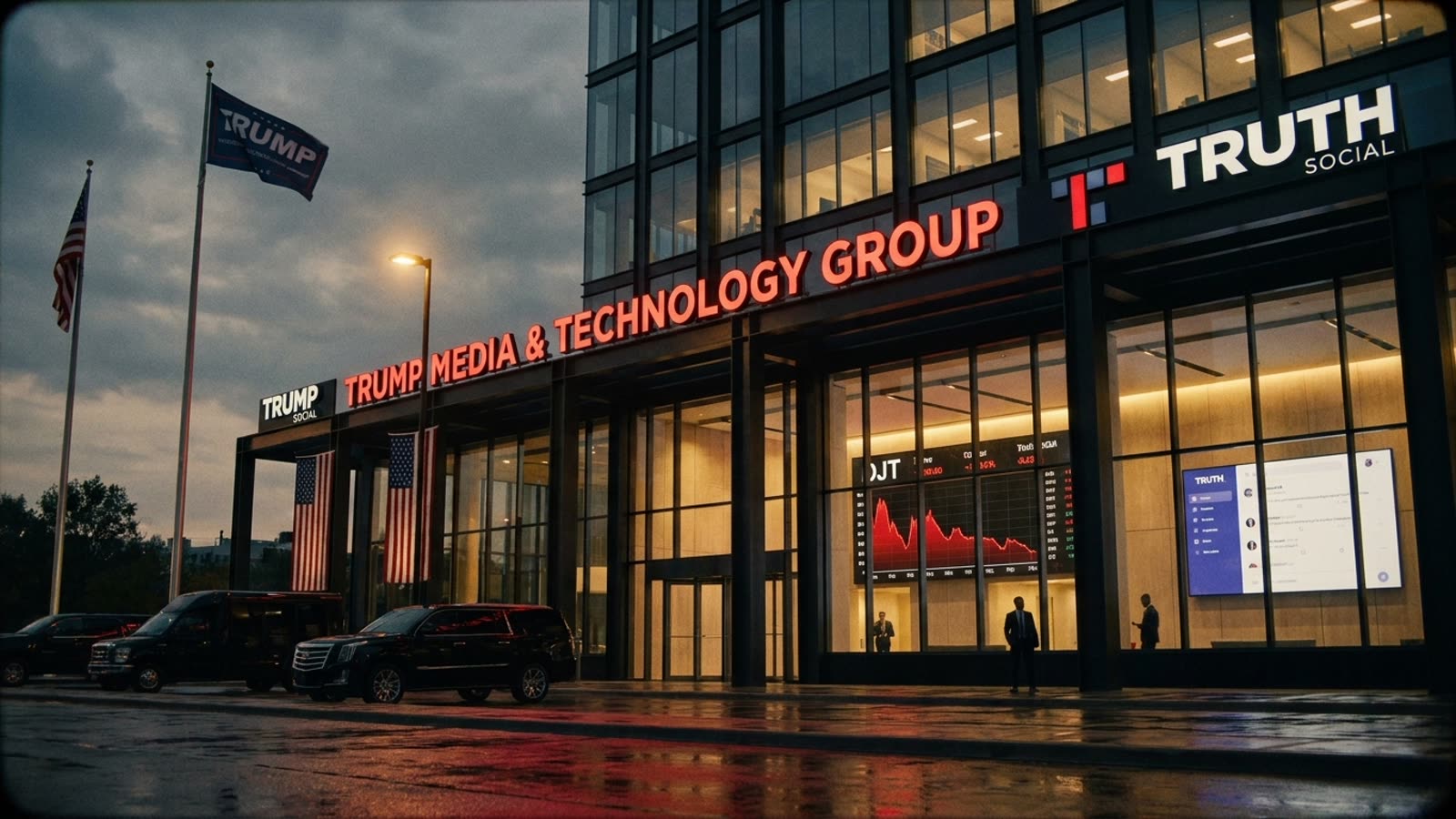
A company that generates $871,000 in quarterly revenue should not be worth billions of dollars. Trump Media and Technology Group, the parent company of Truth Social, reported a net loss of $405.9 million for the first three months of 2026—a figure that exceeds its total revenue by a factor of roughly 466. By any conventional standard of business analysis, this is a failing enterprise. By the standards of the market it actually operates in, it is performing exactly as designed.
The numbers themselves are almost beside the point, which is precisely the point. TMTG's valuation has never been tethered to cash flows, user growth, or advertising potential. It trades as a derivative of Donald Trump's political fortunes, a liquid proxy for sentiment among his supporters, and a speculative vehicle for those betting on—or against—that sentiment. The Q1 results merely confirm what the stock's trading patterns have long suggested: this is not a media company in any operational sense.
The accounting of belief
The $405.9 million loss requires some unpacking. Much of it stems from non-cash charges related to stock-based compensation and the revaluation of warrants—paper losses that don't immediately drain the treasury. But even setting aside accounting technicalities, the underlying business generates almost nothing. Truth Social's advertising revenue is negligible. Its user base, while loyal, remains a fraction of legacy platforms. The company has floated various expansion plans—streaming, financial services—but none have materialized into revenue.
What TMTG does have is approximately $700 million in cash from its SPAC merger, a war chest that buys time but not a business model. At current burn rates, that runway is finite. The company's survival depends on either finding actual revenue streams or maintaining enough stock value to raise additional capital through secondary offerings.
The political premium
Institutional investors have largely stayed away, leaving the shareholder base dominated by retail traders and true believers. This composition creates unusual dynamics. Selling pressure remains muted because many holders view their shares as political expression rather than financial investment. The stock rallies on Trump's legal victories and campaign momentum; it dips on setbacks. Earnings reports like this one barely register.
This is not entirely unprecedented. Meme stocks from GameStop to AMC demonstrated that narrative can override fundamentals for extended periods. But those companies at least had operating businesses generating real, if declining, revenue. TMTG has stripped the meme-stock phenomenon to its essence: pure sentiment, monetized through public markets.
Our take
Trump Media's Q1 report is less a financial disclosure than a philosophical statement about what public markets have become. The company will likely survive as long as Trump remains politically relevant—and possibly longer, sustained by shareholders who would rather lose money than sell. Whether this represents a market failure or a market evolution depends on whether you believe stock prices should reflect expected cash flows or something more intangible. The answer, increasingly, seems to be both.