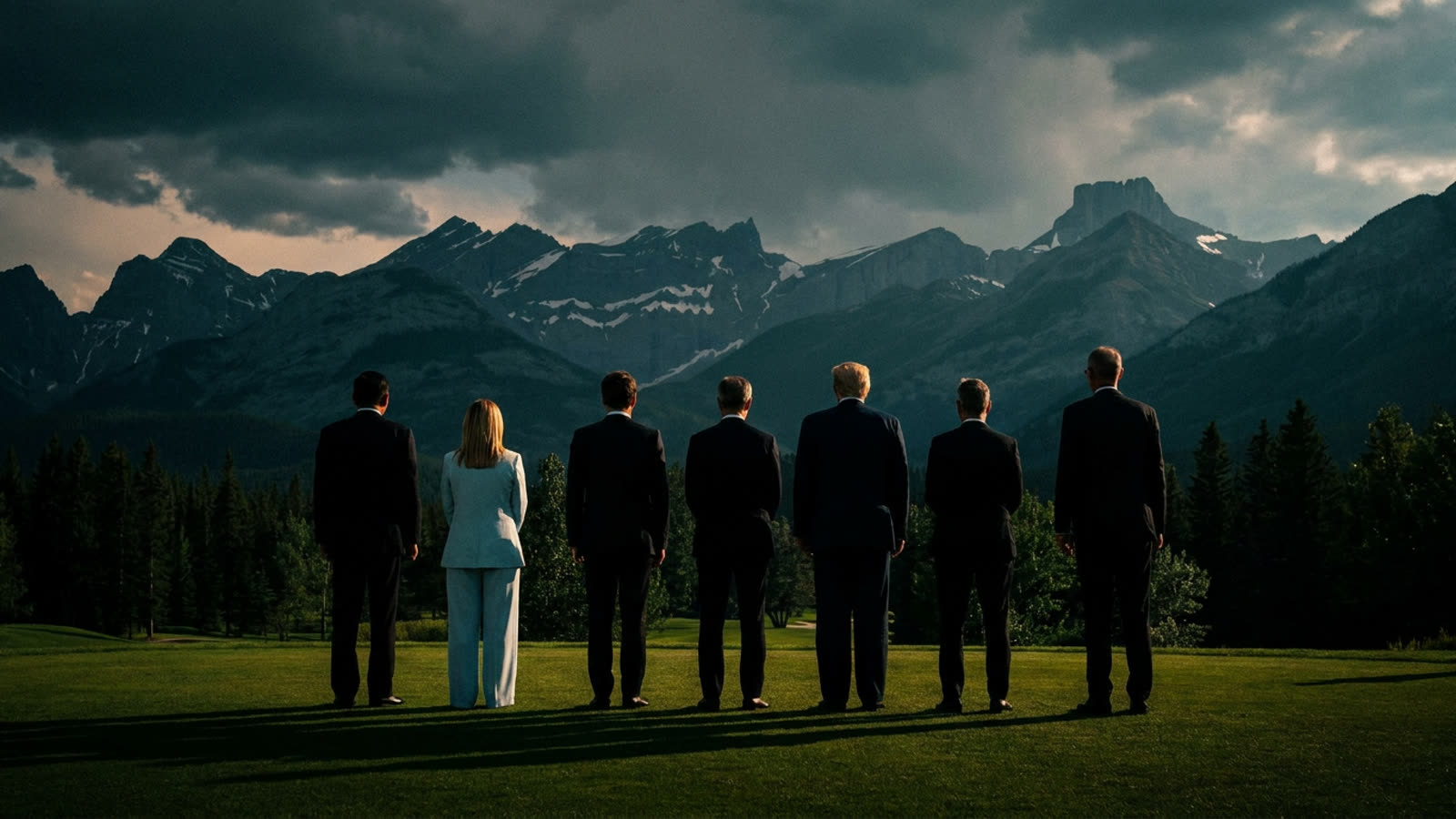
The G7 summit opening in France this week presents a peculiar diplomatic spectacle: seven leaders whose economies are hemorrhaging from the consequences of American military action, all studiously avoiding any public criticism of the man responsible.
President Trump's Iran campaign — now entering its fourth month — has redrawn the global economic map in ways that make polite summit communiqués increasingly difficult to write. Oil prices have stabilized above $95 per barrel, supply chains through the Strait of Hormuz remain disrupted, and European manufacturers are quietly relocating production to avoid sanctions crossfire. The cost to G7 economies outside the United States is measured in the hundreds of billions.
The silence of allies
What makes France's hosting duties particularly awkward is the gap between private frustration and public posture. European officials have spent weeks preparing talking points that acknowledge "regional instability" without assigning blame, crafting language about "shared security concerns" that papers over fundamental disagreements about whether this war serves anyone's interests but domestic American politics.
The British and Germans have been most vocal in private channels, according to diplomatic sources, while publicly maintaining the fiction of alliance solidarity. Japan and Canada have adopted studied neutrality, their export-dependent economies too vulnerable to American displeasure to risk even mild dissent. Italy, as always, is following wherever the strongest current flows.
The economic arithmetic
The numbers tell a story the communiqué will not. German industrial output has contracted for two consecutive quarters, with energy costs and Middle East uncertainty cited as primary factors. France's tourism sector — already struggling — has lost an estimated €2 billion in bookings from travelers avoiding perceived regional instability. Britain's insurance markets have repriced sovereign risk across the Gulf, with knock-on effects for the City's underwriting business.
Meanwhile, American shale producers are enjoying their best quarter since the pandemic recovery, and defense contractors have added roughly $180 billion in market capitalization since hostilities began. The war's economic benefits flow almost exclusively to one participant.
Our take
The G7 was designed for moments of genuine collective action — coordinating responses to oil shocks, financial crises, the occasional pandemic. What it has become under the current configuration is something closer to group therapy for allies too economically dependent on Washington to voice disagreement. The summit will produce a communiqué full of carefully negotiated phrases about stability and partnership. It will not produce honesty about who is paying for America's latest Middle Eastern adventure, or why.