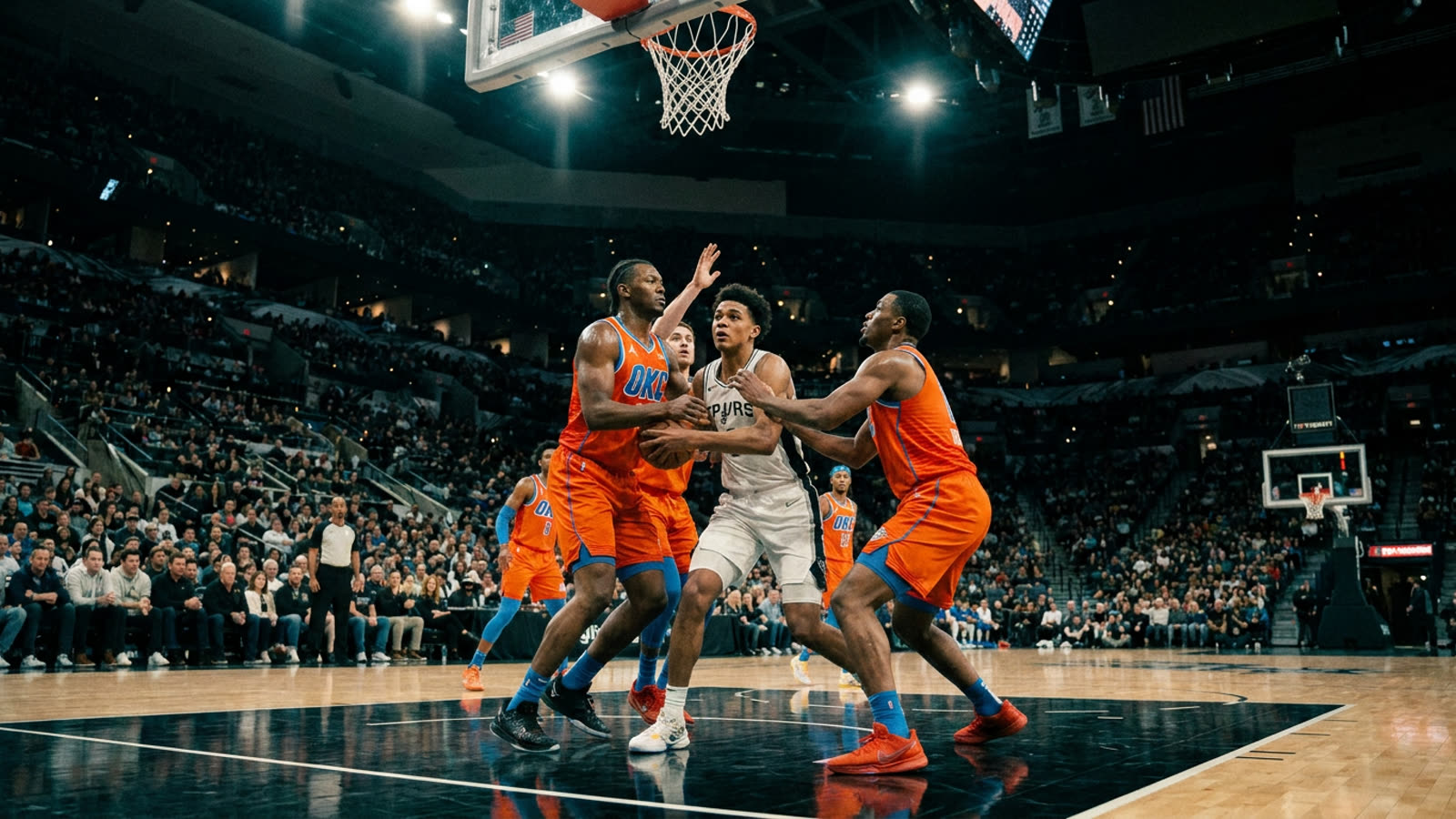
The Oklahoma City Thunder hold a 3-2 series lead over the San Antonio Spurs, and the most remarkable aspect is not what Shai Gilgeous-Alexander has done—it is what everyone else has.
The Thunder's supporting cast has transformed from complementary pieces into series-defining forces. Players who barely register in national consciousness have outperformed their regular-season averages at the precise moment when pressure typically exposes limitations. This is not accidental. It is the product of a front office that prioritized roster construction over headline acquisitions, and a coaching staff that has cultivated genuine role clarity rather than hierarchical resentment.
The depth advantage materializes
San Antonio entered this series with the more compelling narrative: Victor Wembanyama's continued ascent, the franchise's return to playoff relevance, the promise of a new dynasty taking shape. What the Spurs lacked was the institutional knowledge of playoff basketball that cannot be simulated in regular-season games. The Thunder, by contrast, have been accumulating postseason reps for three consecutive years. Their role players have failed in crucial moments before. They have learned what those failures feel like, and more importantly, they have learned how to recover.
The gap between regular-season production and playoff performance is where pretenders reveal themselves. Oklahoma City's secondary scorers have not merely maintained their efficiency—they have elevated it. When defenses collapse on Gilgeous-Alexander, the ball finds shooters who have spent years preparing for exactly these looks. The Spurs, for all their talent, are still teaching their supporting cast how to exist in these moments.
What this means for the Western Conference
Should Oklahoma City close out this series, they will have demonstrated something the rest of the conference must reckon with: the Thunder's window is not approaching, it is open. The roster's age profile suggests this core will improve together for several more seasons. The front office retains draft capital and financial flexibility. And the intangibles—the defensive identity, the ball movement, the collective buy-in—are already championship-caliber.
San Antonio's Wembanyama remains a generational talent, and the Spurs will be formidable for years to come. But this series has exposed the distance between individual brilliance and organizational readiness. The Thunder are not winning because they have more stars. They are winning because they have more players who understand their roles and execute them under duress.
Our take
The NBA's obsession with superstar acquisitions has obscured a more fundamental truth: championships are won by organizations, not individuals. Oklahoma City has spent years drafting well, developing patiently, and resisting the temptation to mortgage the future for immediate gratification. The Spurs took a similar approach and will eventually reap similar rewards. But "eventually" is doing significant work in that sentence. The Thunder are ready now, and their unlikely heroes are proving it one game at a time.