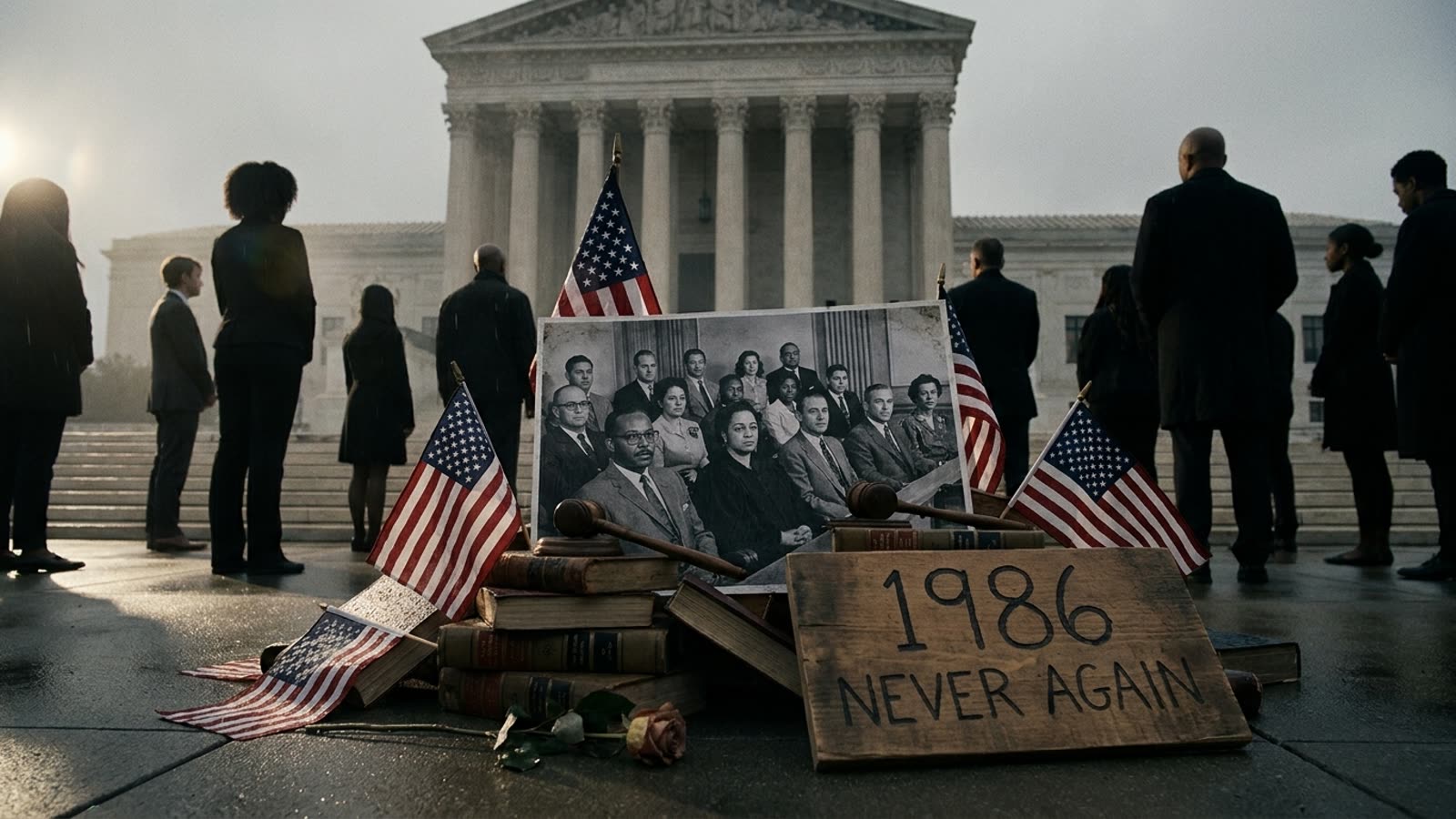
The Supreme Court's decision to grant relief to a death row inmate who claimed racial bias in jury selection is not, strictly speaking, a surprise. The legal framework prohibiting prosecutors from using peremptory challenges to exclude jurors based on race has existed since Batson v. Kentucky in 1986 — nearly four decades of settled precedent. What is notable is that the Court felt compelled to intervene at all, a tacit acknowledgment that lower courts continue to tolerate the very discrimination Batson was meant to eradicate.
The case involves a Black defendant whose trial prosecutor struck every eligible Black juror from the panel, leaving an all-white jury to decide whether he would live or die. The prosecutor offered race-neutral explanations for each strike, as Batson requires. The trial court accepted them. Appellate courts deferred. The pattern is depressingly familiar to anyone who has studied capital punishment in America.
The Batson problem
Batson's three-step framework — defendant objects, prosecutor explains, judge decides — was designed to smoke out pretextual strikes. In practice, it has become a formality. Prosecutors have learned that almost any explanation will suffice: the juror seemed inattentive, lived in the wrong neighborhood, had a relative with a criminal record. Studies consistently show that Black jurors are struck at far higher rates than white jurors, yet Batson claims rarely succeed. The Court's willingness to reverse here suggests at least some Justices believe the doctrine has been hollowed out.
What the ruling does and does not do
The decision does not overturn the defendant's conviction outright. It remands the case for further proceedings, likely a new hearing on whether the prosecutor's stated reasons were genuine or pretextual. The defendant remains on death row. But the ruling sends a signal to lower courts that statistical patterns matter, that accepting facially neutral explanations without scrutiny is insufficient, and that the Constitution's promise of equal protection extends into the jury box.
Critics will note the ruling's narrowness. The Court did not impose new procedural requirements or shift the burden of proof to prosecutors. It did not address the deeper structural incentives that make discriminatory strikes attractive to lawyers seeking favorable juries. The Batson framework remains intact, flaws and all.
Our take
The Court did the minimum necessary to keep Batson from becoming a dead letter, and perhaps that is enough for now. But the persistence of racially skewed jury selection — decades after the practice was nominally outlawed — reflects a legal system that has grown comfortable with formalism over substance. A prosecutor who strikes every Black juror and offers boilerplate justifications should face more than appellate skepticism; the system should make such behavior costly. Until it does, Batson will remain what it has largely been: a speed bump, not a barrier.