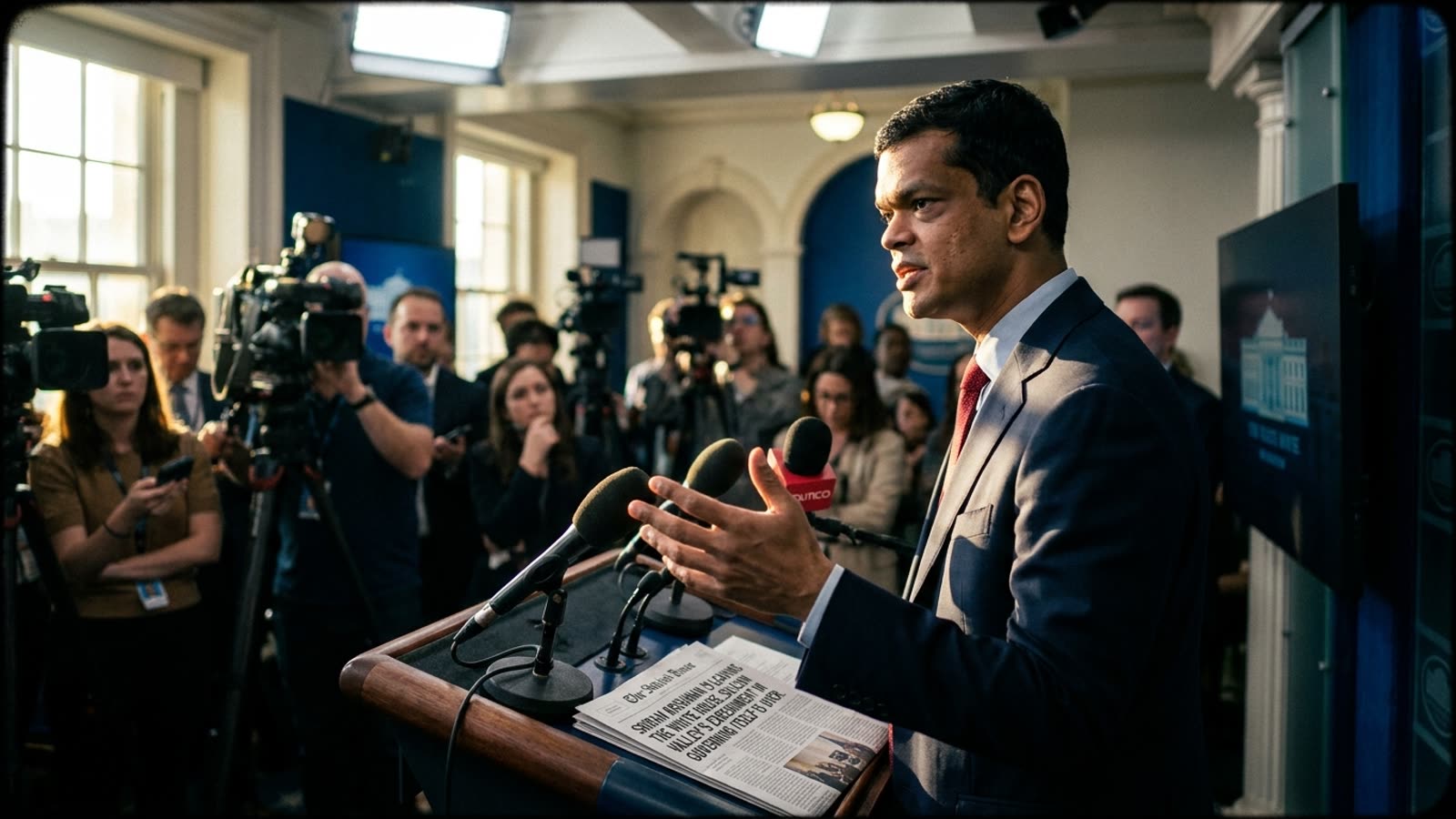
The revolving door between Sand Hill Road and Pennsylvania Avenue has claimed another victim. Sriram Krishnan, the venture capitalist and former Twitter executive who joined the Trump administration as a senior AI policy advisor in January, is stepping down from his role—a tenure so brief it barely outlasted a typical product sprint.
Krishnan's exit, first reported Friday, caps a turbulent stretch for the administration's tech policy apparatus. Recruited from Andreessen Horowitz with considerable fanfare as proof that Silicon Valley's Trump-curious faction would translate enthusiasm into governance, Krishnan instead discovered what every founder-turned-bureaucrat eventually learns: Washington doesn't ship code, it ships compromises.
The valley's man in Washington
Krishnan arrived with impeccable credentials for the role the administration wanted him to play. A general partner at a16z, former head of product at Twitter, and early investor in several AI startups, he represented the exact profile of tech-native talent that Trump allies argued was missing from previous administrations' approach to artificial intelligence. His appointment was celebrated in venture circles as evidence that the industry would finally have a sympathetic ear shaping regulation.
The reality proved messier. Krishnan found himself caught between competing factions: defense hawks demanding aggressive export controls on AI chips, libertarian-leaning tech donors pushing for minimal regulation, and career staff at agencies like NIST who viewed the newcomer with institutional skepticism. His portfolio—nominally coordinating AI policy across the executive branch—came with influence but little formal authority, a combination that produces frustration rather than results.
What comes next
The administration has not announced a replacement, and the silence speaks volumes. Finding another credible tech figure willing to sacrifice earning potential and reputation for a thankless coordinating role will prove difficult. The pool of qualified candidates who both understand AI deeply and can tolerate the administration's chaotic policy process has always been shallow; Krishnan's quick exit drains it further.
Meanwhile, the substantive AI debates continue without clear White House direction. The Commerce Department is finalizing updated export controls. The FTC is probing compute concentration. Congress is advancing competing frameworks for foundation model liability. Each of these tracks will now proceed with one fewer advocate for the industry's preferred outcomes.
Our take
Krishnan's departure is less a personal failure than a structural inevitability. The fantasy that successful tech operators can parachute into government and impose Silicon Valley's move-fast ethos on federal bureaucracy has been tested repeatedly and found wanting. Policy is not product management. Stakeholders cannot be fired. And the returns on political capital compound far more slowly than venture returns. The next tech executive tempted by a White House title should study Krishnan's tenure carefully—then politely decline.