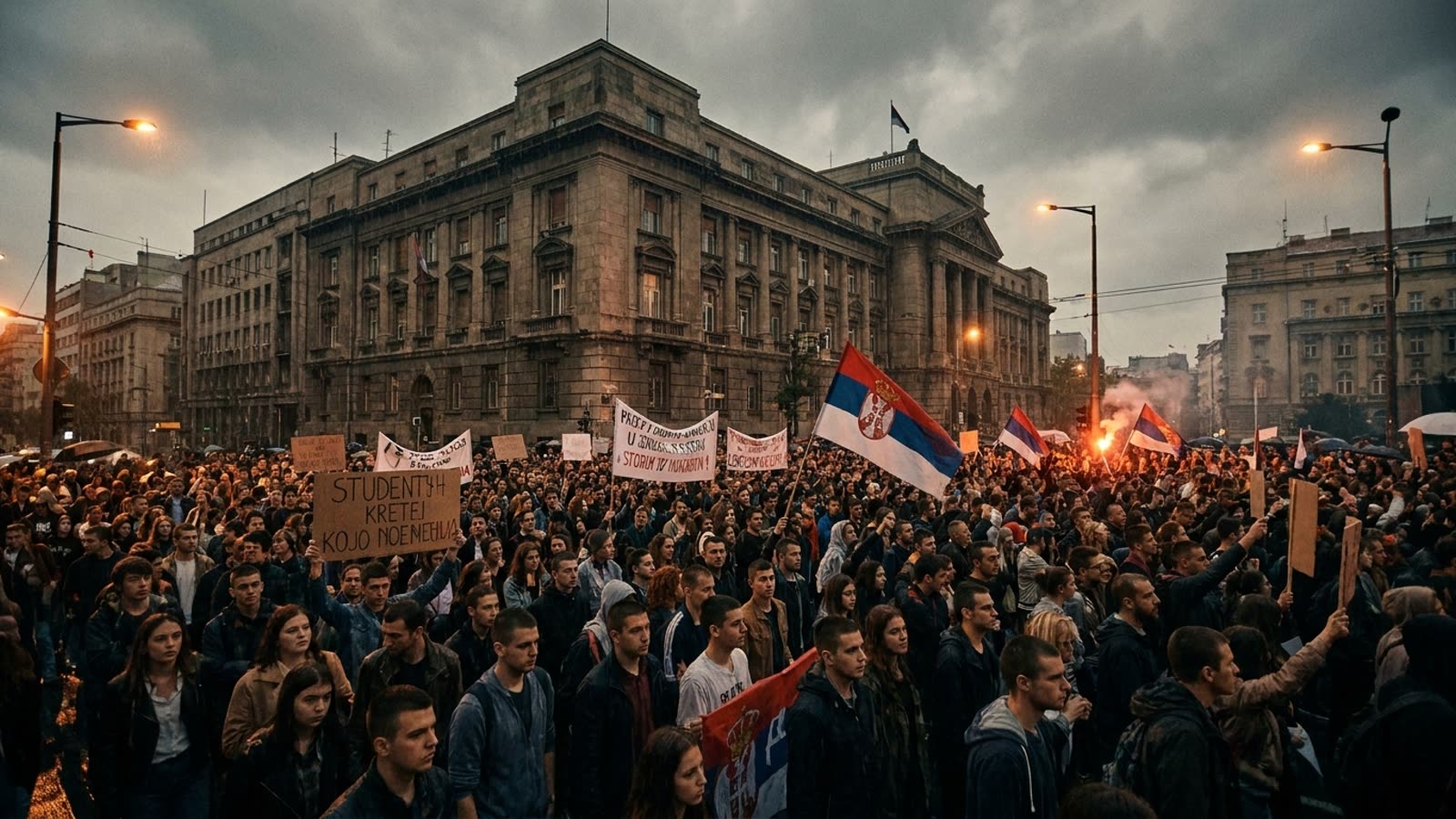
For months, Serbia's student protest movement has blocked intersections, occupied faculties, and chanted outside state television headquarters. On Sunday, they traded megaphones for polling cards — and preliminary data suggests the gamble may be paying off.
Electoral officials reported turnout tracking well above any national election since the democratic transition of 2000, the year Slobodan Milošević was voted out of power. By late afternoon, queues in Belgrade stretched around city blocks; in Novi Sad, poll workers requested additional ballot papers. The question now is whether the surge translates into parliamentary arithmetic capable of unseating Aleksandar Vučić's Serbian Progressive Party, which has governed — critics say dominated — Serbian politics for over a decade.
The student factor
The movement coalesced earlier this year around demands for university autonomy and anti-corruption reforms, but quickly broadened into a vehicle for generational discontent. Its organisers are young, social-media-fluent, and conspicuously non-partisan — a deliberate contrast to the fragmented opposition parties that have failed to dent Vučić's majorities in successive elections. Their strategy: drive first-time and lapsed voters to the polls rather than endorse any single party list.
Whether that diffuse energy can be converted into seats depends on which opposition blocs clear the electoral threshold. Vučić's party, buoyed by control of state media and public-sector patronage networks, has rarely needed to worry about turnout differentials. High participation is, almost by definition, a threat.
Vučić's long shadow
The president has cast himself as a guarantor of stability in a volatile region, leveraging Serbia's delicate position between the European Union and Russia. Western diplomats have tolerated his democratic backsliding in exchange for cooperation on Kosovo and, more recently, cautious distance from Moscow. A genuine electoral upset would scramble those calculations — and raise questions about whether Brussels should have pressed harder, sooner.
Vučić spent the final days of the campaign warning of chaos and foreign interference, a familiar playbook. But the student movement's discipline — no violence, no partisan flags, relentless humour — has made the usual scaremongering harder to land.
Our take
Turnout is not victory, and Serbian elections have a way of disappointing optimists. Vučić's machine is formidable, and even a reduced majority would leave him in power. Still, the images from Belgrade on Sunday — young voters queueing in numbers that recall 2000 — carry their own weight. If the students lose, they will have built something. If they win, they will have reminded Europe that democratic energy can still come from the streets, not just from Brussels communiqués.