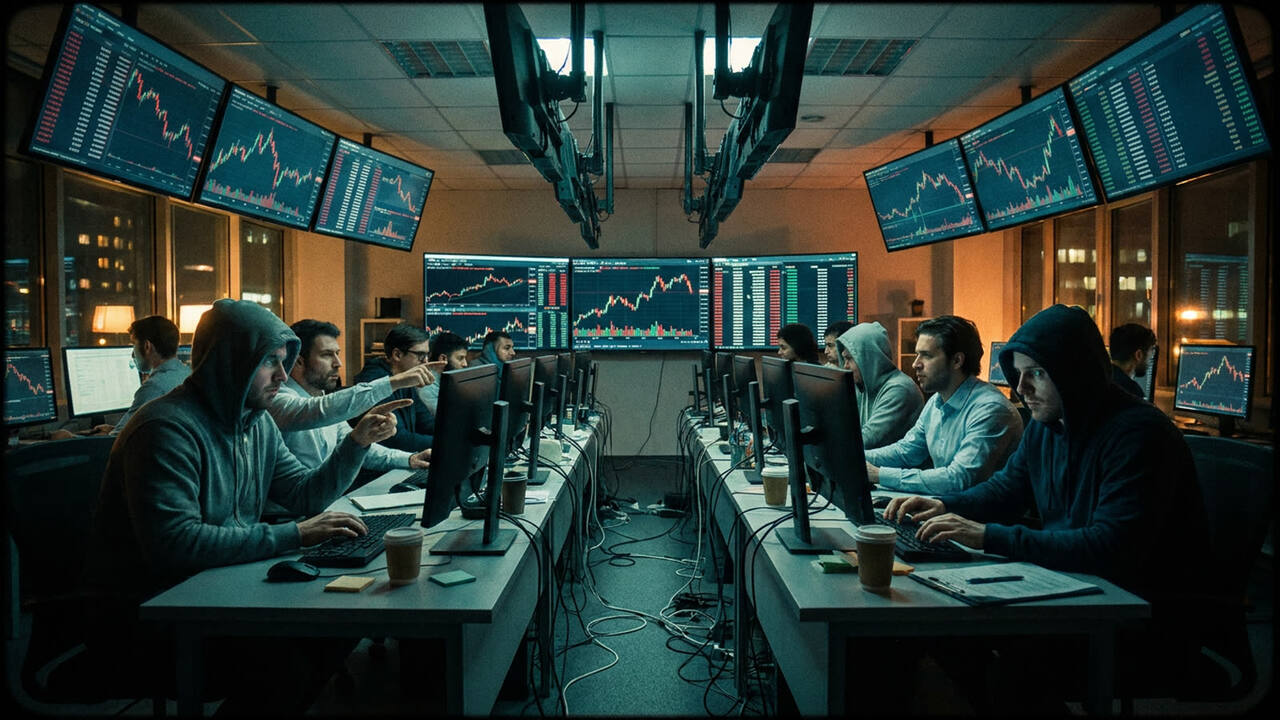
The collapse of FTX in late 2022 sent billions of dollars of customer funds into a legal black hole and revived a phrase that had become almost cliché in crypto circles: not your keys, not your coins. The saying sounds like bumper-sticker wisdom, but it encodes something deeper — a fundamental tension between convenience and sovereignty that defines the entire cryptocurrency experiment.
Self-custody is the practice of holding your own cryptographic private keys rather than trusting an exchange, broker, or custodian to hold them for you. In traditional finance, this would be like keeping cash under your mattress instead of in a bank account. In crypto, it's closer to being your own bank — complete with all the responsibility and risk that entails.
The mechanics of control
Every cryptocurrency wallet is really just a pair of cryptographic keys: a public key (your address, which anyone can send funds to) and a private key (the secret that proves you own those funds and authorizes transfers). When you use an exchange like Coinbase or Kraken, you don't actually hold these keys. The exchange does. You have an IOU, a claim on assets the exchange controls. This is custodial holding.
Self-custody means you control the private key directly, usually through a hardware device (a small USB-like gadget that stores keys offline) or a software wallet on your phone or computer. The key is often represented as a seed phrase — twelve or twenty-four random words that can regenerate your entire wallet. Lose that phrase, and your funds are gone forever. There is no customer service line, no password reset, no court order that can recover them.
This is not a bug. It is the entire point.
Why most people don't bother
Despite the FTX disaster and countless smaller exchange failures, the vast majority of cryptocurrency holders still use custodial services. The reasons are obvious: self-custody is inconvenient, technically intimidating, and genuinely risky. A 2023 Chainalysis estimate suggested that roughly twenty percent of all Bitcoin in existence is permanently lost, much of it due to forgotten passwords and misplaced seed phrases from crypto's early years.
The user experience of self-custody has improved dramatically — hardware wallets from companies like Ledger and Trezor now feature intuitive interfaces, and mobile wallets have become far more polished. But the fundamental tradeoff remains. Custodial services offer insurance, fraud protection, and the ability to recover your account if you forget your password. Self-custody offers something different: the guarantee that no third party can freeze, seize, or lose your funds through their own incompetence or malfeasance.
The philosophical stakes
Satoshi Nakamoto's original Bitcoin whitepaper was titled "A Peer-to-Peer Electronic Cash System." The emphasis was on peer-to-peer — transactions without intermediaries. Self-custody is what makes that possible. Without it, cryptocurrency is just a slower, more volatile version of PayPal.
This matters beyond the ideological. In countries with unstable currencies or authoritarian governments, self-custody provides a genuine escape valve. A Ukrainian refugee crossing the border in early 2022 could carry their life savings in a memorized seed phrase. A Venezuelan family could preserve wealth outside a collapsing bolívar. These use cases are real, even if they represent a small fraction of total crypto activity.
Our take
Self-custody is crypto's original promise and its greatest UX challenge. The industry has spent fifteen years trying to make it easier without making it less secure, with mixed results. For most casual investors in stable democracies, the convenience of a regulated exchange probably outweighs the sovereignty of holding your own keys. But understanding why self-custody exists — understanding that the entire system was designed to make it possible — is essential to understanding what cryptocurrency is actually for. It is not a better stock. It is an attempt to build money that cannot be controlled by anyone except its owner. Whether that's utopian or paranoid depends on your trust in institutions. Recent history suggests a little paranoia might be warranted.