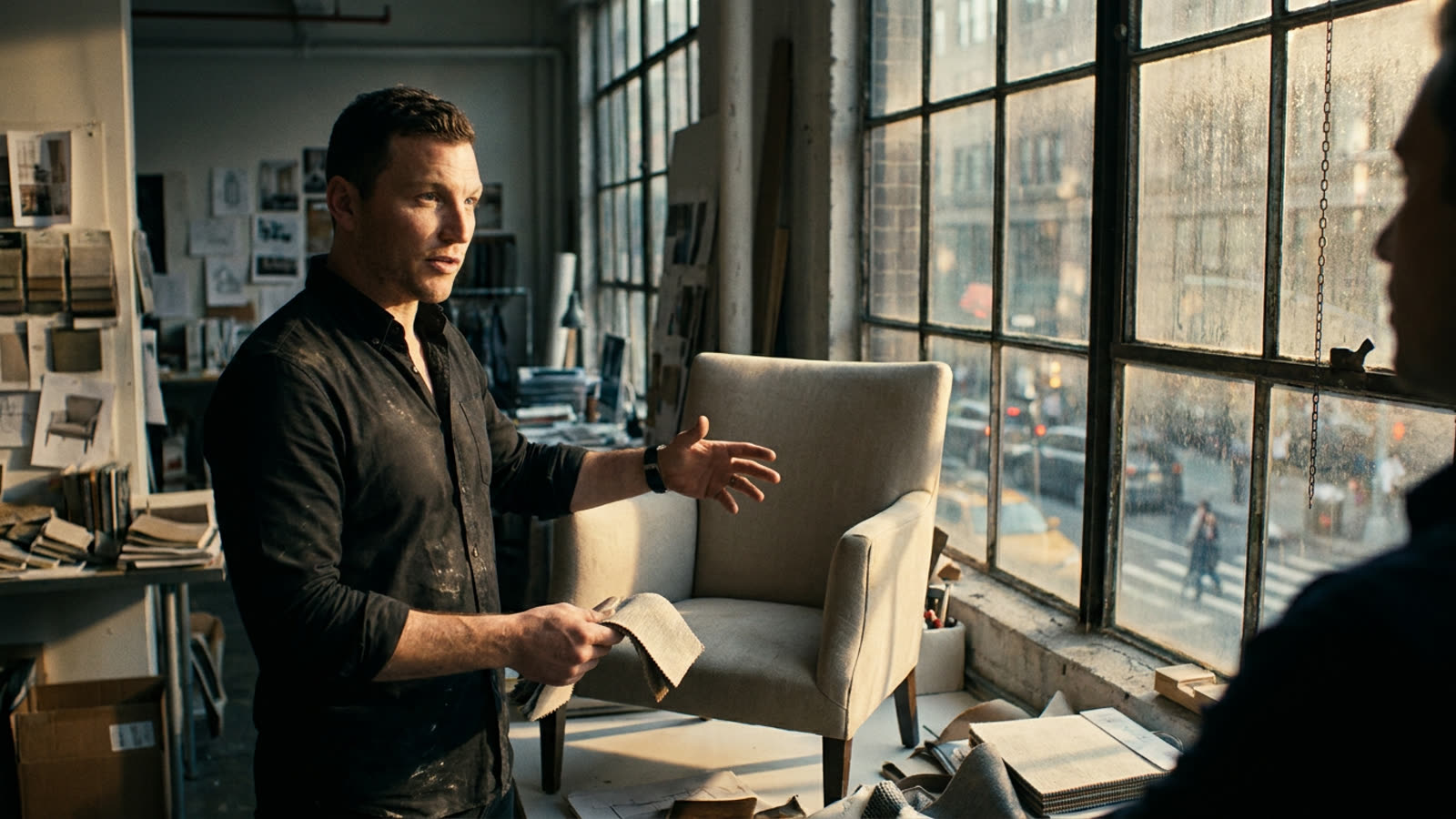
The trajectory from professional pest to tastemaker is not one the sports-to-celebrity pipeline typically offers. Athletes retire into broadcasting booths, front offices, or the comfortable obscurity of restaurant ownership. They do not, as a rule, apprentice at Vogue and open furniture restoration businesses in Manhattan. Sean Avery has never been interested in rules.
The former NHL agitator, who spent twelve seasons making enemies across the league before his career ended in 2012, has now spent longer as a civilian than he ever did as a player. And in that time, the man who pioneered the "Avery Rule" — a regulation literally created to stop his on-ice antics — has become something genuinely unexpected: a credentialed member of New York's design establishment.
The Vogue years and what came after
Avery's fashion world entry in 2008, when he interned at Vogue during an NHL lockout, was treated as a publicity stunt. Anna Wintour, characteristically, did not care what anyone thought. The internship was real, the work was real, and Avery — whatever his motivations — showed up. He has since parlayed that foundation into a furniture restoration business, a design consultancy, and a social media presence that trades hockey nostalgia for mid-century modern appreciation.
The skepticism has never fully dissipated. Avery's playing career was defined by provocation: the comments about Dion Phaneuf's girlfriend that got him suspended, the relentless chirping that made him a target, the fights that were often more theater than violence. The design world, which prizes authenticity above almost everything, has had to reconcile whether this reinvention is genuine transformation or merely a new arena for performance.
Why the industry tolerates him
The answer, according to those who have worked with him, is simpler than the psychology suggests: he actually knows what he is doing. Avery's furniture work — restoring vintage pieces, sourcing for clients, consulting on residential projects — reflects a genuine education in the field, not a dilettante's hobby. He has put in time that most celebrity crossovers never bother with.
This does not make him beloved. The design world is small, gossipy, and has a long memory for arrogance. Avery's public persona, even in its mellowed form, retains an edge that can read as abrasive. But competence buys tolerance, and tolerance, over fourteen years, can slowly curdle into something resembling respect.
Our take
Sean Avery's second act works precisely because it is so improbable. Had he become a hockey analyst or opened a sports bar, no one would have paid attention — it would have been too predictable, too safe. Instead, he chose a field where his past carried no currency and his reputation was a liability. That he has survived, even thrived, says something about either his genuine passion for the work or his preternatural instinct for finding new audiences to provoke. Possibly both. The NHL's most irritating player becoming interior design's most unlikely practitioner is, at minimum, a more interesting story than another former enforcer selling car dealerships.