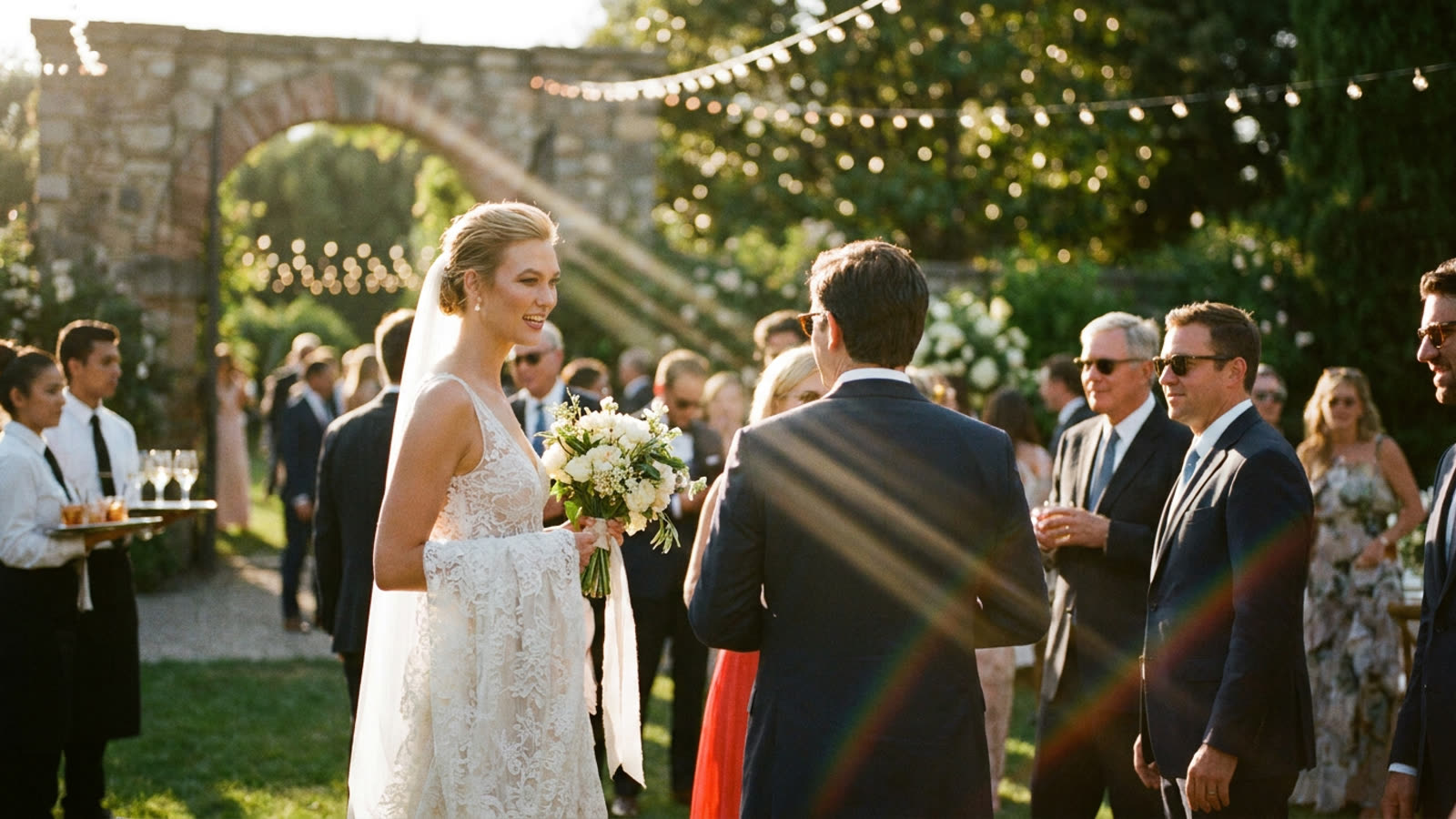
The reconciliation arrived not with a joint Instagram post or a tearful podcast confession, but with the quiet efficiency of a wedding invitation. Karlie Kloss, once Taylor Swift's most photographed best friend and later her most conspicuous absence, has reportedly been welcomed back into the singer's inner circle in time for whatever nuptials Swift is planning with Travis Kelce. The beef, as the tabloids would have it, has been squashed.
Except that framing misses what made the Swift-Kloss estrangement so fascinating in the first place. This was never really about beef. It was about the collision between Swift's carefully curated girl-squad brand and the messier realities of adult friendships—particularly when one friend marries into a family whose politics your fanbase despises.
The Kushner problem
Kloss married Joshua Kushner in 2018, making her sister-in-law to Jared Kushner and, by extension, adjacent to the Trump administration that Swift had publicly opposed. The timeline of their friendship's cooling tracks almost perfectly with that union. By 2019, Kloss was no longer appearing at Swift's Fourth of July parties. By 2020, fans had constructed elaborate theories about coded lyrics and deliberate snubs.
What made the situation genuinely awkward was that Joshua Kushner himself is a Democrat who reportedly did not vote for Trump. The guilt-by-association calculus was always somewhat unfair to Kloss, who found herself caught between her husband's family and her friend's increasingly political public persona. Swift, whose brand depends on an almost pathological need to be liked, apparently decided the optics were too complicated to manage.
The squad's quiet dissolution
The Kloss situation was merely the most visible symptom of a broader phenomenon: the 2014-era squad—Gigi Hadid, Selena Gomez, Lena Dunham, and a rotating cast of Victoria's Secret models—had largely dispersed by the early 2020s. Some friendships endured privately. Others faded in the way adult friendships often do, without drama but without maintenance either.
Swift's public persona evolved accordingly. The Eras Tour featured collaborations and surprise guests, but the emphasis shifted from the collective to the individual, from squad goals to romantic partnership. Kelce became the new constant presence, and the friend group became less central to the narrative.
Why now
The timing of the reconciliation is instructive. Swift is reportedly engaged and planning a wedding that will be one of the most scrutinized celebrity events in years. The guest list will be parsed for meaning, every absence noted and interpreted. Having Kloss present neutralizes one potential storyline and signals magnanimity. It is, in its way, a strategic move dressed up as personal growth.
This is not cynicism—or not entirely. Friendships between famous people operate under constraints that civilian relationships do not. The public nature of the bond creates public expectations about its maintenance. Walking back a perceived slight requires navigating not just personal feelings but fan communities, tabloid narratives, and brand considerations.
Our take
The Swift-Kloss reconciliation is probably genuine and probably also convenient, because those two things are not mutually exclusive when you are operating at their level of fame. What it reveals is that the girl-squad era was always somewhat performative—not fake, exactly, but certainly curated for public consumption in ways that made its eventual fraying feel like betrayal rather than ordinary drift. The wedding invitation suggests both women have matured past the need to perform their friendship or their estrangement. That might be the most adult thing either of them has done.