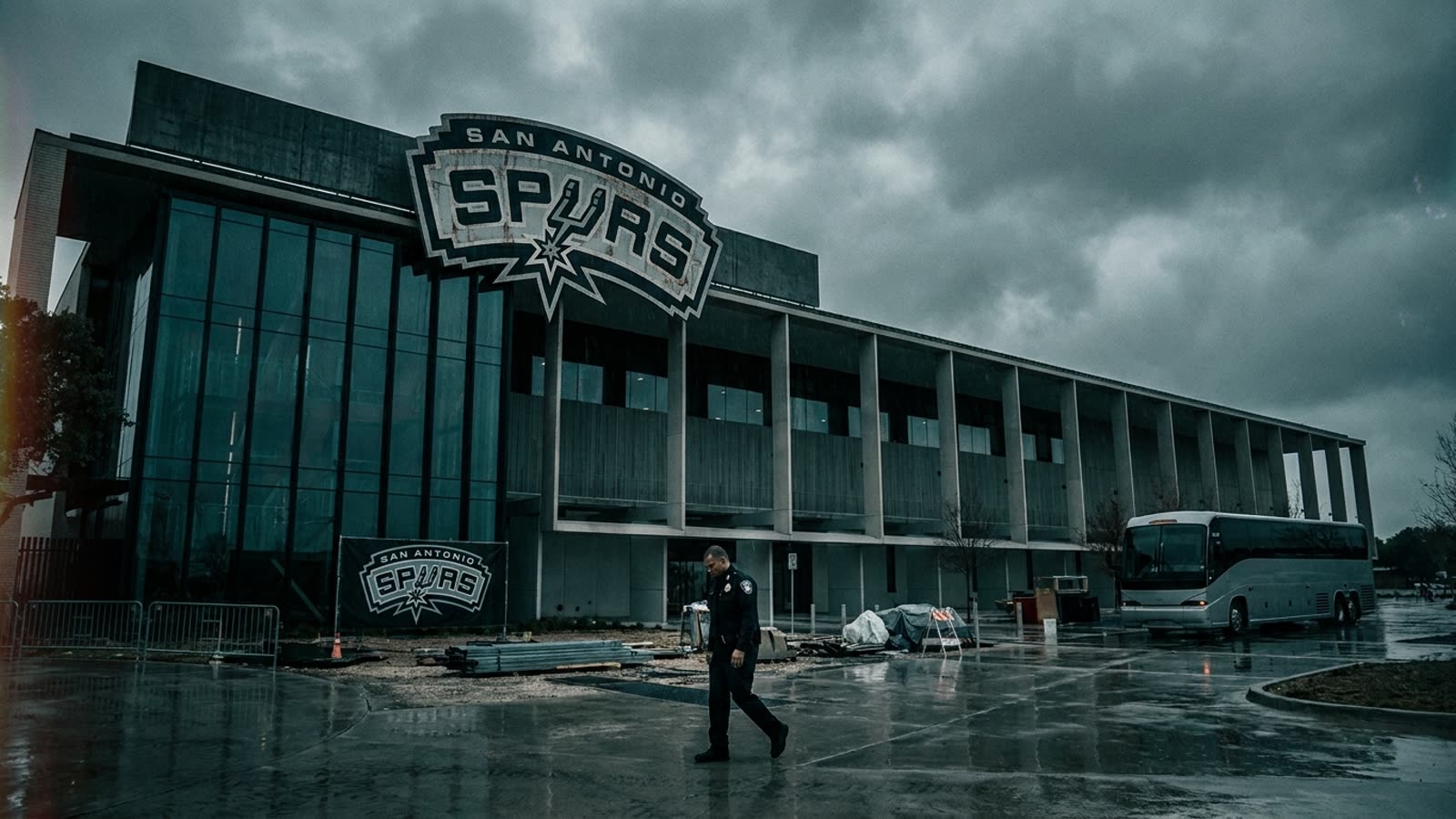
The San Antonio Spurs arrived at the 2026 NBA Finals as the feel-good story of the postseason—a franchise synonymous with patient excellence that had accelerated its rebuild around Victor Wembanyama into a championship contender in just three seasons. Now, trailing the New York Knicks 2-0 after Game 2, the Spurs confront an uncomfortable reality: Wembanyama may be transcendent, but transcendence alone does not win titles.
The 7-foot-4 Frenchman has been spectacular in defeat. His defensive impact remains otherworldly, his offensive versatility continues to break the sport's positional grammar. Yet the Finals have exposed what the regular season obscured: San Antonio's roster construction relies on Wembanyama to be superhuman rather than merely superb. When Karl-Anthony Towns and the Knicks' veteran ensemble execute at a championship level, the Spurs have no secondary engine capable of matching that output.
The supporting-cast problem
San Antonio's path to the Finals featured favorable matchups and timely opponent injuries. The Knicks offer neither. New York's depth—built through years of calculated trades and free-agent patience—allows them to absorb Wembanyama's individual brilliance while attacking the Spurs' weaker links. The contrast is instructive: the Knicks' roster reflects a front office that understood star acquisition is necessary but insufficient. The Spurs bet that Wembanyama's ceiling would paper over roster gaps that now look like chasms.
The franchise's legendary patience appears to have been abandoned precisely when it was most needed. After decades of drafting, developing, and waiting for the right moment, San Antonio rushed to compete before building the complementary pieces that championship teams require. The Popovich-era Spurs won five titles with stars surrounded by perfectly fitted role players. The Wembanyama-era Spurs have the star but not the fit.
History's uncomfortable lesson
The NBA's archives are littered with generational talents who needed years—and front-office recalibrations—before winning championships. LeBron James required a move to Miami and a specific roster architecture. Kevin Garnett needed a trade to Boston. Even Tim Duncan, the franchise's patron saint, benefited from David Robinson's presence in his first championship season. Wembanyama is 22 years old and already in the Finals, which represents remarkable progress. But progress and completion are different categories.
Down 2-0, the Spurs would need to win four of five games against a Knicks team that has been the more complete unit in every meaningful metric. It is not impossible—the 2016 Cavaliers proved that—but it requires the kind of opponent collapse that cannot be planned for.
Our take
The Spurs should not be embarrassed by a Finals loss to a superior roster; reaching this stage with a 22-year-old centerpiece is genuinely impressive. But the front office must resist the temptation to view this run as validation. It is, instead, a diagnostic: Wembanyama is everything advertised, and that is precisely why surrounding him with adequate rather than excellent teammates constitutes organizational malpractice. San Antonio has the most valuable asset in basketball. The summer's task is ensuring they deserve him.