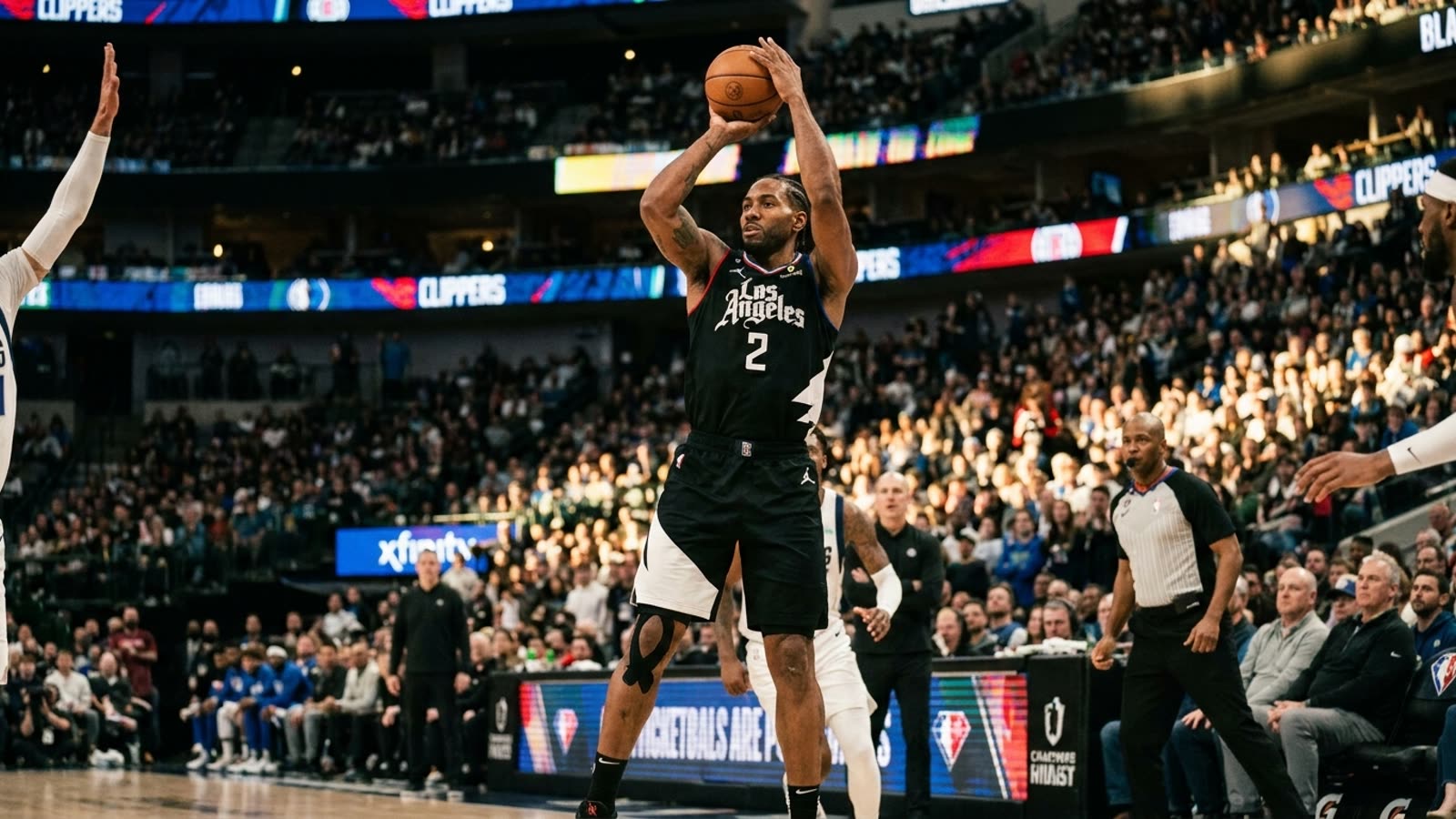
The NBA has interviewed Kawhi Leonard as part of its investigation into the Clippers' Aspiration case, according to sources — a development that suggests the league is no longer willing to tolerate the information vacuum that has surrounded one of basketball's most talented and most unavailable stars.
The Aspiration investigation, which centers on how the Clippers communicated Leonard's injury status and availability, represents something genuinely novel: the league apparatus turning its scrutiny not on a player's conduct, but on the institutional management of a player's body. For years, the Clippers have treated Leonard's knee like a state secret, offering vague updates that left everyone from opposing coaches to paying ticket-holders guessing whether the two-time Finals MVP would actually suit up on any given night.
The transparency problem
Leonard has appeared in roughly half of the Clippers' regular season games since joining the franchise in 2019. The team's explanations have ranged from "load management" to "right knee injury recovery" to simply listing him as questionable until hours before tip-off. This ambiguity has consequences beyond frustrated fans. Sports betting, now a multi-billion dollar industry with official NBA partnerships, depends on accurate injury information. When a team's star player is perpetually Schrödinger's cat — simultaneously playing and not playing until observed — it creates market distortions the league can no longer ignore.
The interview with Leonard himself signals the investigation has moved beyond reviewing team communications. The league apparently wants to understand what the player knew, when he knew it, and whether there was coordination to obscure his true status.
Broader implications for load management
If the NBA determines the Clippers violated disclosure rules, the ramifications extend well beyond one franchise. Every team with an aging superstar — and every superstar protective of their long-term health — will be watching. The league has tried to balance player wellness against the product it sells: games featuring the players fans pay to see. Leonard's case sits at the uncomfortable intersection of those interests.
The Clippers, for their part, have maintained they followed all protocols. But protocols written for a pre-gambling, pre-load-management era may not have anticipated a situation where a team's most important player becomes a part-time employee with full-time star billing.
Our take
The NBA created this problem by embracing sports betting revenue while maintaining injury reporting standards designed for a gentler era. Leonard and the Clippers simply exploited the gap. The investigation may produce fines or new disclosure requirements, but the fundamental tension remains: players want to preserve their bodies, teams want to protect their investments, and the league wants to sell a product. Someone's interests will lose. The only question is whose.