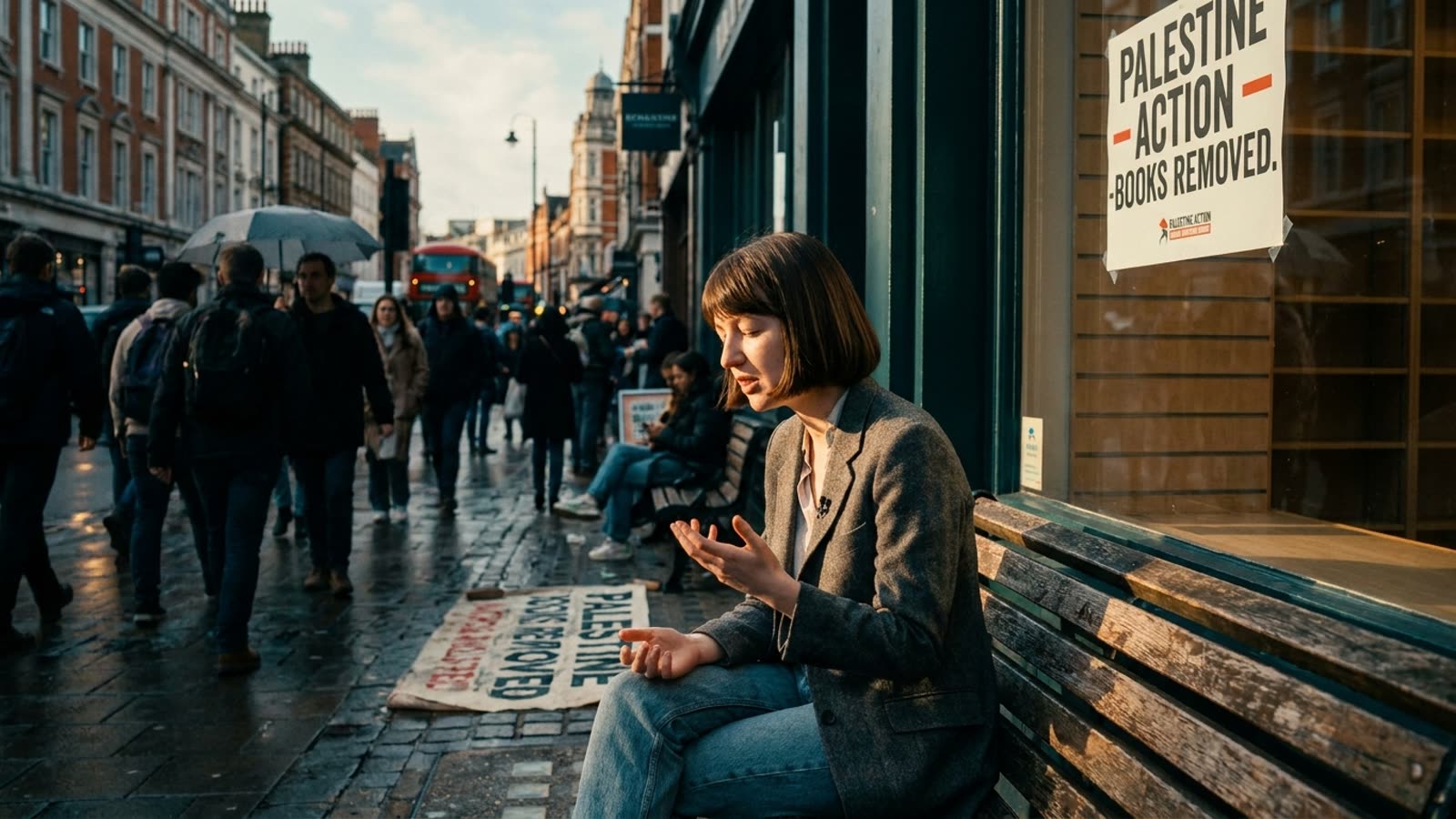
Sally Rooney has built a career on the quiet devastation of people who cannot say what they mean. Now she has said exactly what she means, and British booksellers are responding by removing her novels from their shelves.
The Irish author, whose works including Normal People and Beautiful World, Where Are You have sold millions of copies and spawned prestige television adaptations, has seen her titles pulled from major UK retailers following her public statements in support of Palestine Action, the direct-action group that has targeted arms manufacturers with protests and property damage. "I have made every effort to be honest with the public about my beliefs and intentions, and I am wholly prepared to accept the consequences," Rooney said in a statement that reads less like damage control than a deliberate drawing of lines.
The commercial calculus
The pullback appears coordinated rather than spontaneous. Multiple chains have quietly shifted Rooney's titles from prominent displays to back rooms or removed them from online storefronts entirely, though none have issued formal statements explaining the decision. The move is commercially curious: Rooney remains one of the most bankable names in literary fiction, and her readership skews precisely toward the demographic most likely to sympathize with her politics. Retailers seem to be betting that the reputational risk of association outweighs the lost revenue—a calculation that reveals how thoroughly the Palestine debate has become a third rail in British public life.
The controversy also exposes the peculiar position of the contemporary literary novelist as both artist and brand. Rooney has long been explicit about her socialist politics and her refusal to sell Hebrew translation rights to Israeli publishers, decisions that generated controversy but not commercial consequences on this scale. Supporting a group that the British government has sought to classify as extremist apparently crosses a different threshold.
The Streisand problem
Whether the retail pullback will actually diminish Rooney's readership is another matter. Her books remain available through independent shops, online resellers, and libraries. The publicity surrounding the controversy has likely introduced her work to readers who might otherwise never have encountered it. There is a long tradition of banned or restricted books finding larger audiences precisely because of their suppression—a dynamic Rooney, with her acute sense of how power operates through culture, surely understands.
The episode also raises questions about what, exactly, booksellers believe they are accomplishing. Rooney's novels contain no calls to action, no political manifestos, no content that could plausibly be described as incitement. They are, famously, books about young people having difficult conversations about love and class. The decision to pull them is not about the books at all but about the author's extraliterary speech—a standard that, applied consistently, would empty a great many shelves.
Our take
Rooney called the bluff, and the bluff folded. The literary establishment has spent years celebrating her as the voice of a generation while quietly hoping she would confine her politics to her fiction. She declined, and now everyone involved looks slightly ridiculous: the retailers performing a boycott that will accomplish nothing, the author accepting consequences that may well enhance her reputation, and the reading public left to wonder when purchasing a novel became a political act requiring due diligence on the author's Twitter feed. Rooney has always written about the impossibility of clean hands in a compromised world. She has now provided a rather elegant demonstration.