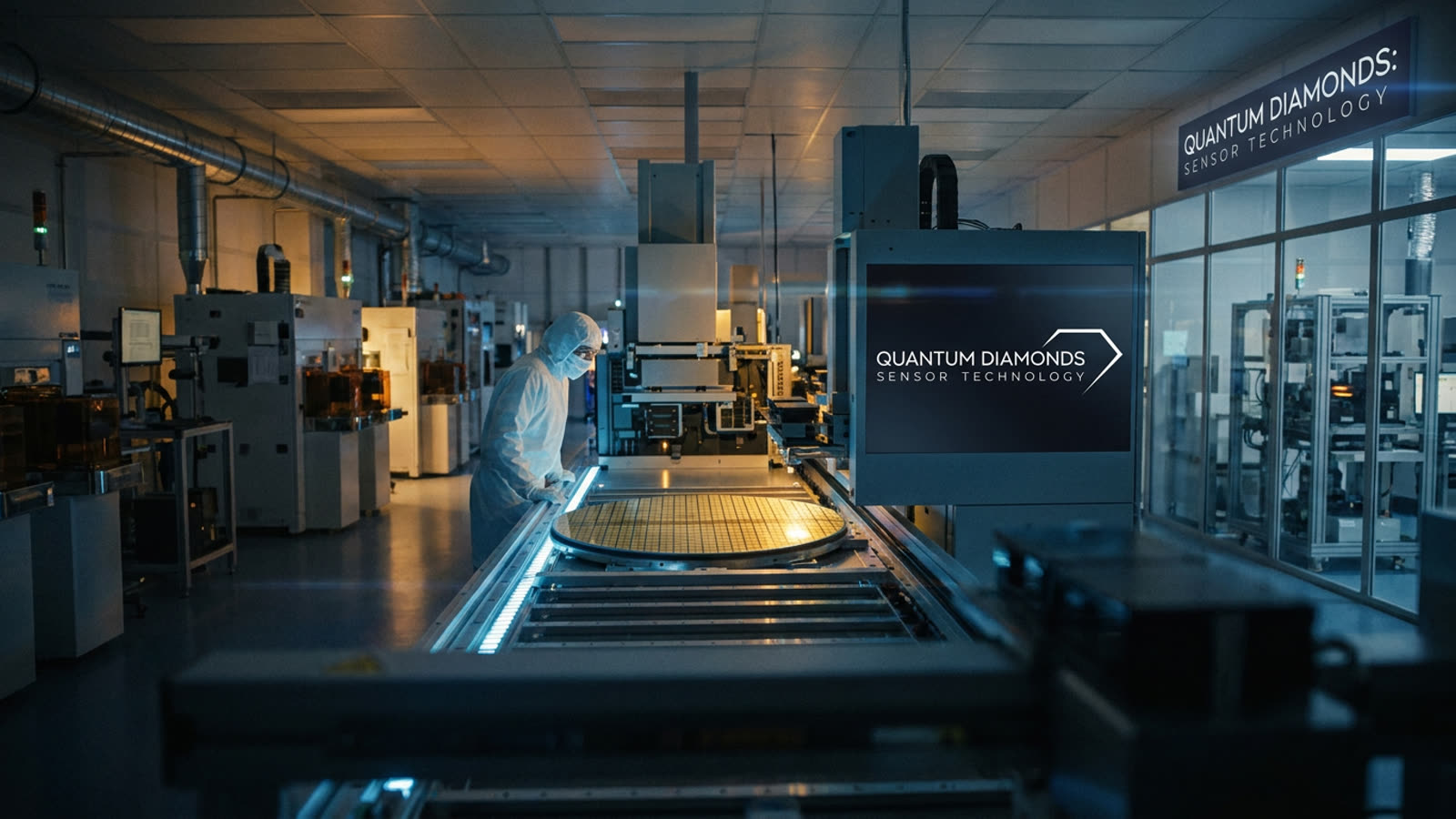
The European Union has spent the better part of a decade lamenting its semiconductor dependence on Asia and America, passing subsidy packages and issuing strategy documents with the urgency of a continent that knows it missed the last industrial revolution. Now Brussels is placing chips—quite literally—on quantum physics, backing QuantumDiamonds, a Munich-based startup that claims its nitrogen-vacancy diamond sensors can detect manufacturing defects invisible to conventional inspection tools.
The company's €50 million Series B, announced this week with participation from the European Innovation Council Fund, represents a particular species of industrial policy bet: one where the underlying science is sound but the path to commercial scale remains foggy. Diamond-based quantum sensors exploit atomic-level imperfections to achieve measurement precision impossible with classical instruments. In semiconductor fabrication, where nanometer-scale defects can doom entire wafer batches, such sensitivity has obvious appeal.
The inspection bottleneck nobody talks about
Chip manufacturing gets most of the attention in sovereignty debates, but inspection and metrology—the art of measuring what you've built—is equally critical and equally concentrated. ASML dominates lithography; KLA Corporation dominates inspection. Both are subject to American export controls that have, at various points, left European and Asian fabs scrambling for alternatives.
QuantumDiamonds is positioning itself as a European answer to this dependency, though the comparison requires generous assumptions about timeline. Current quantum sensor prototypes operate in laboratory conditions with careful temperature control and vibration isolation. Transplanting them into the chaos of a working fab—with its electromagnetic interference, thermal gradients, and relentless throughput demands—is an engineering challenge the company acknowledges will take years to solve.
Why Brussels wrote the check anyway
The EIC's investment thesis appears less about near-term returns than about maintaining optionality. If quantum sensing matures into a viable inspection technology, Europe would prefer not to discover it has no domestic suppliers. The €50 million is, in this framing, an insurance premium against future strategic vulnerability.
This logic has driven similar bets across the bloc's chip strategy, from ASML's extreme ultraviolet monopoly (which Europe stumbled into rather than planned) to ongoing subsidies for Intel and TSMC fabs on European soil. The pattern is consistent: pay now, hope the technology gods smile later.
Our take
QuantumDiamonds may or may not become a commercially significant company. The more interesting signal is what the investment reveals about European industrial policy in 2026: a willingness to fund genuinely speculative technology rather than simply subsidizing established players to build factories. Whether this represents strategic sophistication or expensive wishful thinking will take a decade to determine. In the meantime, Munich has another well-funded deep-tech startup, and Brussels has another line item in its semiconductor independence narrative. Both outcomes were probably the point.