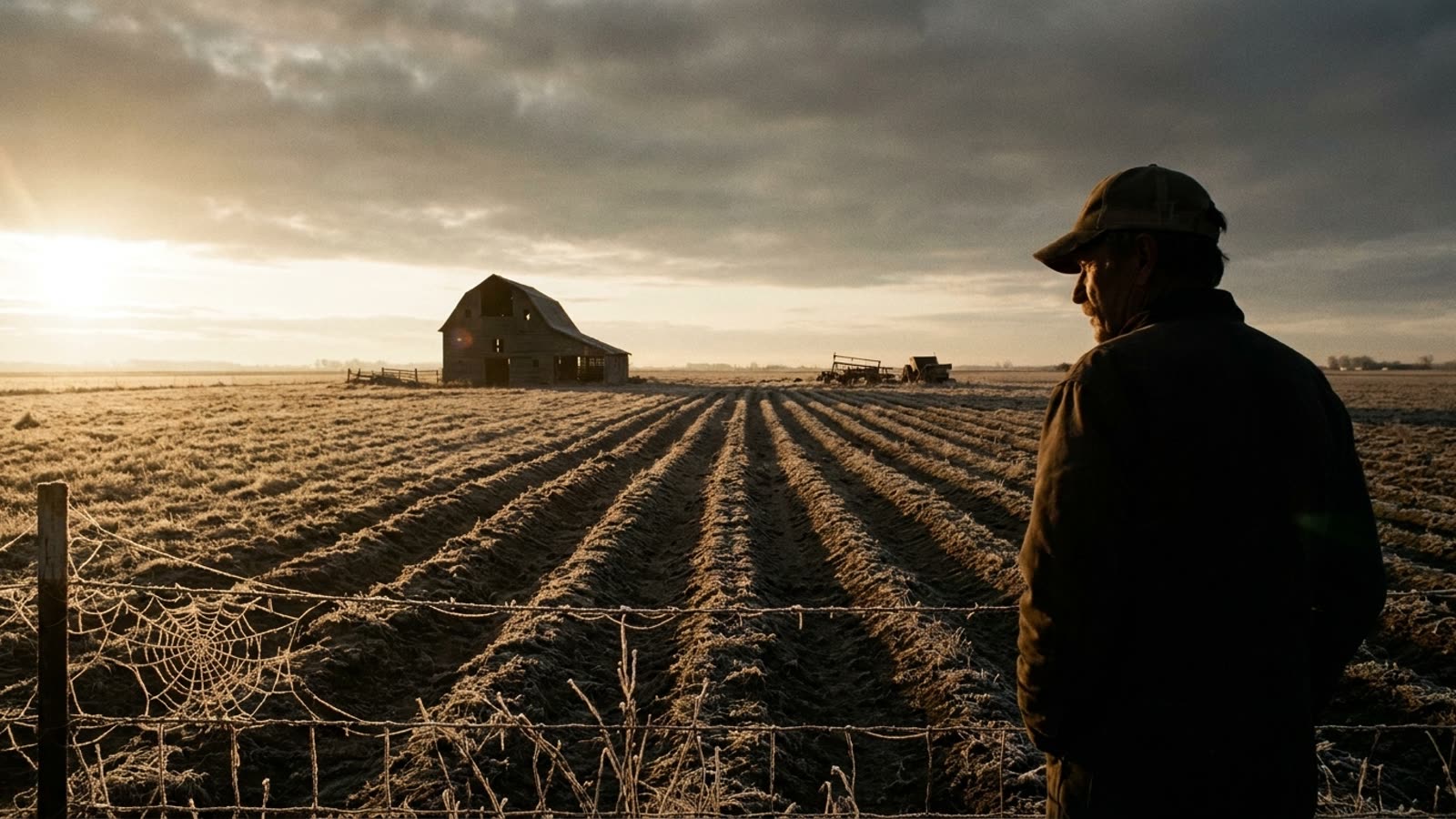
Plant corn in April, harvest in October. In those six months, the world changes — but your crop does not. That production lag, invisible to most consumers, is the engine behind some of the most violent price swings in any market. Economists call it the cobweb model, and it explains why hog farmers go bust every decade while widget factories hum along.
The logic is elegant. Imagine wheat prices spike because last year's drought cut supply. Farmers see the high price and plant more. But wheat takes months to grow. By the time the new crop arrives, everyone planted more — supply floods the market, prices collapse. Farmers plant less the next year. The cycle repeats, tracing a cobweb pattern on a supply-demand graph if you plot it over time. The name comes from those spiraling lines, first sketched in the 1930s by Nicholas Kaldor and others trying to understand why agriculture never found equilibrium.
Why the lag matters more than the crop
The cobweb effect appears anywhere production decisions lock in long before output arrives. Hog cycles are textbook: a piglet takes six months to raise, so when pork prices rise, farmers breed more. Eighteen months later — gestation plus growth — the market drowns in pork and prices crater. Shipping is another: when freight rates soar, companies order new vessels, but shipyards take two years to deliver. By launch day, the boom is over and the ship sails into a glut. The delay turns rational responses into destabilizing overreactions.
Manufacturing avoids this trap because factories adjust fast. If widget demand spikes, you run a second shift next week. If it falls, you slow the line tomorrow. Inventory buffers the gap between decision and output. Agriculture has no such cushion — you cannot un-plant a field or speed up a calf. The biological clock is fixed, so the market whipsaws.
The modern twist: futures and information
Futures markets were supposed to smooth the cycle by letting farmers lock in prices before planting. They help, but they do not eliminate the cobweb. Information spreads faster now — every farmer sees the same USDA report, the same commodity screen. That synchronization can amplify the cycle instead of dampening it. When everyone sees high soybean futures, everyone plants soybeans. The glut arrives on schedule.
The cobweb also explains why subsidies and price floors persist. Governments know the cycle bankrupts farmers not because they are bad at farming but because the market structure is inherently unstable. A guaranteed minimum price breaks the downward spiral, though it creates its own distortions. The European Union's butter mountains and American corn surpluses are cobwebs frozen in policy.
Our take
The cobweb model is Economics 101, but it deserves wider fame. It shows that rationality is not enough — structure matters. Farmers acting sensibly create chaos because the production lag turns foresight into blindness. The lesson applies beyond agriculture: any industry with long lead times and inelastic supply — energy, real estate, semiconductors — risks the same spiral. The cobweb is not a market failure. It is the market working exactly as the calendar dictates, which is sometimes indistinguishable from failure.