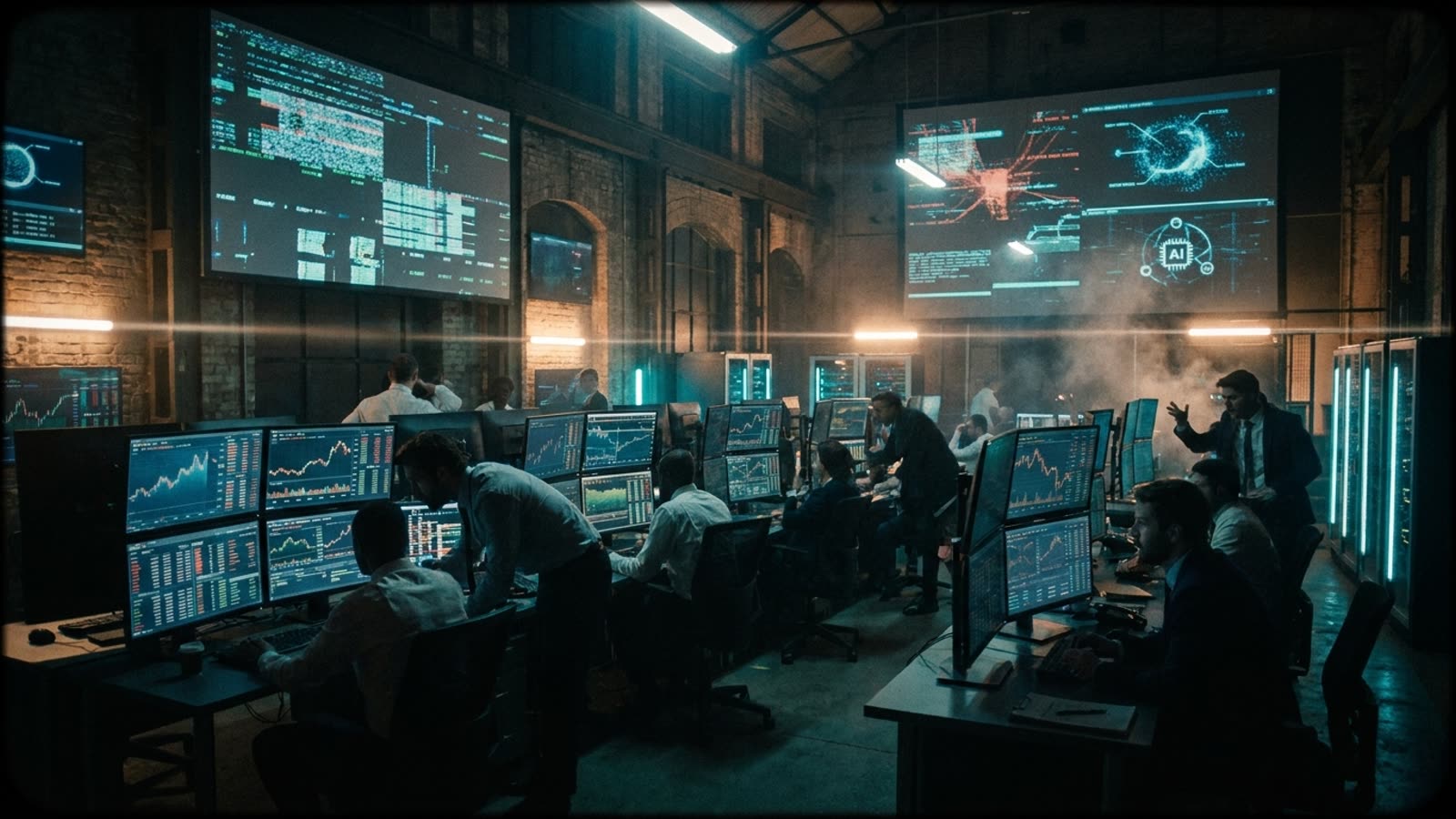
The cryptocurrency industry has spent fifteen years building elaborate security architectures, multi-signature wallets, and bug bounty programs. All of it assumes one thing: that when an attacker finds a vulnerability, defenders will have time to respond. That assumption is about to become obsolete.
Security researchers are increasingly warning that the next generation of crypto exploits will operate at machine speed—not the hours or days that current incident response teams train for, but milliseconds. The convergence of quantum computing advances, AI-powered vulnerability scanning, and automated exploit deployment means that by the time a protocol's Telegram alert channel lights up, the treasury could already be empty.
The speed problem is structural
Traditional finance solved this decades ago with circuit breakers, trading halts, and centralized kill switches. Decentralized protocols, by ideological design, lack these mechanisms. A smart contract cannot pause itself when it detects anomalous behavior unless that capability was explicitly coded in—and most were not. The immutability that makes blockchain trustworthy also makes it unforgiving.
The numbers are sobering. In the 2022 Ronin bridge hack, attackers had nine days before anyone noticed $625 million was missing. More recent exploits have compressed that timeline to hours, then minutes. The trajectory points toward attacks that complete before the first human learns they have begun.
Quantum is not the only threat
While quantum computers capable of breaking current cryptographic standards remain years away, the more immediate danger comes from AI systems that can analyze codebases at superhuman speed. Large language models are already being fine-tuned to identify smart contract vulnerabilities, and the same tools available to white-hat auditors are available to adversaries. The asymmetry favors attackers: they need to find one flaw, while defenders must secure everything.
Some protocols are experimenting with automated defense systems—AI guardians that can detect and respond to exploits without human intervention. But these introduce their own risks: a false positive that freezes legitimate transactions could trigger the very panic it was designed to prevent.
Our take
The crypto industry's libertarian ethos has always been in tension with the practical need for guardrails. That tension is about to be tested at machine speed. The protocols that survive the next decade will be those that find ways to build in automated circuit breakers without sacrificing the decentralization that gives them value. The ones that cling to ideological purity may find themselves explaining to their communities why the treasury vanished in the time it takes to read this sentence.