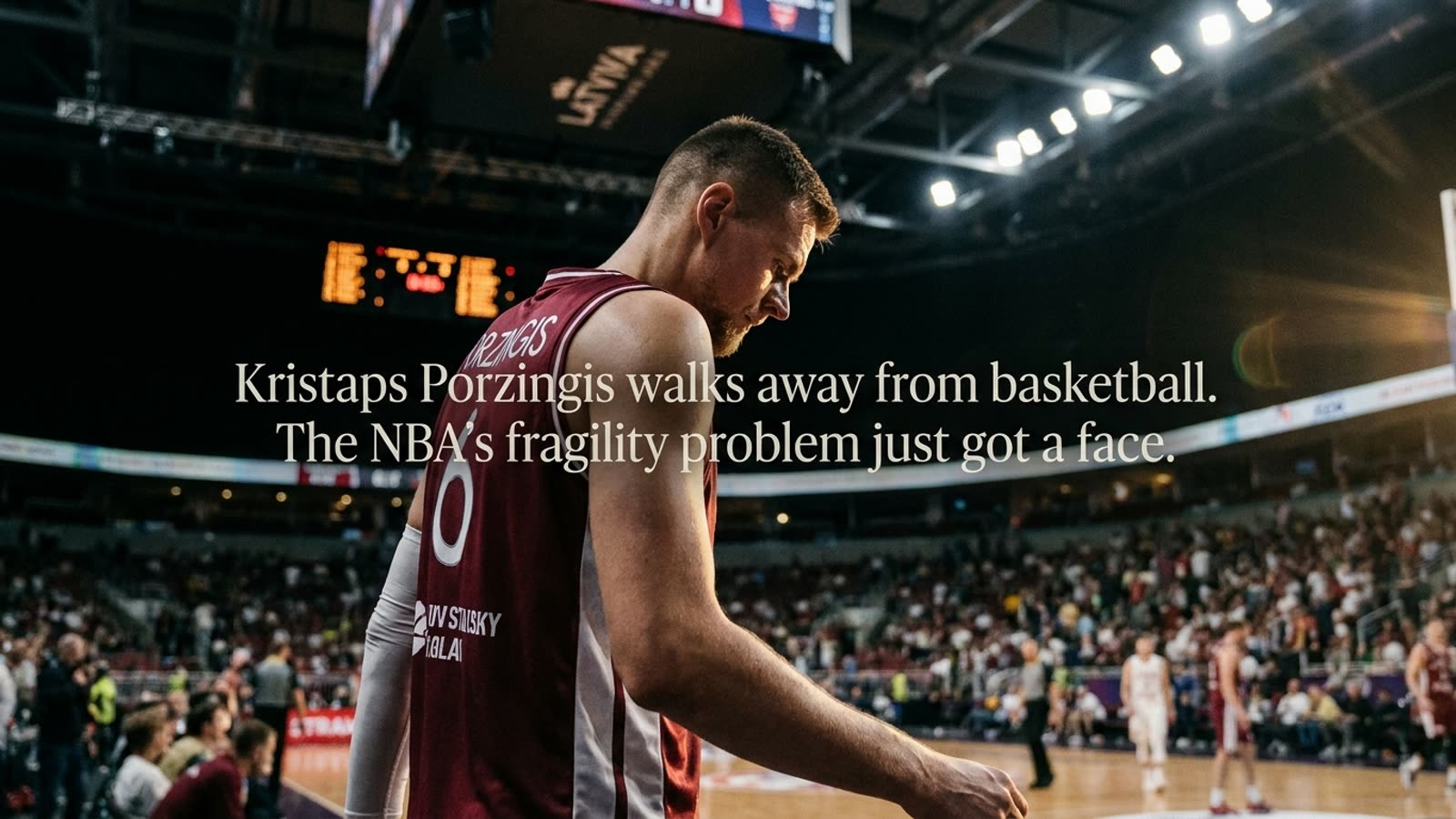
Kristaps Porzingis has not played a single game for the Golden State Warriors this season. Now he may never play another game for anyone.
The 7-foot-3 Latvian announced Friday that he will "step away" from the NBA to prioritize his health—a carefully worded statement that stopped short of retirement but carried the unmistakable weight of finality. At 31, Porzingis has endured torn ACLs, bone bruises, plantar fasciitis, and a catalogue of lower-body ailments that would fill a medical textbook. His departure is not a surprise to anyone who has watched him limp through the past five seasons. What is surprising is that he is the one saying it out loud.
The unicorn's curse
When Porzingis entered the league in 2015, he was marketed as the future—a 7-foot-3 stretch big who could shoot threes, block shots, and run the floor like a guard. The term "unicorn" was coined for him, a creature so rare and wondrous that it defied categorization. But the very attributes that made him special also made him vulnerable. His frame, all length and angles, was never built for the NBA's relentless 82-game grind plus playoffs. He has played more than 60 games in a season exactly twice in eleven years.
The Warriors acquired him last summer as a reclamation project, hoping that reduced minutes and careful load management might coax one more productive season from his battered body. They got zero games instead. Porzingis reportedly aggravated a leg injury during training camp and never recovered enough to take the court.
A league in denial
Porzingis's exit arrives at an awkward moment for the NBA. The league has spent the past decade celebrating its giants—Giannis Antetokounmpo, Joel Embiid, Victor Wembanyama—while quietly watching them miss significant stretches to injury. Embiid has never played more than 68 games in a season. Wembanyama, just two years into his career, has already dealt with knee concerns. The pattern is not coincidental; it is structural. The modern NBA asks its biggest players to move like perimeter players, absorbing lateral stresses their joints were never designed to handle.
Teams have responded with load management, minute restrictions, and armies of sports scientists. What they have not done is acknowledge that the product itself may be unsustainable at its current intensity. Porzingis's decision to prioritize his long-term health over his career is, in that sense, a quiet indictment of a system that treats bodies as depreciating assets.
Our take
Porzingis deserves credit for choosing himself over the game. Too many athletes play until they cannot walk, then spend their retirements paying the price. But his departure should also prompt uncomfortable questions in league offices. The NBA has never been more athletic, more entertaining, or more punishing on the human frame. At some point, the bill comes due. Porzingis just handed the league the receipt.