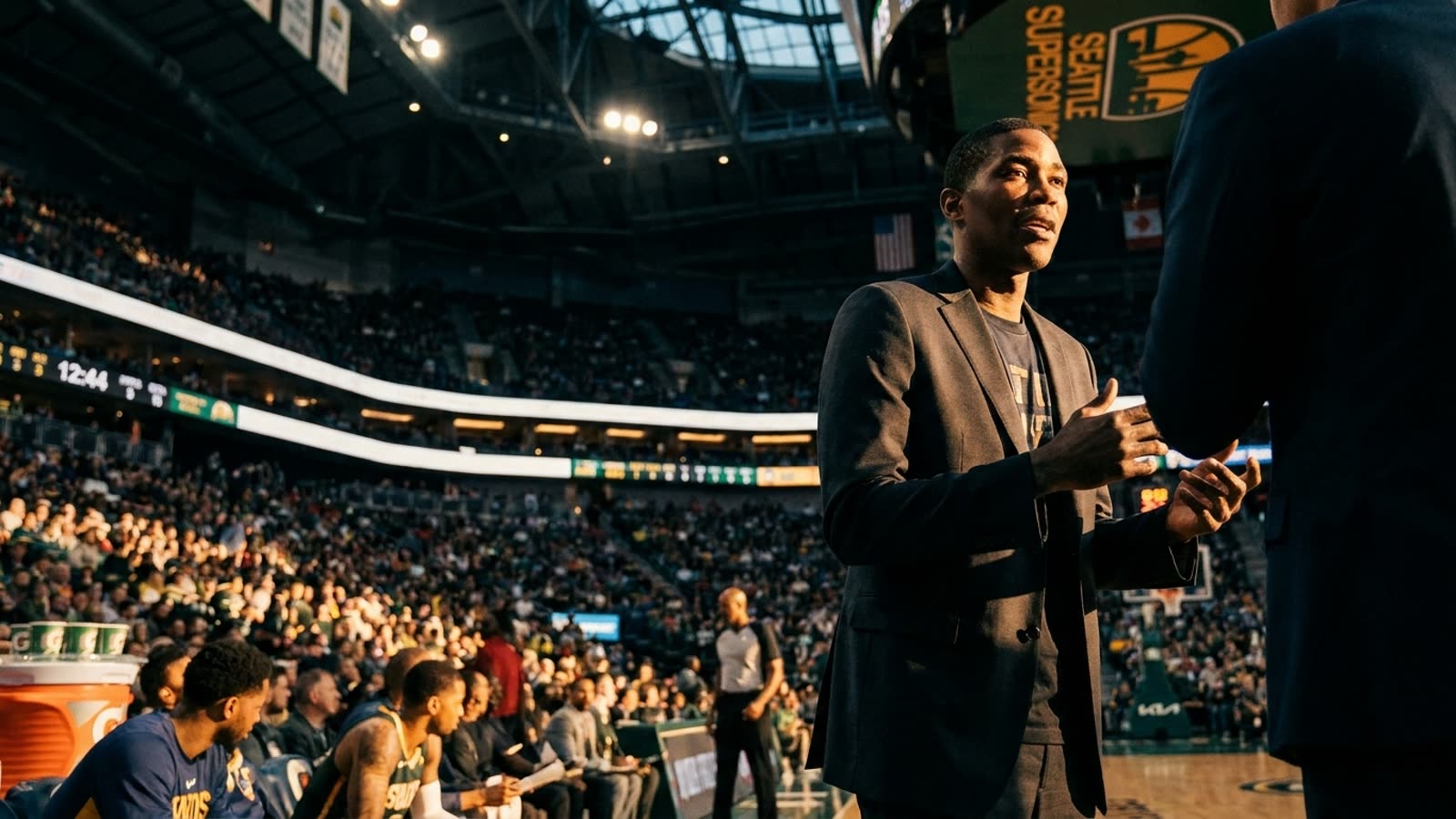
For nearly two decades, Seattle has occupied a peculiar position in American professional sports: a major market with a championship-caliber arena, a rabid basketball culture, and absolutely no NBA team to show for it. The SuperSonics departed for Oklahoma City in 2008, leaving behind a wound that never quite healed. Now, according to Jamal Crawford—the Seattle native and three-time Sixth Man of the Year who has been working as an adviser to the expansion bid led by Kraken owner Samantha Holloway—the city's return to the league "feels different" this time.
He is not wrong to sense a shift.
The Holloway advantage
What separates this bid from the half-dozen that have flickered and died since 2008 is the ownership structure. Holloway's group already operates the NHL's Seattle Kraken and controls Climate Pledge Arena, the $1.15 billion renovation of the old KeyArena that opened in 2021. The building was designed with NBA specifications in mind; the bones are already there. Previous suitors had to promise arenas that existed only on napkins. Holloway can promise a building that exists, is profitable, and sits in the heart of downtown Seattle.
Crawford's involvement adds credibility of a different kind. He grew up in the Rainier Beach neighborhood, starred at the University of Washington, and spent years lobbying publicly for the Sonics' return. His presence signals to the league that this is not a mercenary play by out-of-town financiers—it is a homecoming.
The expansion math
The NBA has been telegraphing a two-team expansion for years, with Seattle and Las Vegas the presumptive winners. Commissioner Adam Silver has said repeatedly that the league will expand "when the time is right," a phrase that has become a running joke among Seattle fans. But the economics have shifted. Media rights deals signed in 2024 are generating record revenue, and expansion fees—likely north of $4 billion per franchise—would provide a windfall that owners could split.
Las Vegas, with its new arena and the gravitational pull of the Raiders and Golden Knights, is considered a lock. Seattle's case rests on history, market size, and the argument that the Pacific Northwest deserves a team. The Kraken's success—strong attendance, engaged corporate sponsors—has demonstrated that Seattle can support a second major winter sport.
What remains uncertain
Timelines are slippery. Silver has suggested a decision could come within the next two years, but the league has no obligation to move quickly. There are also questions about whether Holloway's group will face competition from other Seattle-based bidders, and whether the NBA will extract concessions—revenue-sharing tweaks, salary-cap adjustments—before greenlighting expansion.
Crawford, for his part, is playing the long game. He has been careful not to overpromise, telling reporters that he is "just trying to help" and that the process will take time.
Our take
Seattle's basketball exile has always been more about bad timing and worse politics than about the city's viability as a market. The Sonics left because a previous ownership group wanted public stadium money that voters refused to provide; Oklahoma City was simply willing to write a bigger check. That era is over. Climate Pledge Arena exists. Holloway has the capital and the operational track record. Crawford has the local credibility. If the NBA expands—and it will—Seattle should be first in line. The only question is whether the league will stop teasing and finally make it official.