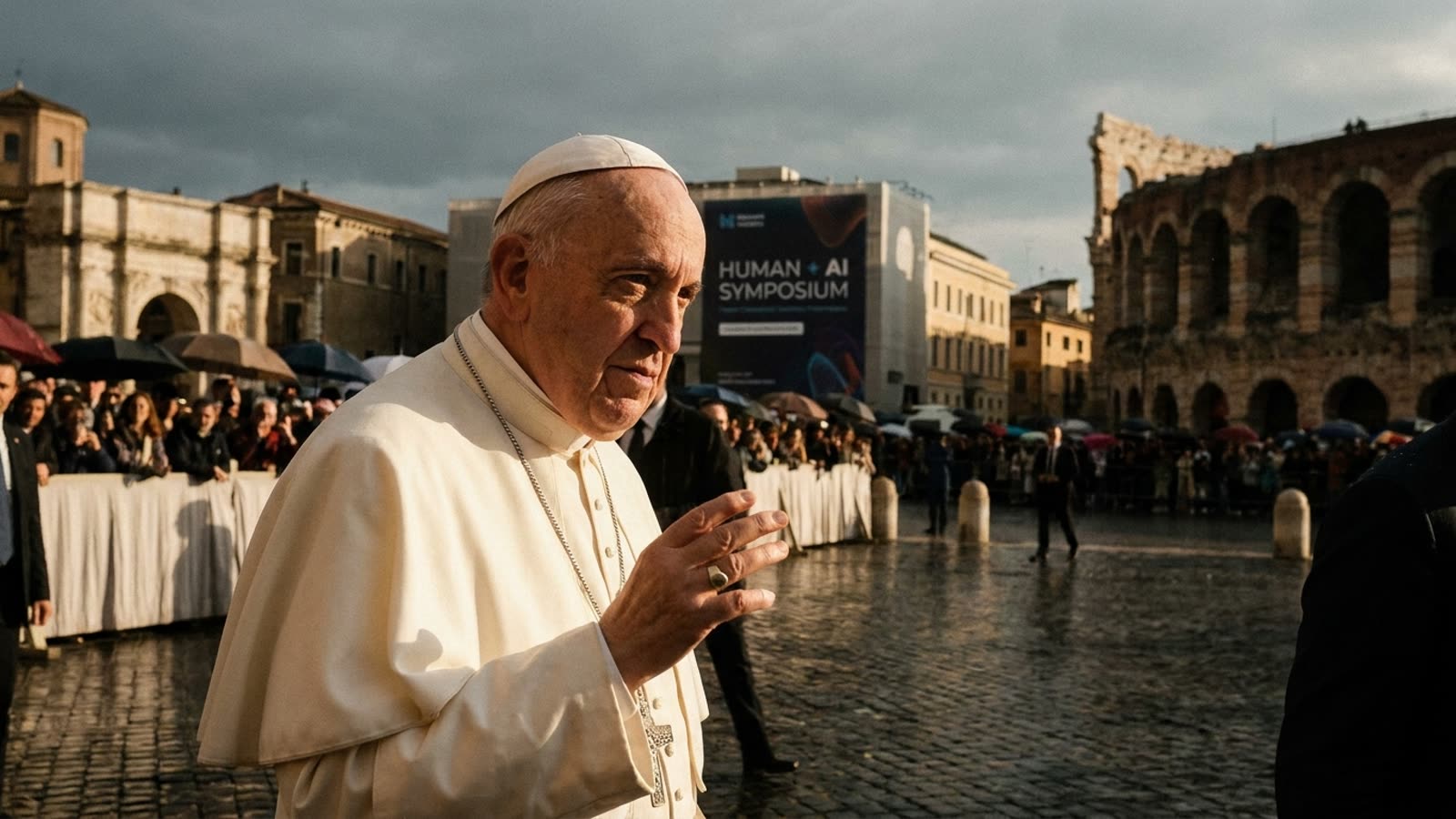
The Vatican's new encyclical on artificial intelligence arrives dressed as a technology policy document but reads like an existential indictment of the industry building these systems.
Pope Francis, now 89 and increasingly focused on legacy-defining pronouncements, has produced a text that barely engages with the technical debates consuming AI researchers—alignment, interpretability, capability scaling. Instead, he aims at something the industry would prefer to leave unexamined: the anthropology embedded in its products. What do you believe a human being is, the encyclical asks, when you design a system to replace human judgment?
The dignity question
The document's central argument is that AI systems inevitably encode assumptions about human nature, and that most current systems encode a reductive one. When a hiring algorithm screens candidates, it operationalizes a theory of human potential. When a content recommendation engine optimizes for engagement, it assumes something about what people are for. Francis argues these implicit theories tend toward what he calls "technocratic reductionism"—treating humans as optimizable inputs rather than bearers of inherent dignity.
This isn't new territory for Catholic social teaching, which has spent a century critiquing both communist collectivism and market individualism for similar reasons. But applying that framework to AI yields uncomfortable questions for companies that prefer to discuss their products in terms of efficiency gains and user empowerment.
Why the timing matters
The encyclical lands as AI governance debates have calcified into familiar positions: safety researchers warning of existential risk, civil society groups focused on bias and labor displacement, industry pushing self-regulation. Francis sidesteps these categories entirely. He's less interested in whether AI might become superintelligent than in whether the humans building it have become spiritually impoverished.
The Vatican has been building toward this intervention for years, hosting AI ethics workshops and consulting with researchers from DeepMind, Microsoft, and various universities. But the final document bears little trace of those technical conversations. It's addressed not to engineers but to the broader public, urging them to resist what Francis calls the "colonization of the imagination" by technological determinism.
The industry response
Silicon Valley's reaction has been predictably muted. Most executives will treat the encyclical as they treat all religious pronouncements—respectfully irrelevant. But Francis isn't trying to change corporate behavior directly. He's trying to shape the cultural context in which AI policy gets made, giving ammunition to regulators and activists who want to move beyond narrow technical fixes toward broader questions about the kind of society AI is building.
Whether that works depends on whether anyone outside Catholic intellectual circles takes the argument seriously. The document's influence will be measured not in product changes but in whether phrases like "technocratic reductionism" start appearing in regulatory proceedings and editorial pages.
Our take
The encyclical's critics will dismiss it as a religious leader opining on matters beyond his expertise. They're missing the point. Francis isn't claiming to understand transformer architectures; he's claiming that the people who do understand them have systematically avoided the most important questions about their work. That's a harder charge to refute, and the industry's preference for discussing AI in purely technical terms is itself evidence for the prosecution.