The AI industry has spent three years promising that its products will transform civilization. What it neglected to mention was that the transformation would begin with the electrical grid, the water table, and the property values of communities that never asked to host the future.
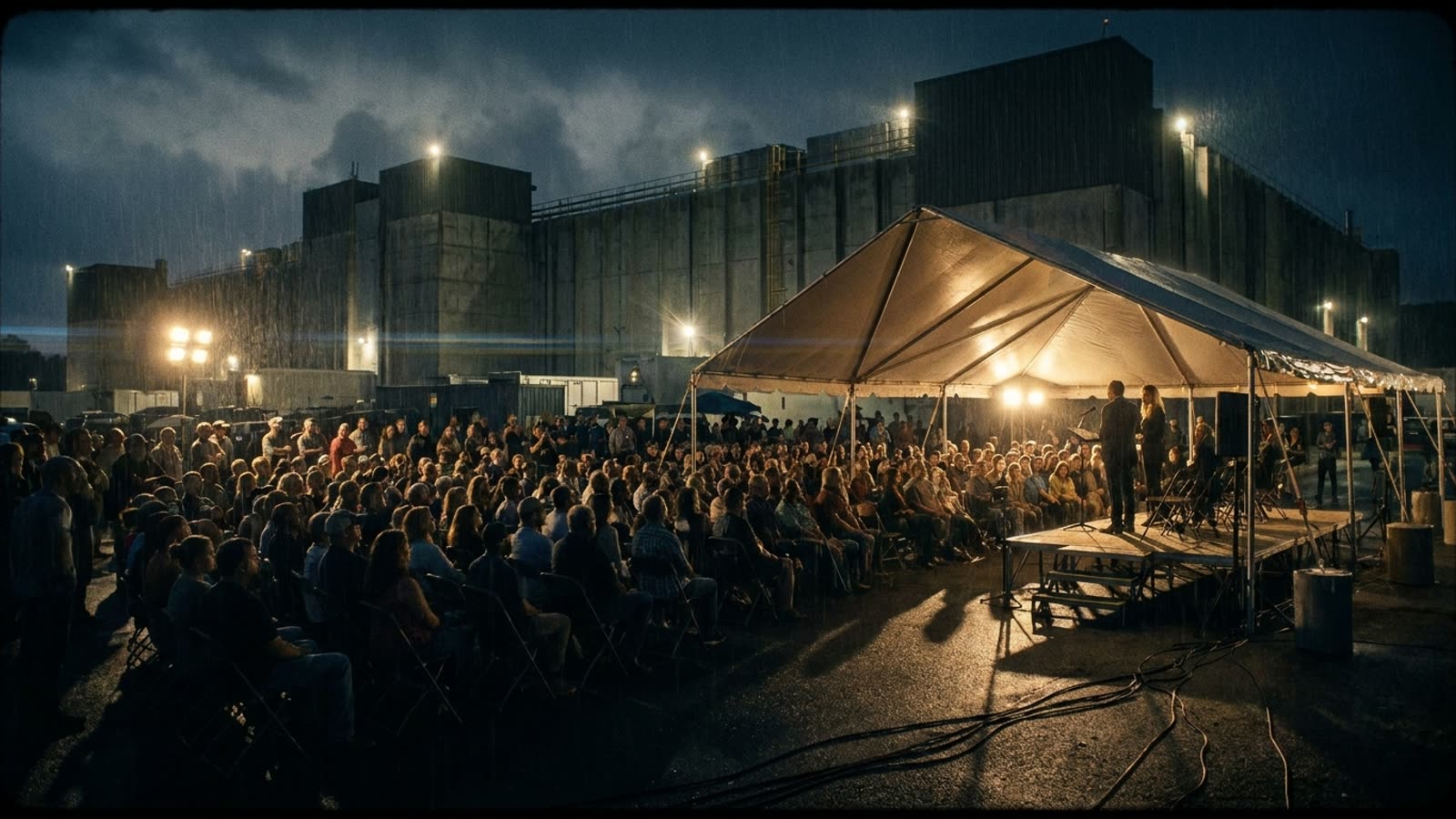
In Pennsylvania this week, residents packed a town hall meeting to denounce the data center construction boom reshaping their region. The complaints were familiar—noise, water consumption, strain on local infrastructure, tax incentives that benefit corporations while burdening schools—but the intensity was new. These weren't professional activists. They were homeowners watching their quiet towns become industrial zones to power chatbots.
The geography of compute
Data centers have always required somewhere to exist, but the AI era has transformed them from modest server farms into power-hungry behemoths that rival small cities in their energy demands. A single large facility can consume as much electricity as 80,000 homes. The sites cluster where power is cheap and regulation is light, which increasingly means rural communities in states like Pennsylvania, Virginia, and Texas that lack the political infrastructure to resist.
The pattern is predictable: developers arrive with promises of jobs and tax revenue, secure approvals before residents fully understand what's coming, then break ground on facilities that operate around the clock with skeleton crews while drawing resources that were meant for everyone else. By the time the community organizes, the concrete is already poured.
The Lake Tahoe precedent
Pennsylvania isn't alone. In Nevada, Lake Tahoe residents recently lost their energy supplier entirely—the utility redirected capacity to serve data center clients offering more lucrative contracts. The message was clear: when compute and communities compete for the same electrons, compute wins.
This dynamic will only intensify. Every major AI lab is racing to build or secure capacity, and every race requires physical infrastructure somewhere. The industry's carbon-neutral pledges and efficiency improvements cannot change the fundamental math: training and running large models requires staggering amounts of power, and that power must come from somewhere.
Our take
The Pennsylvania town hall is a leading indicator, not an anomaly. The AI industry has operated for years on the assumption that its infrastructure challenges are engineering problems to be solved with better chips and cleaner energy. They are not. They are political problems, and political problems require consent. The communities being asked to sacrifice their quality of life for the AI boom are beginning to realize they never agreed to the bargain—and they vote. The industry would be wise to start treating local opposition as a strategic risk rather than a public relations nuisance, because the backlash is no longer theoretical.