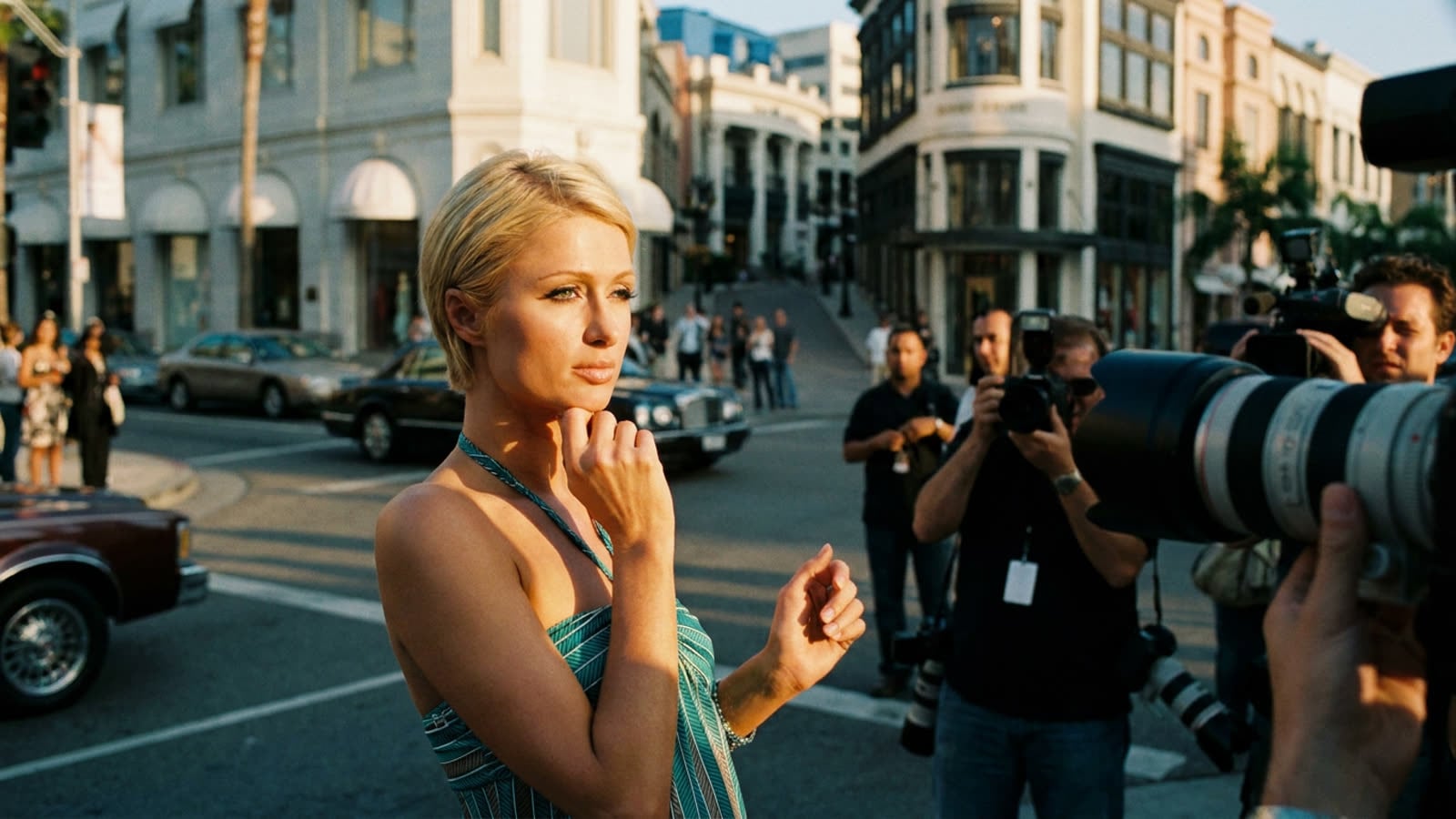
The latest side-by-side photographs of Paris Hilton circulating this week invite the familiar parlor game: good genes or good doctors? But the question itself is outdated, a relic from an era when celebrities pretended their faces simply happened to them. Hilton, now forty-five, has never really played that game. She built an empire on the understanding that image is product, and product requires quality control.
The original face of the feed
Before Kylie Jenner's lip kits, before the Kardashian contouring tutorials, before "Instagram face" became a diagnostic category, there was Paris Hilton on the red carpet in 2003, teaching a generation that looking like yourself was optional. She did not invent cosmetic enhancement, but she may have invented the brazenness about it—the refusal to pretend that beauty was accidental rather than curated.
The photographs from her early twenties show a woman already committed to a specific aesthetic: the ski-slope nose, the perpetually startled brow, the lips that suggested more than nature provided. By the time she was thirty, these choices had calcified into a template that thousands of young women brought to their own consultations.
The maintenance economy
What the current images reveal is not transformation but preservation. Hilton's face in 2026 looks remarkably similar to Hilton's face in 2010—which is, of course, the point. The modern celebrity beauty project is not about looking younger; it is about looking the same. The goal is to arrest time at whatever moment the algorithm determined was peak engagement.
This requires an infrastructure that barely existed when Hilton first posed for paparazzi: the dermatologists, the facialists, the "skin coaches," the LED masks, the hyperbaric chambers, the personalized peptide serums. The industry she helped create now generates tens of billions annually, and its most successful clients are the ones who look like they have not aged a day since their last magazine cover.
Our take
The honest answer to "good genes or good docs" is: both, plus an army of aestheticians, plus twenty years of treating one's face as a brand asset requiring constant investment. Hilton understood before almost anyone that in the attention economy, your face is your logo, and logos do not get wrinkles. Whether this represents liberation or imprisonment depends largely on whether you are the one writing the checks.