The history of human socializing is, at its core, a history of people standing around in rooms that belong to someone they know. Before there were clubs, before there were restaurants, before there were even taverns in any recognizable sense, there were house parties — gatherings held in domestic spaces where the host controlled the guest list, the music, and the precise ratio of strangers to friends. Every subsequent innovation in nightlife has attempted to improve upon this formula. None has succeeded in replacing it.
The house party persists because it solves problems that commercial venues cannot. There is no cover charge, no dress code enforced by someone younger than you, no ambient sense that your presence is being monetized by the minute. The music is chosen by a person whose taste you presumably trust, or at least tolerate. The lighting flatters. The bathroom is clean, or at least you know whose fault it is when it isn't.
The economics of intimacy
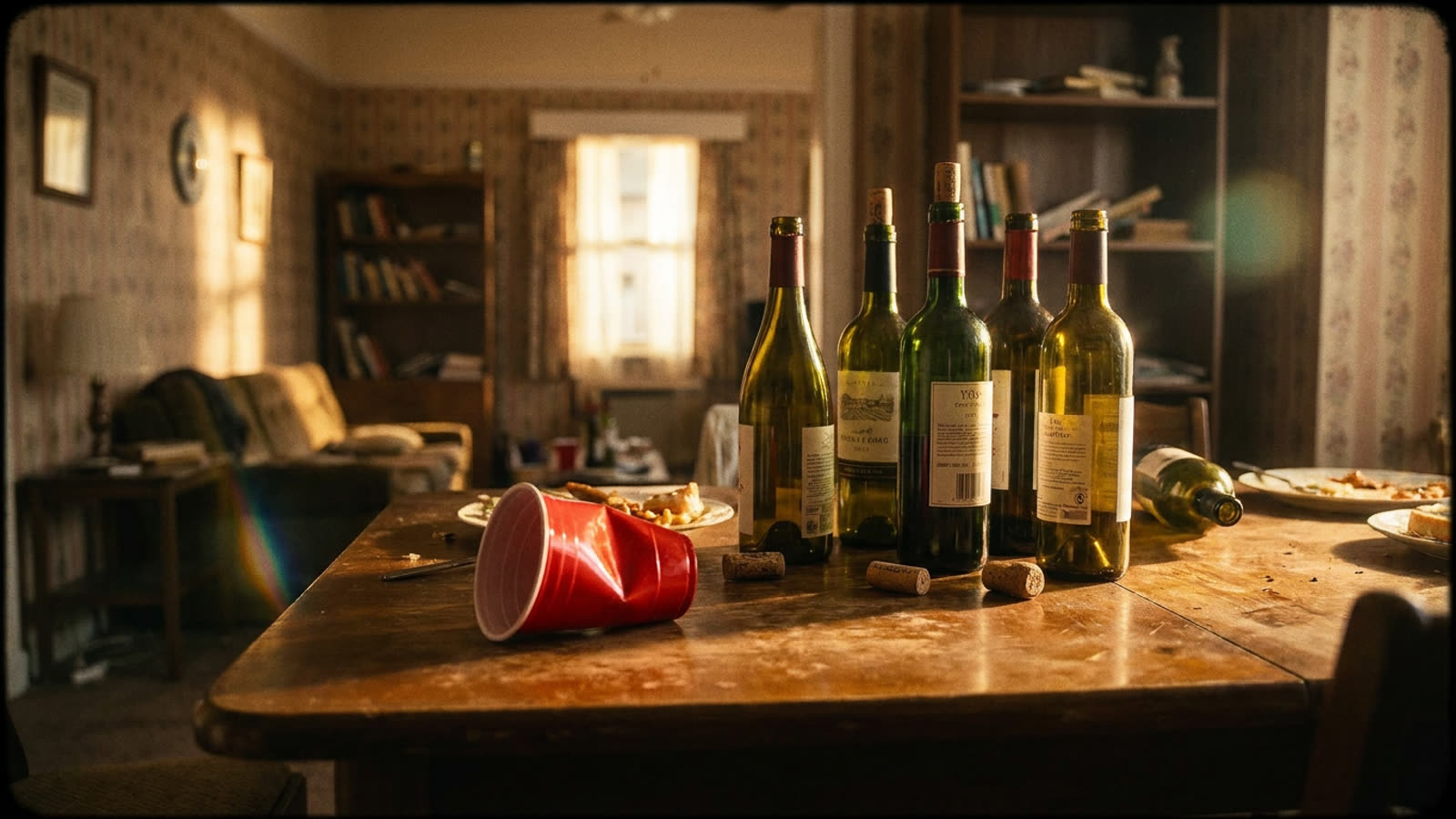
Nightlife businesses operate on a fundamental tension: they must pack enough bodies into a space to cover rent while maintaining the illusion of exclusivity that justifies their prices. The house party faces no such constraint. Its economics are primitive and elegant — someone buys too much alcohol, guests bring more, and whatever remains becomes the host's reward for scrubbing wine stains from the carpet. The transaction is social rather than commercial, which means the ambient anxiety of being a customer disappears entirely.
This matters more than it might seem. Commercial nightlife requires constant, low-grade performance: you are being watched by staff assessing your spending potential, by other patrons assessing your social value, by the venue itself through its architecture of visibility. The house party inverts this dynamic. You were invited, which means someone already decided you belong.
The pandemic's accidental gift
The years of restricted gathering did something unexpected to domestic entertaining. People who had never hosted learned to cook. Those who already cooked learned to cook better. The home bar, once a dusty cabinet of inherited bottles, became a genuine project. When restrictions lifted, many discovered they had accidentally built the infrastructure for a richer social life than they had previously known.
The dinner party — the house party's more structured cousin — experienced a particular renaissance. Restaurants had become logistically fraught, reservation-dependent, expensive in ways that felt newly absurd. Meanwhile, people had spent months perfecting their sourdough, their pasta, their cocktail ratios. The calculus shifted. Why spend a significant sum to sit at a cramped table and shout over music when you could spend a fraction of that on ingredients and actually hear your friends speak?
The algorithm cannot replicate the guest list
Digital platforms have disrupted nearly every form of human connection, but they have notably failed to improve upon the house party. Dating apps have transformed romance. Social media has transformed friendship maintenance. Event platforms have transformed concert-going and professional networking. Yet no technology has successfully intermediated the experience of being invited to someone's home.
This is because the house party's value proposition is fundamentally curatorial. The host has selected these specific people, wagering that their combination will produce something interesting. This is a creative act that cannot be algorithmed. The friend-of-a-friend you meet at a house party arrives pre-vetted in a way that no app can replicate. Someone whose judgment you trust has already decided this person is worth knowing.
Our take
The house party endures because it is the original social technology, and like most original technologies, it turns out to be remarkably difficult to improve upon. Every generation rediscovers it, usually after spending their twenties overpaying for the privilege of standing in loud, crowded rooms owned by strangers. The realization arrives like a minor revelation: the best nights happen in living rooms, the best conversations happen in kitchens, and the only cover charge that matters is bringing a bottle of something decent and staying long enough to help with the dishes.