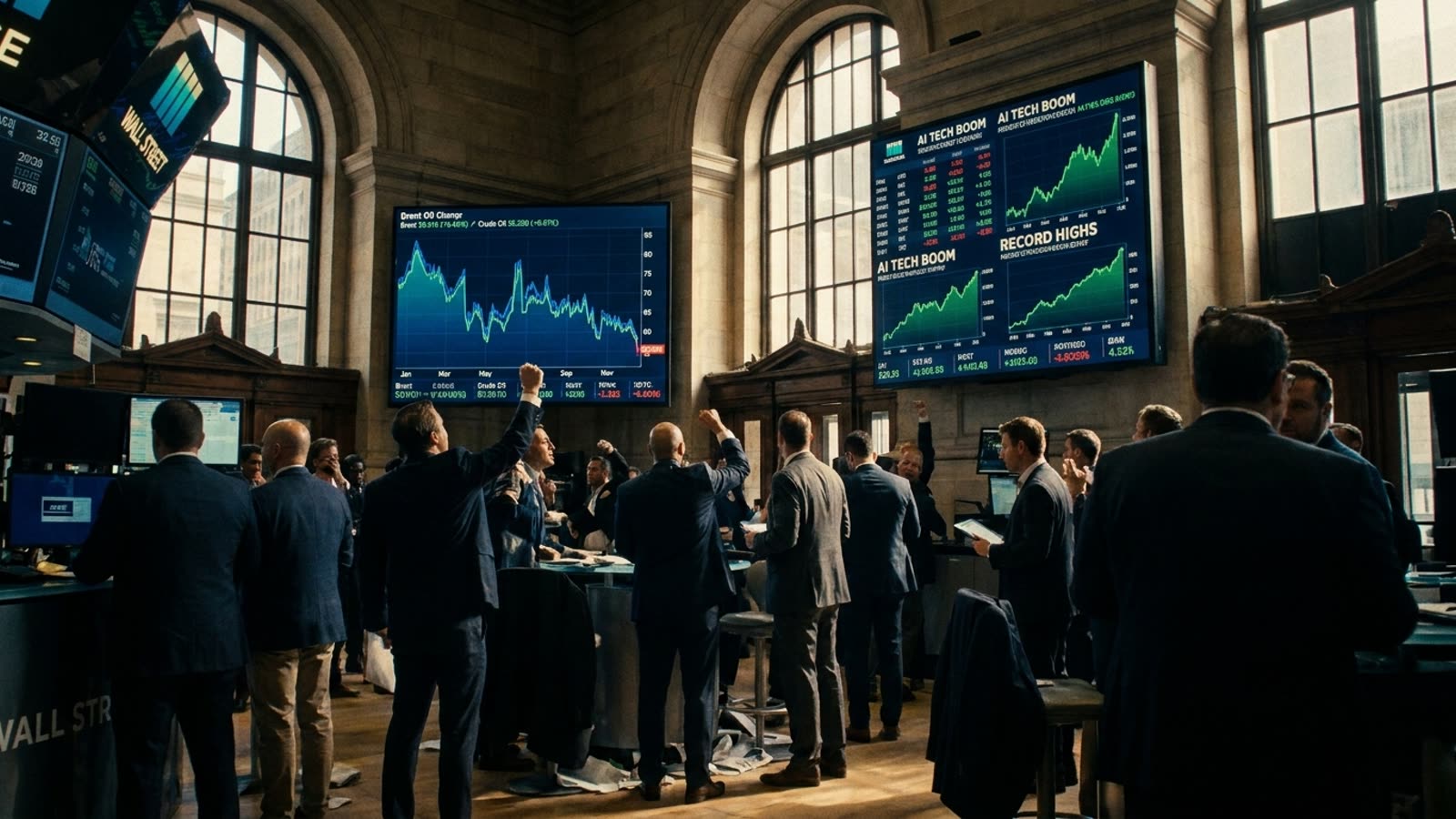
Two of the most consequential prices in global markets—oil and the S&P 500—are sprinting in opposite directions this week, and the gap tells you everything about where capital believes the future lies.
Brent crude is on track for its sharpest weekly decline since late 2024, sliding toward $72 a barrel as traders price in a meaningful probability that the Strait of Hormuz will remain open for business. The nascent US-Iran framework, extended earlier this week pending final White House approval, has drained the geopolitical risk premium that had propped up crude since the spring escalation. Tanker insurers are quietly revising war-risk surcharges downward. Options markets show implied volatility in Brent falling faster than at any point since the pandemic recovery.
The AI offset
Equities, by contrast, are partying like it's 1999—or perhaps 2021. The S&P 500 and Nasdaq both touched fresh all-time highs Thursday, powered almost entirely by a handful of AI-adjacent mega-caps. Nvidia, Microsoft, and Alphabet have added more than $900 billion in combined market value this month alone. The rally has a familiar, narrow feel: breadth indicators are weakening even as the index climbs, and the equal-weighted S&P is lagging its cap-weighted sibling by the widest margin since the meme-stock summer.
What connects the two moves is a single narrative: the world is getting safer, and technology is getting smarter. Falling oil prices ease inflation fears, which keeps the Fed on hold, which lets growth stocks run. The logic is circular but, for now, self-reinforcing.
Fragility beneath the surface
The trouble is that both legs of the trade rest on assumptions that could reverse quickly. Hormuz diplomacy is not a done deal; Tehran's hardliners have scuttled frameworks before, and the Trump administration's internal divisions on Iran policy are well documented. A single missile test or tanker incident could send Brent back above $85 within days.
On the equity side, the AI thesis is priced for perfection. Anthropic's eye-popping funding round—reported this week—has pushed private valuations into territory that assumes enterprise AI adoption will accelerate on a near-vertical curve. Public-market multiples reflect similar optimism. If second-quarter earnings disappoint, or if the Fed surprises with hawkish rhetoric at its June meeting, the same leverage that amplified the rally will work in reverse.
Our take
Markets love a clean story, and "peace dividend plus AI boom" is as clean as they come. But the divergence between oil and stocks is less a sign of rational reallocation than of selective attention. Crude is pricing in geopolitical hope; equities are pricing in technological certainty. Both bets may prove correct—but the odds that both prove correct simultaneously are lower than current prices imply. Enjoy the party, but know where the exits are.