Nscale wants to be the infrastructure backbone of the AI age, and it has persuaded enough investors to attempt a $35 billion initial public offering on the strength of that ambition. The problem is that its crown jewel—a sprawling data center campus in West Virginia—remains mired in the unglamorous realities of concrete, permits, and community politics. If Nscale cannot deliver on this single mega-project, the valuation thesis collapses; if it can, the company becomes a template for a new class of "neoclouds" challenging Amazon, Microsoft, and Google on their own turf.
The stakes extend well beyond one IPO. Nscale's West Virginia campus is a test case for whether the AI infrastructure boom can actually be built at the speed capital markets are pricing in.
The Neocloud Proposition
Neoclouds like Nscale, CoreWeave, and Lambda Labs emerged to serve a specific need: GPU-dense computing for AI training and inference, delivered faster and with fewer legacy constraints than the hyperscalers. Nvidia's backing of Nscale signaled confidence that demand for AI compute would outstrip what AWS and Azure could provision. The thesis was compelling enough to attract sovereign wealth funds and growth-equity titans.
But neoclouds are not software companies. They must secure land, negotiate power contracts, hire construction crews, and navigate zoning boards—activities that do not scale with a few keystrokes. Nscale's West Virginia site was chosen for cheap electricity and available acreage. What the spreadsheets did not fully capture was the friction.
Construction Realities
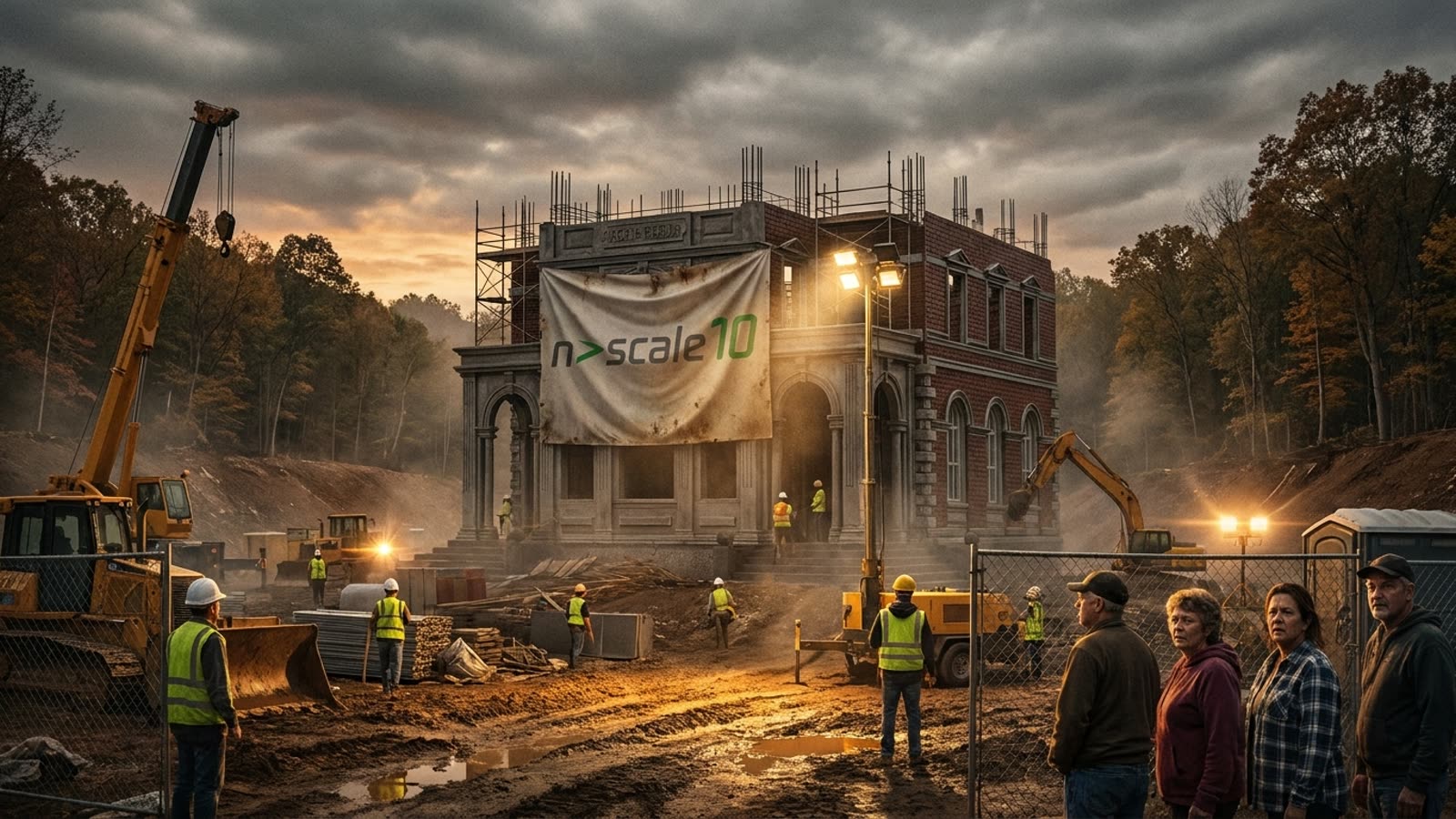
The campus is behind schedule. Supply-chain delays for high-voltage electrical equipment, a shortage of skilled tradespeople in the region, and weather interruptions have pushed timelines out by months. Financing for later phases remains contingent on hitting milestones that now look optimistic. Meanwhile, local opposition has coalesced around concerns about water usage, noise, and the strain on roads never designed for heavy truck traffic.
None of these problems is insurmountable, but each one chips away at the narrative of frictionless growth that justifies a $35 billion valuation. Nscale must demonstrate that it can execute in the physical world with the same efficiency investors expect from software.
A Sector-Wide Warning
Nscale's struggles are not unique. Across the United States, data center projects face pushback from communities worried about resource consumption and from utilities uncertain they can deliver the power these facilities demand. Texas, Virginia, and now West Virginia have all seen local resistance intensify as the scale of AI infrastructure becomes tangible.
The irony is that the AI boom's success depends on building things—lots of them, quickly, in places that did not ask for them. The companies that master this unglamorous work will own the picks and shovels of the next computing era. Those that stumble will discover that investor enthusiasm is a poor substitute for a completed building.
Our take
Nscale's IPO is a referendum on whether the AI infrastructure thesis can survive contact with reality. The company has genuine demand, serious backers, and a differentiated strategy. But a $35 billion valuation assumes execution that has not yet materialized. If Nscale threads the needle in West Virginia, it will have earned its place alongside the hyperscalers. If it does not, the IPO will become a cautionary tale about the distance between AI hype and the hard work of pouring concrete.