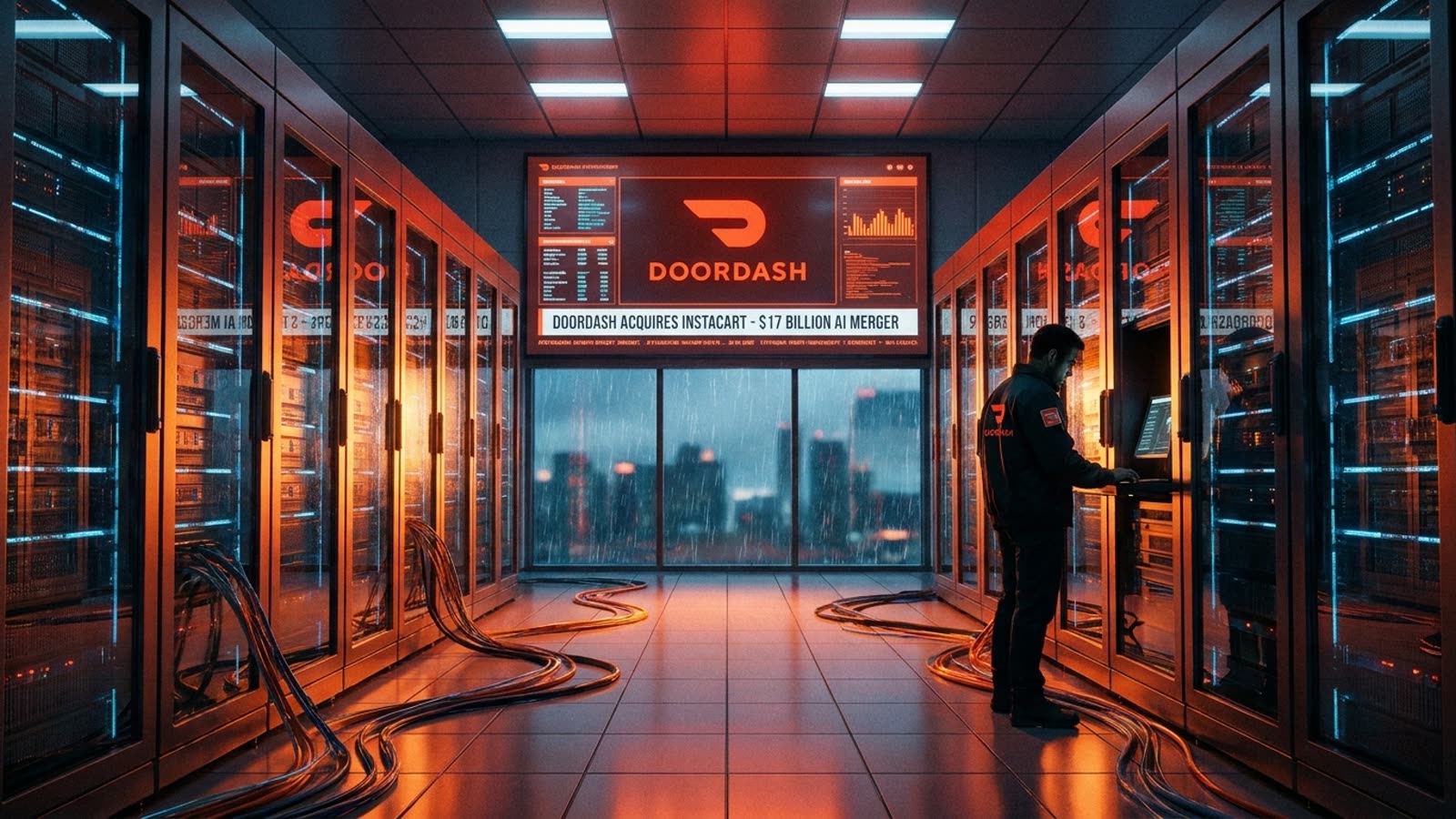
The consolidation everyone expected has arrived in the form no one quite predicted. DoorDash's $17 billion acquisition of Instacart does not merely combine the two largest grocery delivery platforms in the United States — it fuses the most sophisticated AI-driven logistics operations in consumer technology into a single entity capable of predicting what you will eat before you know you are hungry.
The strategic logic is obvious enough on the surface: DoorDash dominates restaurant delivery while Instacart owns grocery. Together they control an estimated 65 percent of the American on-demand delivery market. But the real prize is invisible to consumers scrolling through apps. It is the artificial intelligence infrastructure both companies have spent billions developing — demand forecasting models, dynamic pricing algorithms, route optimization systems, and the increasingly autonomous "shopper intelligence" tools that tell gig workers which avocados to select.
The AI stack nobody talks about
Instacart's machine-learning capabilities have quietly become among the most advanced in retail technology. The company's systems process millions of data points per hour: historical purchase patterns, real-time inventory feeds from partner grocers, weather correlations, local event schedules, even social media sentiment analysis. Its "Carrot AI" platform, launched in 2024, uses large language models to handle customer service queries and generate personalized shopping suggestions that have reportedly increased basket sizes by double digits.
DoorDash brings complementary strengths. Its Dasher dispatch system — the algorithm that matches orders to drivers — processes more real-time logistical decisions per second than most airlines. The company's acquisition of Wolt in 2022 gave it access to European engineering talent that has since built some of the most efficient last-mile routing models in the industry. Combining these systems creates something unprecedented: an AI platform that can optimize the entire journey from a customer's vague craving to a bag on their doorstep.
Regulatory scrutiny awaits
The Federal Trade Commission will examine this deal with particular intensity. Chair Lina Khan's agency has already signaled concerns about consolidation in gig-economy platforms, and a merger creating such dominant market share invites antitrust challenge. The companies will likely argue that their real competitors are Amazon, Walmart, and traditional grocers — not each other. That argument may prove persuasive given Amazon's own formidable logistics AI and Walmart's aggressive delivery expansion.
More interesting is whether regulators will scrutinize the AI systems themselves. The combined company will possess an extraordinary dataset on American eating habits, household compositions, and economic behaviors. Privacy advocates have already raised concerns about what happens when a single corporate entity knows both what you order for dinner and what you stock in your refrigerator.
Our take
This merger is less about delivery drivers than about data scientists. DoorDash is not buying Instacart's shoppers or its grocery partnerships — those are commodities. It is buying the AI infrastructure that makes those assets efficient. The result will be a company whose machine-learning capabilities rival those of the tech giants, applied to the mundane but essential task of feeding America. Whether that concentration of algorithmic power in a single delivery platform serves consumers or merely extracts more margin from them is a question regulators should ask before approving anything.