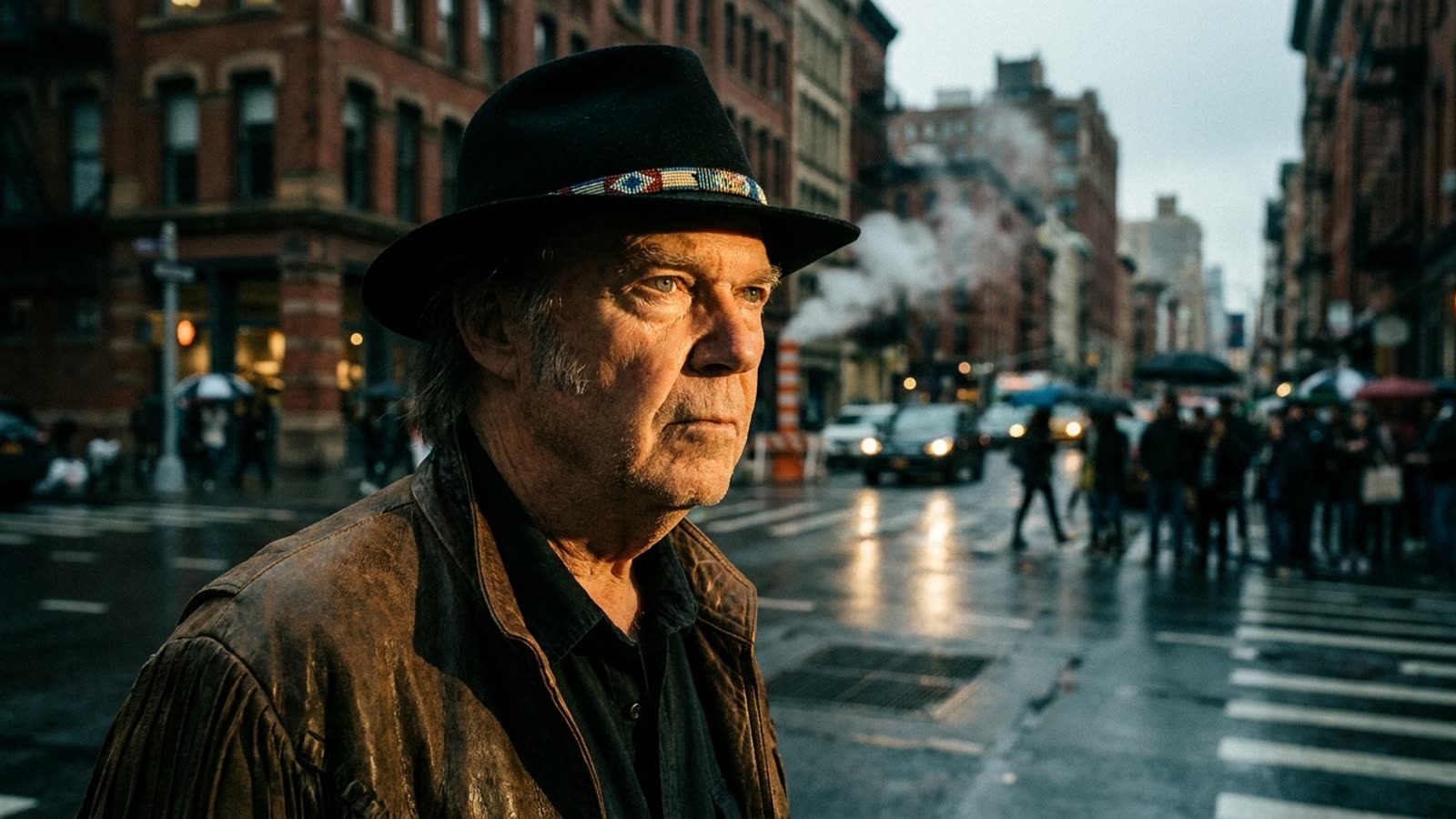
There is something almost admirable about a man who, at 81, still believes litigation is a valid form of protest. Neil Young filed a $10 million lawsuit Monday against Trump 47 Committee Inc., alleging the former president's political operation continues to blast "Rockin' in the Free World" at rallies without permission. This is not a new complaint. Young sued over the identical issue in 2020, reached a settlement, and apparently assumed that would be the end of it. He assumed wrong.
The song, released in 1989 as a critique of George H.W. Bush-era America, has become Trump's unlikely walk-on anthem — a choice that has baffled Young for nearly a decade. In the complaint, Young's team describes the track as representing "the opposite of everything Donald J. Trump stands for," which is both legally irrelevant and emotionally satisfying to write, one imagines.
The déjà vu of rock-and-roll resistance
Young joins a long roster of artists who have publicly objected to Trump's use of their music, including the estates of Tom Petty and Prince, plus living acts like Adele, Rihanna, and the Rolling Stones. The legal terrain here is genuinely murky: political campaigns typically purchase blanket licenses from performance rights organizations like ASCAP and BMI, which can cover public performance. But synchronization rights — and the question of whether rally use constitutes endorsement — remain contested. Most artists who complain do so for the press release, not the payout. Young, by contrast, keeps showing up to court.
Why this lawsuit matters more than the last one
The 2020 suit was filed against a different Trump entity, and the settlement terms were never disclosed. By suing the current committee, Young is essentially arguing that Trump's operation treats prior agreements as suggestions. The $10 million figure is likely aspirational — statutory damages for willful copyright infringement can reach $150,000 per work, and proving willfulness requires demonstrating the defendant knew they lacked authorization. But Young's team will argue that a prior settlement constitutes exactly that knowledge.
The timing is pointed. With Trump's 2028 ambitions already being floated by allies, Young may be attempting to establish a legal precedent that survives any single campaign cycle. Or he may simply be furious.
Our take
Neil Young has spent sixty years being difficult, and this lawsuit is entirely on brand. Whether he collects a dime is almost beside the point. At a moment when most legacy artists are selling their catalogs and cashing out, Young is using his to pick fights. There is something clarifying about an octogenarian who still believes his music means something specific — and who is willing to spend money proving it.