Most cocktails that survive a century do so as museum pieces — ordered ironically, made badly, tolerated. The Negroni is the exception. It remains genuinely popular, genuinely good, and genuinely irritating to people who find its devotees insufferable. All three qualities are connected.
The drink's origin story is suspiciously neat: Count Camillo Negroni, a Florentine aristocrat with a taste for stronger things, allegedly asked a bartender at Caffè Casoni to fortify his Americano by swapping soda water for gin. The bartender, Fosco Scarselli, obliged and garnished with orange instead of lemon to mark the variation. Whether this happened exactly as legend holds matters less than what the story communicates — that the Negroni was born from someone wanting more, and getting it elegantly.
The tyranny of equal parts
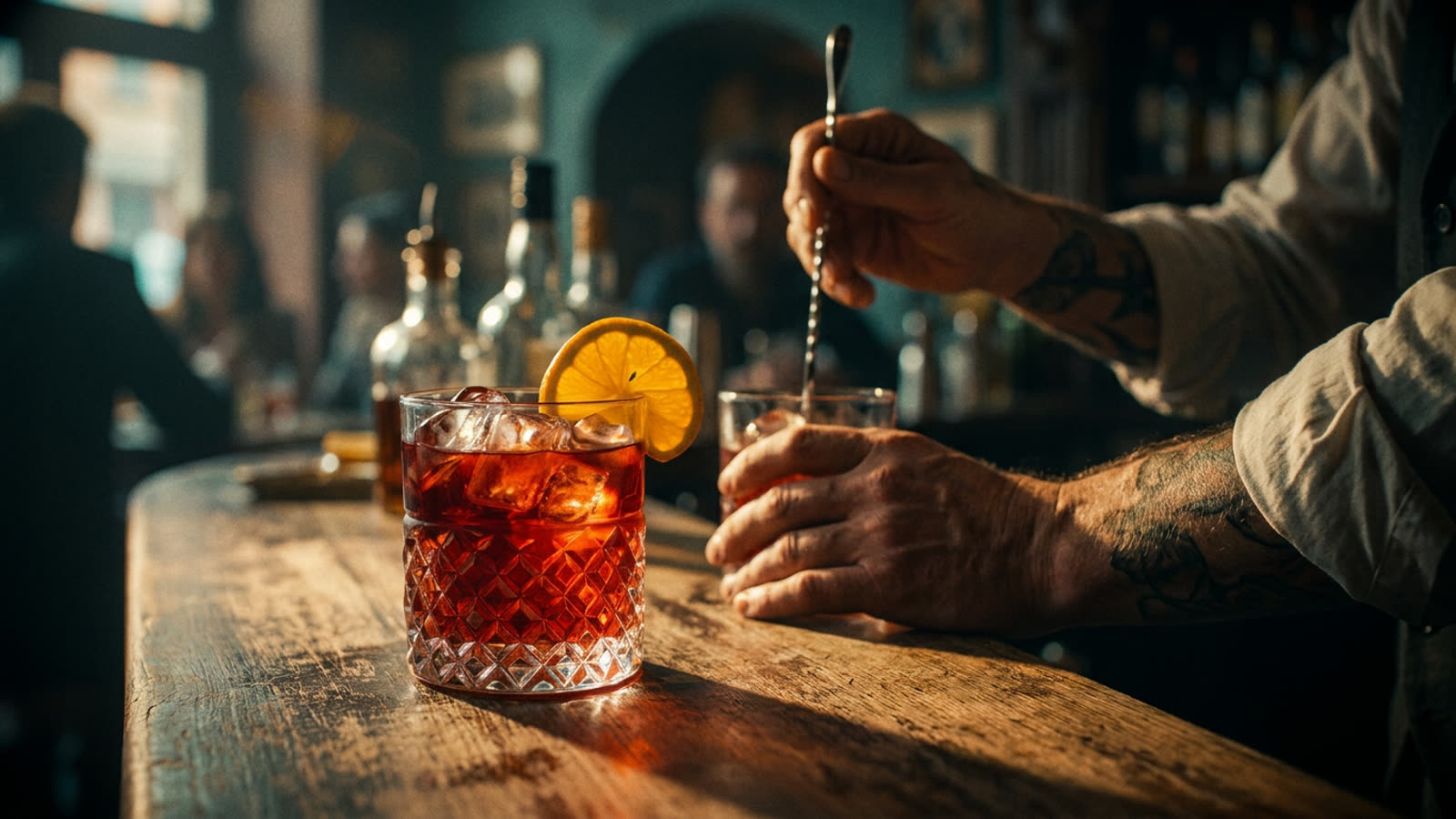
What makes the Negroni unusual among classic cocktails is its brutal simplicity. One part gin, one part Campari, one part sweet vermouth. No citrus juice to balance, no egg white to emulsify, no elaborate technique to master. The equal-parts formula means any competent person can make one at home, yet the drink somehow retained its aura of sophistication. This is partly because Campari's aggressive bitterness functions as a taste barrier — you must learn to enjoy a Negroni, which makes enjoying one feel like an achievement.
The cocktail renaissance of the early 2000s elevated the Negroni from Italian-restaurant staple to universal signifier of discernment. Bartenders loved it because it showcased their vermouth selection and required no showmanship. Drinkers loved it because ordering one suggested worldliness without requiring explanation. The Negroni became a password.
Variations and the purity question
Success bred experimentation. The Boulevardier swaps gin for bourbon. The White Negroni uses gentian liqueur and dry vermouth for a paler, more floral result. Barrel-aged versions proliferated. Mezcal Negronis appeared on menus from Brooklyn to Berlin. Purists objected to each deviation; the deviations continued regardless.
The most commercially significant variation arrived when Negroni Sbagliato — the "mistaken" Negroni that replaces gin with prosecco — went viral after a clip of actors discussing it circulated online. Suddenly a lighter, bubblier, more approachable version introduced the template to drinkers who found the original too punishing. Whether this democratization honored or diluted the drink depends entirely on how seriously one takes aperitivo culture, which is to say, too seriously.
Our take
The Negroni endures because it solves a genuine problem: what to drink when you want something bitter, strong, and beautiful without requiring a bartender to perform. It is the rare cocktail that tastes better made indifferently at home than made elaborately at a bar, which makes it both democratic and slightly antisocial. That its fans can be tedious does not diminish the drink itself. The Negroni will outlast the discourse about it, as all good things eventually do.