The most subversive meal in global hospitality is also the most ancient. While Western hotels race to offer avocado toast variations and cold-pressed juice bars, the Japanese breakfast—ichiju-sansai, or "one soup, three sides"—has emerged as the quiet status symbol of properties that want to signal seriousness about food without shouting about it.
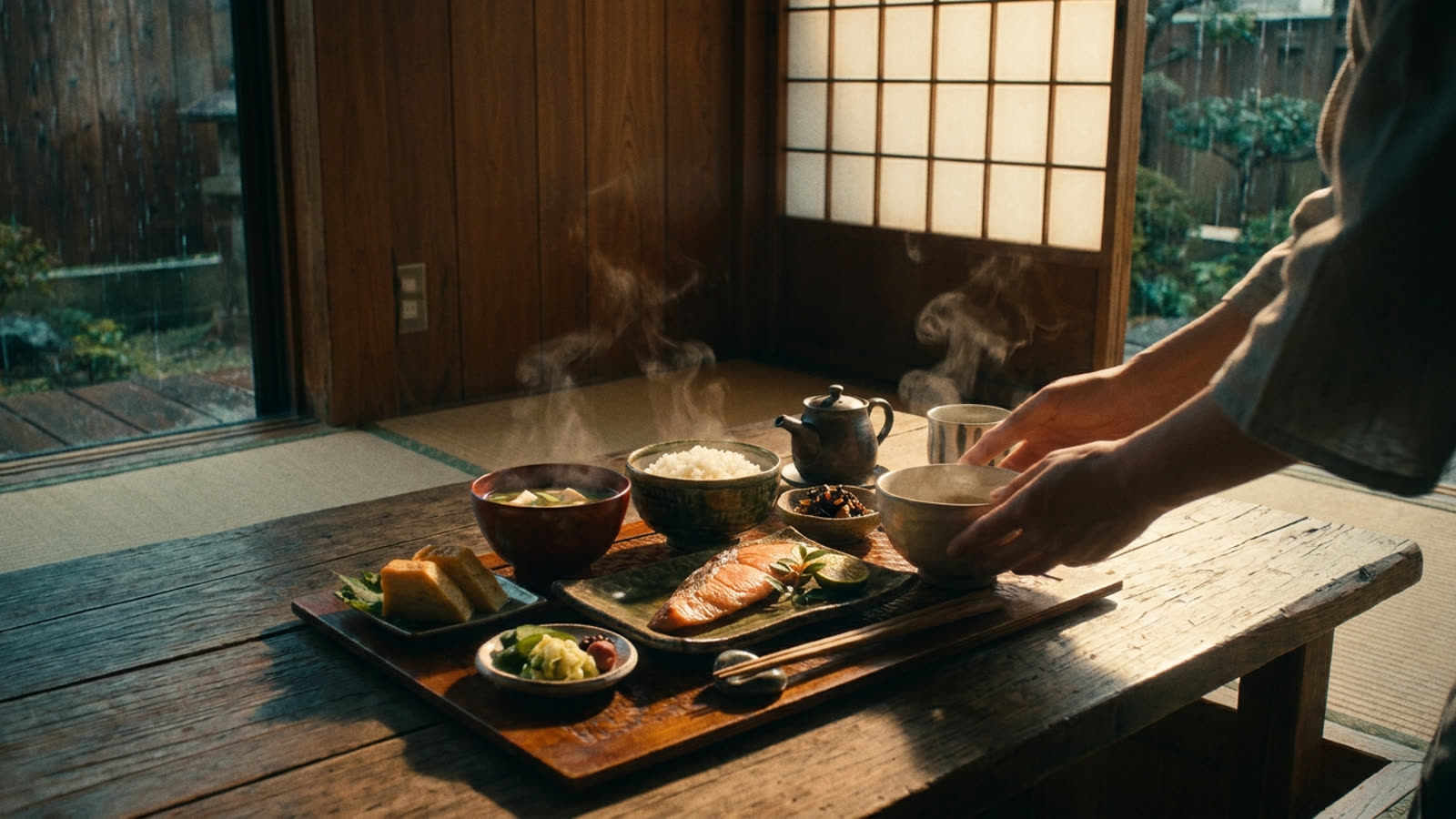
The formula has remained essentially unchanged for centuries: a bowl of steamed rice, miso soup, grilled fish (typically salmon or mackerel), pickled vegetables, a small portion of natto or tofu, and perhaps a raw egg to crack over the rice. The meal is neither large nor small, neither indulgent nor ascetic. It simply is.
The philosophy of morning restraint
What makes the Japanese breakfast so compelling to Western tastemakers is precisely what makes it so foreign: the complete absence of sweetness. No pastries, no fruit compotes, no maple syrup. The meal operates on umami, salt, and the gentle bitterness of green tea. It treats the morning palate as something to be awakened gradually rather than jolted into consciousness.
This runs counter to nearly every assumption embedded in continental breakfast culture, where sugar functions as the primary currency of hospitality. The Japanese approach suggests that true luxury lies not in abundance but in precision—each element of the tray serving a specific nutritional and aesthetic purpose.
From ryokan to Aman
The globalization of Japanese breakfast culture accelerated as luxury hotel groups began incorporating it into their Asian properties, then gradually exported the concept westward. What was once available only at traditional ryokan inns became a room-service option at design hotels in London and Los Angeles.
The irony is that this expansion required certain compromises. Authentic Japanese breakfast demands ingredients that travel poorly—the particular sliminess of fresh natto, the precise fermentation of regional miso, fish grilled moments before serving. What arrives at a hotel in Paris is necessarily an interpretation, though often a thoughtful one.
Yet the approximation may matter less than the gesture. Ordering a Japanese breakfast at a Western hotel is a declaration of taste, a signal that one has traveled enough to know what one is missing.
Our take
The Japanese breakfast's global ascent reveals something uncomfortable about contemporary food culture: we have become so exhausted by innovation that tradition itself now functions as novelty. A meal that Japanese families have eaten without comment for generations becomes "elevated" simply by appearing on a foreign menu. There is nothing wrong with appreciating another culture's foodways, but we might pause to notice that the breakfast's appeal lies partly in its resistance to the very forces of disruption we claim to celebrate. Sometimes the most radical thing a meal can do is remain exactly what it always was.