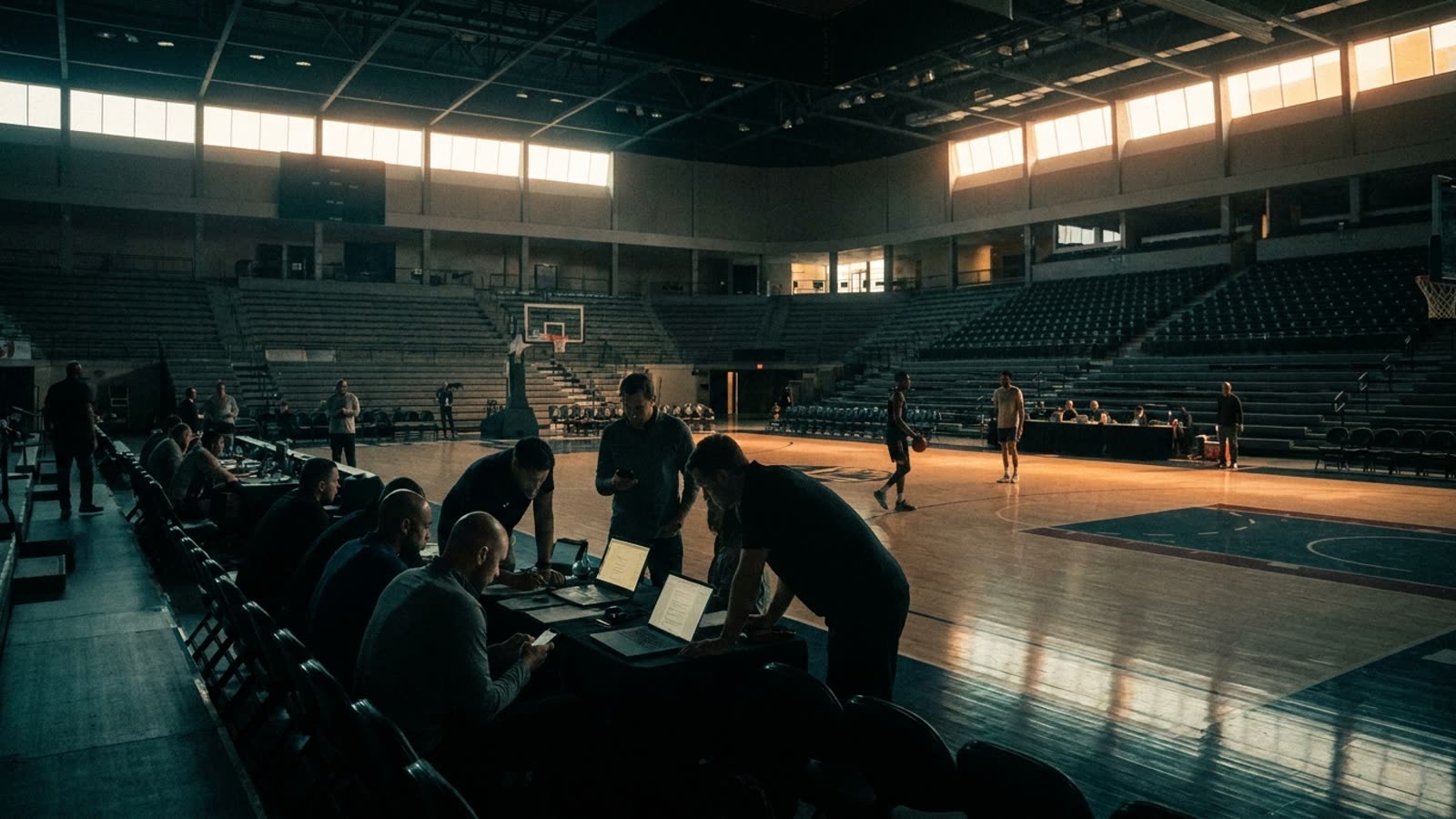
The NBA's annual summer bazaar officially opened at midnight Eastern, and within hours the contours of a strange market had emerged: plenty of talent, plenty of interest, and a collective nervousness about what any of it will actually cost.
This is not the free agency of a decade ago, when max contracts flew like confetti and second-tier stars could extract nine-figure deals from desperate franchises. The new collective bargaining agreement's punitive luxury-tax aprons have turned general managers into accountants, and the early hours of negotiation have reflected that caution. Teams are circling, but few are pouncing.
The cap crunch is real
The second apron — the hard ceiling above which teams lose access to most roster-building tools — has become the defining constraint of modern NBA roster construction. Roughly a third of the league is already at or near that threshold, which means their free-agency participation is limited to minimum contracts and creative sign-and-trade gymnastics. The result is a bifurcated market: a handful of cap-space teams can bid aggressively, while the rest must get clever or stay home.
For players in the middle tier — the solid starters and rotation pieces who once commanded eight-figure annual salaries — the math is brutal. There simply are not enough bidders with real money. Early reports suggest several veterans are already recalibrating expectations, eyeing shorter deals or player options that preserve future flexibility.
Who is actually spending?
The usual suspects with cap room — rebuilding franchises in smaller markets — are being courted by agents hoping to spark bidding wars. But those teams have learned from past mistakes: overpaying a free agent rarely accelerates a rebuild. The smarter play is often to absorb bad contracts in exchange for draft capital, which means the biggest checks may go to teams willing to take on salary rather than players seeking new homes.
Meanwhile, contenders are focused on the margins. The defending champions are reportedly exploring wing depth. Several playoff teams are hunting for a backup center who can switch defensively. These are not the splashy signings that dominate headlines, but they are the moves that often decide playoff series.
Our take
Free agency has become less a talent auction than a puzzle-solving exercise, and the teams that thrive are the ones that understand the new rules. The CBA was designed to create parity by punishing excess, and it is working — perhaps too well. The market is quieter, more strategic, and frankly less fun to watch. But for franchises that have done their homework, the inefficiencies are there to exploit. The winners this summer will not be the teams that spend the most; they will be the ones that spend smartest.