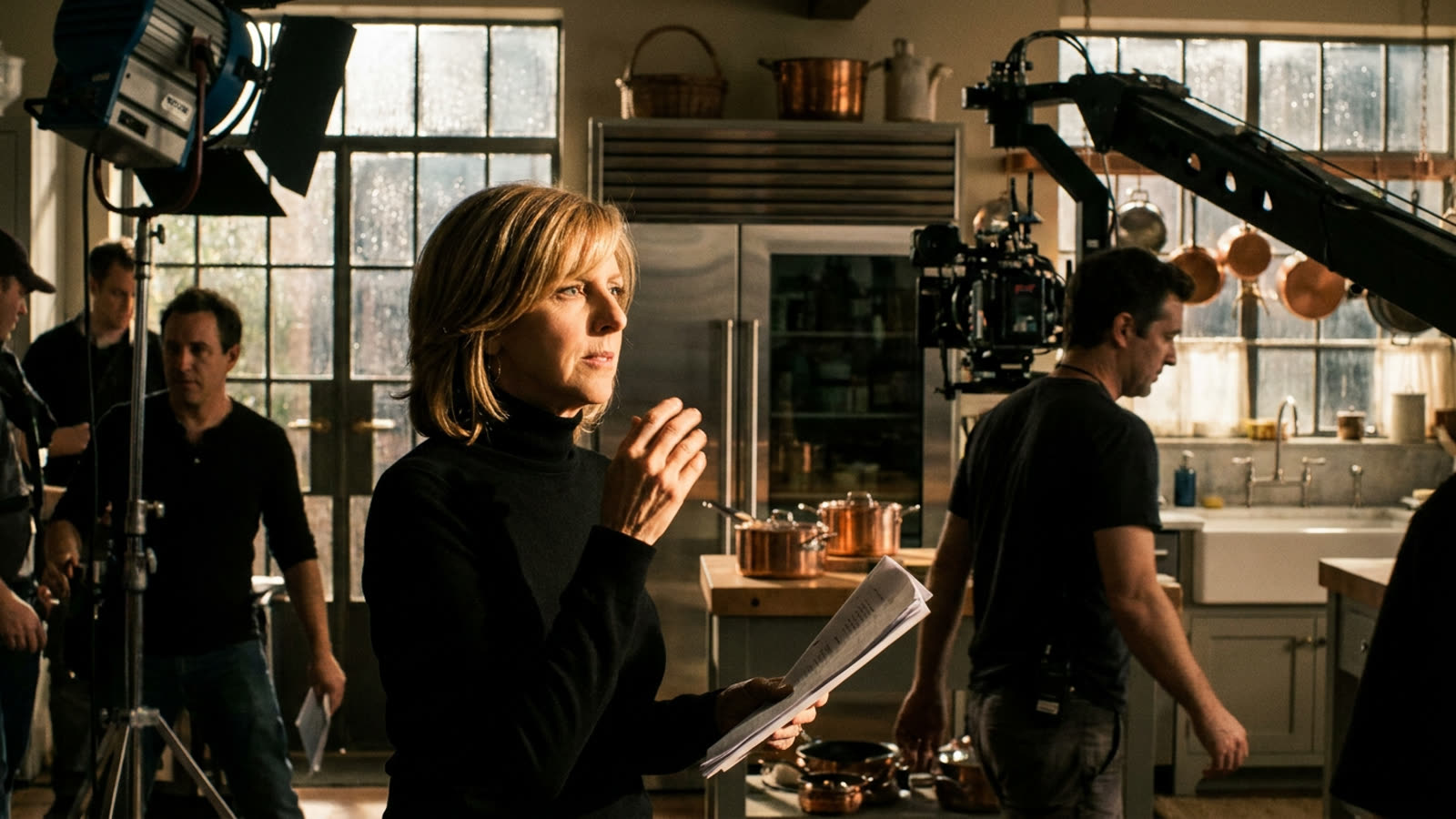
There is a specific shade of white that exists only in Nancy Meyers films. It is not the white of actual walls, which yellow and scuff and collect the residue of living. It is a white that suggests wealth has been deployed so thoroughly that even entropy has been priced out of the room. Paired with a Wolf range, a kitchen island the size of a small European car, and copper pots that have never known a burned onion, this white became the defining aesthetic of American domestic fantasy for a generation of viewers who could afford none of it.
Meyers did not invent the aspirational interior—shelter magazines have trafficked in envy since the Gilded Age—but she perfected its cinematic deployment. In films like Something's Gotta Give, It's Complicated, and The Holiday, the kitchen ceased to be a room where food was prepared and became a stage set for the proposition that taste, properly executed, could substitute for happiness.
The Architecture of Longing
The Meyers kitchen operates on a precise formula. The appliances are professional-grade but immaculate, suggesting a homeowner who could cater a dinner party for forty but mostly reheats soup. The countertops are natural stone, preferably Carrara marble, which in reality stains if you look at a lemon too aggressively. Fresh flowers appear in multiple rooms despite no visible florist. The bookshelves contain hardcovers arranged by color.
This is not realism, and Meyers has never pretended otherwise. Her production designers have spoken openly about spending months sourcing specific cabinet hardware, about building sets that cost more than the homes they depicted. The kitchens are not meant to be lived in; they are meant to be longed for. They represent a fantasy of control—the idea that if your Le Creuset collection is complete and your subway tile is properly grouted, the chaos of middle age might be held at bay.
The Demographic Precision
Meyers understood her audience with the clarity of a luxury brand marketer. Her protagonists are women of a certain age—divorced or widowed, professionally successful, financially comfortable—who have been abandoned by Hollywood's youth obsession. She gave them cashmere turtlenecks and beachfront properties and the attention of younger men. The kitchen was the throne room of this fantasy, the space where these women demonstrated mastery over their domain even as their romantic lives combusted.
The formula worked because it was aspirational without being alienating. The homes were wealthy but not garish, East Coast establishment rather than Los Angeles flash. You could imagine earning your way into a Meyers kitchen through decades of sensible professional choices and one extremely favorable divorce settlement. The fantasy was bourgeois, not aristocratic—and therefore felt almost achievable.
The Lasting Infection
Real estate agents now speak of the "Meyers effect" without irony. Open-concept kitchen renovations spiked in the years following her most successful films. Subway tile, once a utilitarian choice for actual subways, became a signifier of taste. The farmhouse sink—impractical, difficult to clean, prone to chipping—achieved ubiquity in homes that had never seen a farm.
Pinterest and Instagram accelerated what Meyers began, democratizing the aesthetic while stripping it of context. A generation of homeowners installed professional ranges they would never learn to use properly, marble countertops that required quarterly sealing, kitchen islands that disrupted traffic flow but looked magnificent in listing photos. The Meyers kitchen became less a place to cook than a set for performing domesticity to an imagined audience.
Our take
The Nancy Meyers kitchen is a gorgeous con, and we remain willing marks. It promises that consumption can be elevated to art, that the right appliances can make us the protagonists of our own romantic comedies, that taste is a form of virtue. None of this is true, of course. A Wolf range will not save your marriage, and Carrara marble is a maintenance nightmare. But Meyers understood something essential about American longing: we don't want to be rich, exactly. We want to be the kind of person who would know what to do with a butler's pantry. That fantasy, at least, remains affordable.