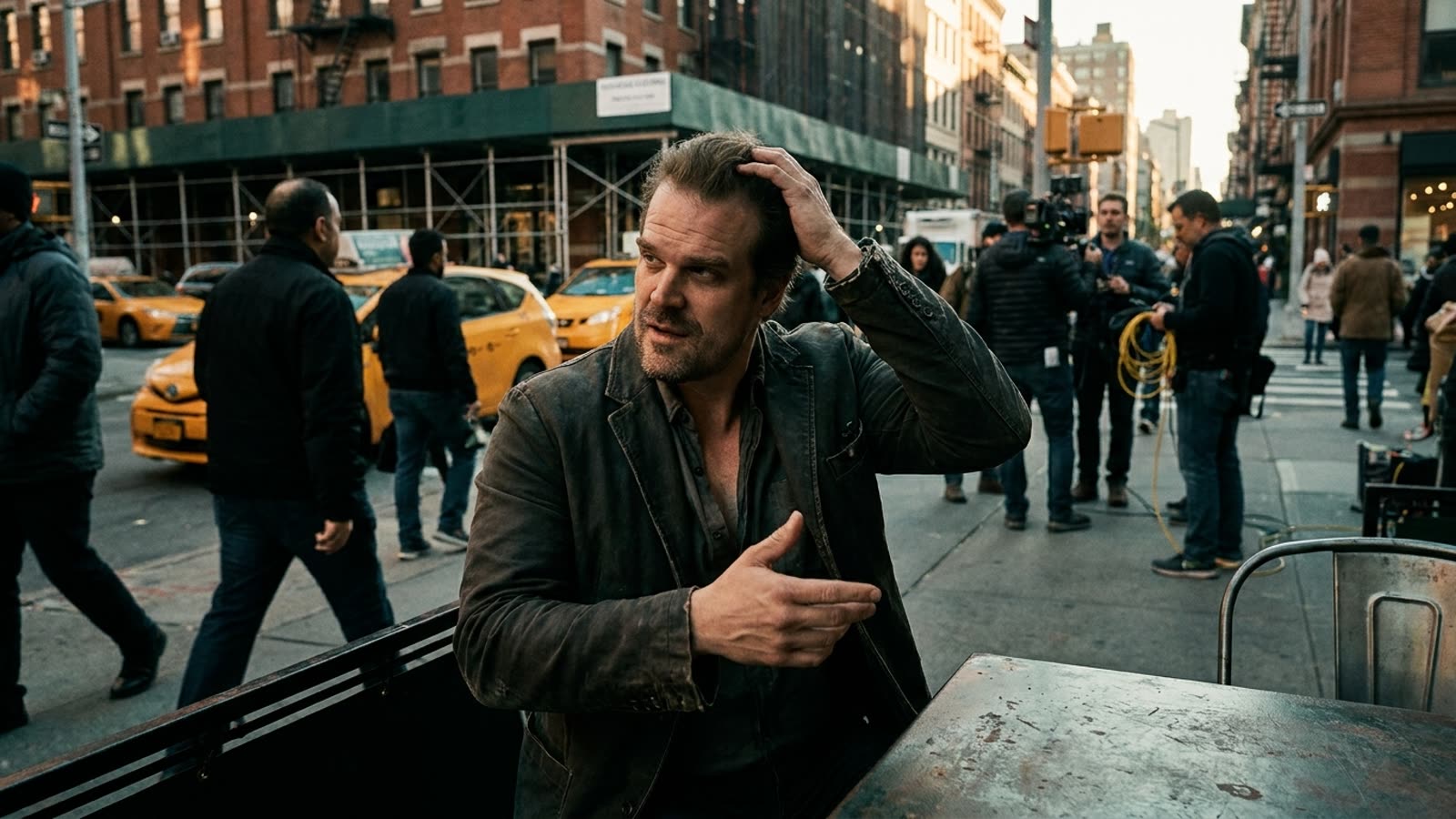
David Harbour has spent nearly a decade playing the gruff but tender father figure to Eleven on Stranger Things. What audiences did not see was how that protective instinct bled into real life—and nearly destroyed him.
In a new interview, the actor revealed that tabloid coverage and public speculation about Millie Bobby Brown, whom he met when she was eleven years old, triggered a mental health crisis that required professional intervention. Harbour, now 51, described watching the media apparatus turn its attention to his young co-star as a kind of slow-motion horror he felt powerless to stop. The scrutiny of her relationships, her appearance, her every public statement—all of it accumulated into what he called an unbearable weight.
The impossible position of the on-screen protector
Harbour's breakdown illuminates a peculiar trap of modern celebrity: the actor who plays a guardian becomes, in the public imagination, actually responsible for the child star's wellbeing. Fans expected him to intervene, to shield, to father. But Harbour was not her parent. He was a colleague, a friend, a man with his own boundaries and limitations. The gap between what audiences projected onto him and what he could actually do became a chasm.
This dynamic intensified as Brown grew into adulthood under constant surveillance. Every boyfriend, every fashion choice, every interview answer was dissected by millions. Harbour watched it happen and felt the particular helplessness of caring deeply about someone whose life you cannot control. He has spoken before about his struggles with bipolar disorder and addiction; this new revelation suggests that the Stranger Things phenomenon created stressors that his existing coping mechanisms could not handle.
Celebrity parenthood by proxy
The entertainment industry has long created these pseudo-familial bonds—think of the Full House cast's complicated real-life entanglements, or the way former child stars describe their TV parents as more present than their biological ones. But social media has weaponized these relationships. When fans believe they know the interior lives of celebrities, they also believe they can demand accountability from the adults in those celebrities' orbits.
Harbour's marriage to Lily Allen and his role as stepfather to her daughters adds another layer. He has been learning, in real time, what it means to actually protect young people in his care. The contrast between that private responsibility and the public performance of protection on Stranger Things may have sharpened his sense of the absurdity—and the genuine pain—of his position.
Our take
Harbour's honesty is valuable precisely because it refuses the easy narrative. He is not claiming victimhood, nor is he distancing himself from Brown. He is describing, with unusual clarity, the psychological toll of loving someone you cannot save from public consumption. The Stranger Things phenomenon made billions of dollars by selling audiences a found family. Harbour is now explaining what it cost to be part of one.