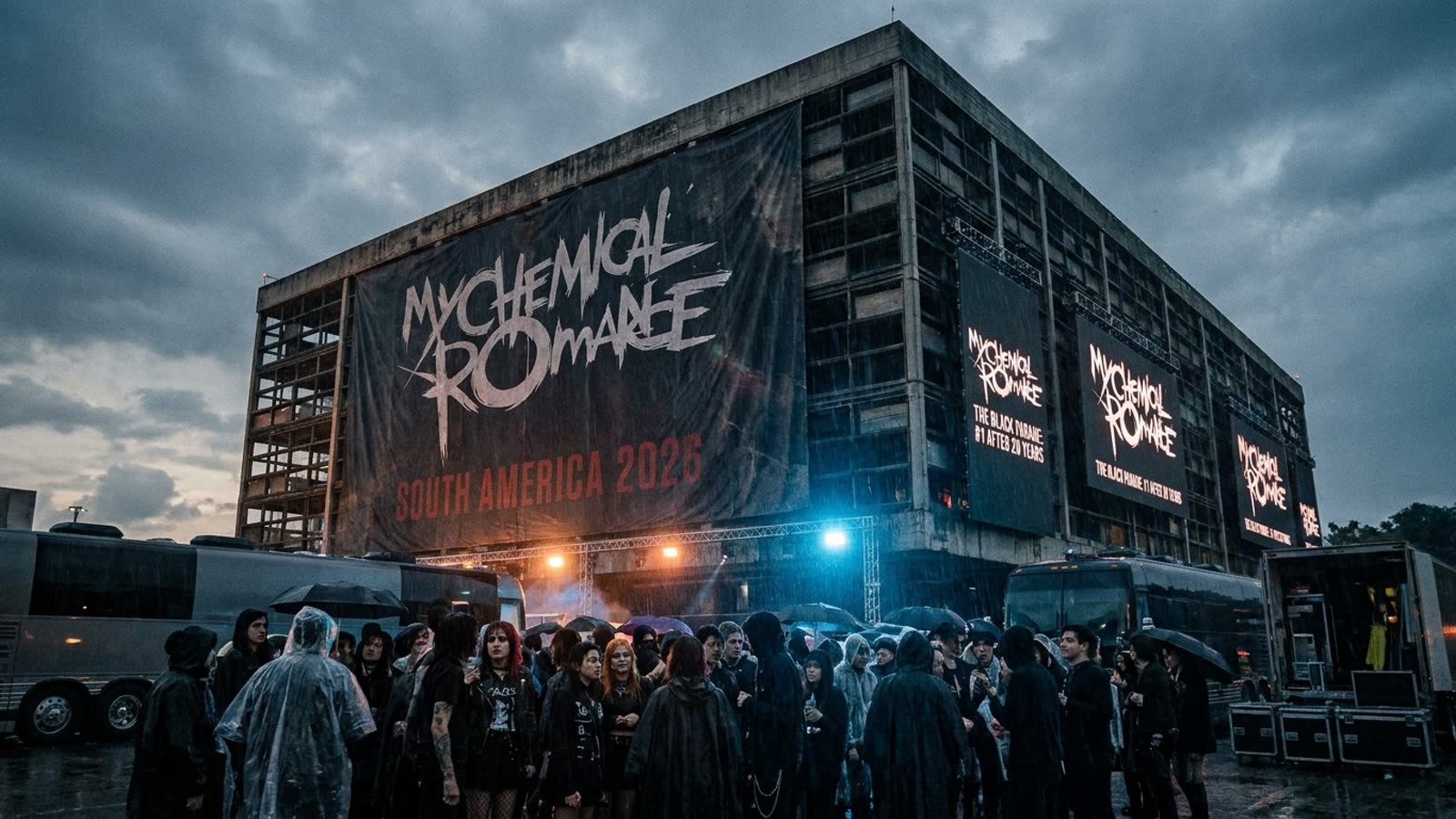
Twenty years ago, Gerard Way screamed about death and marching bands and the theatrical absurdity of mortality, and teenagers who didn't yet know what real loss felt like screamed along. Now those teenagers are pushing forty, burying parents, ending marriages, and watching their own children discover that the world is, in fact, as bleak as the black eyeliner suggested. The Black Parade has finally reached No. 1 on the Billboard 200, and the timing is almost too perfect to be coincidental.
The album surged from No. 139 to the summit this week, propelled by a twentieth-anniversary vinyl reissue and a cultural moment that seems engineered for maximum emotional devastation. My Chemical Romance never topped the chart during their original run—they peaked at No. 2 in 2006, blocked by Justin Timberlake's FutureSex/LoveSounds, which now feels like a cosmic joke about the decade's competing impulses toward hedonism and despair.
The vinyl economy of feelings
The reissue market has become a peculiar engine for revisiting emotional real estate we thought we'd vacated. Anniversary editions give listeners permission to return to albums that shaped them, and The Black Parade is perhaps the most permission-requiring record of its era. Admitting you still feel things about "Welcome to the Black Parade" requires a vulnerability that streaming's algorithmic shuffle doesn't demand. Buying the vinyl is a commitment, a physical object that says: yes, I still need this.
The numbers reflect genuine demand rather than industry manipulation. No bundles, no ticket tie-ins, no Taylor Swift-style variant flooding. Just people deciding, en masse, that they wanted to own this particular piece of their past in the most tangible format available.
Why now, really
The pandemic made death immediate for a generation that had been insulated from it. The years since have brought rolling waves of loss—parents aging faster than expected, friends succumbing to the accumulated damage of difficult decades, the ambient grief of watching institutions and certainties collapse. The Black Parade was always a concept album about dying, but it was also about the theatricality of death, the way we perform mourning and meaning-making in the face of oblivion.
That performance feels less adolescent now. The album's central conceit—that death comes for you in the form of your fondest memory—lands differently when you've actually started cataloging what those memories might be. The Patient isn't a character anymore; he's a demographic.
Our take
There's something genuinely moving about a record finally getting its commercial due because the people who loved it grew into the pain it was always describing. My Chemical Romance didn't change; we did. The Black Parade at No. 1 isn't nostalgia—it's recognition. The parade was always coming. We just didn't know we'd already joined it.