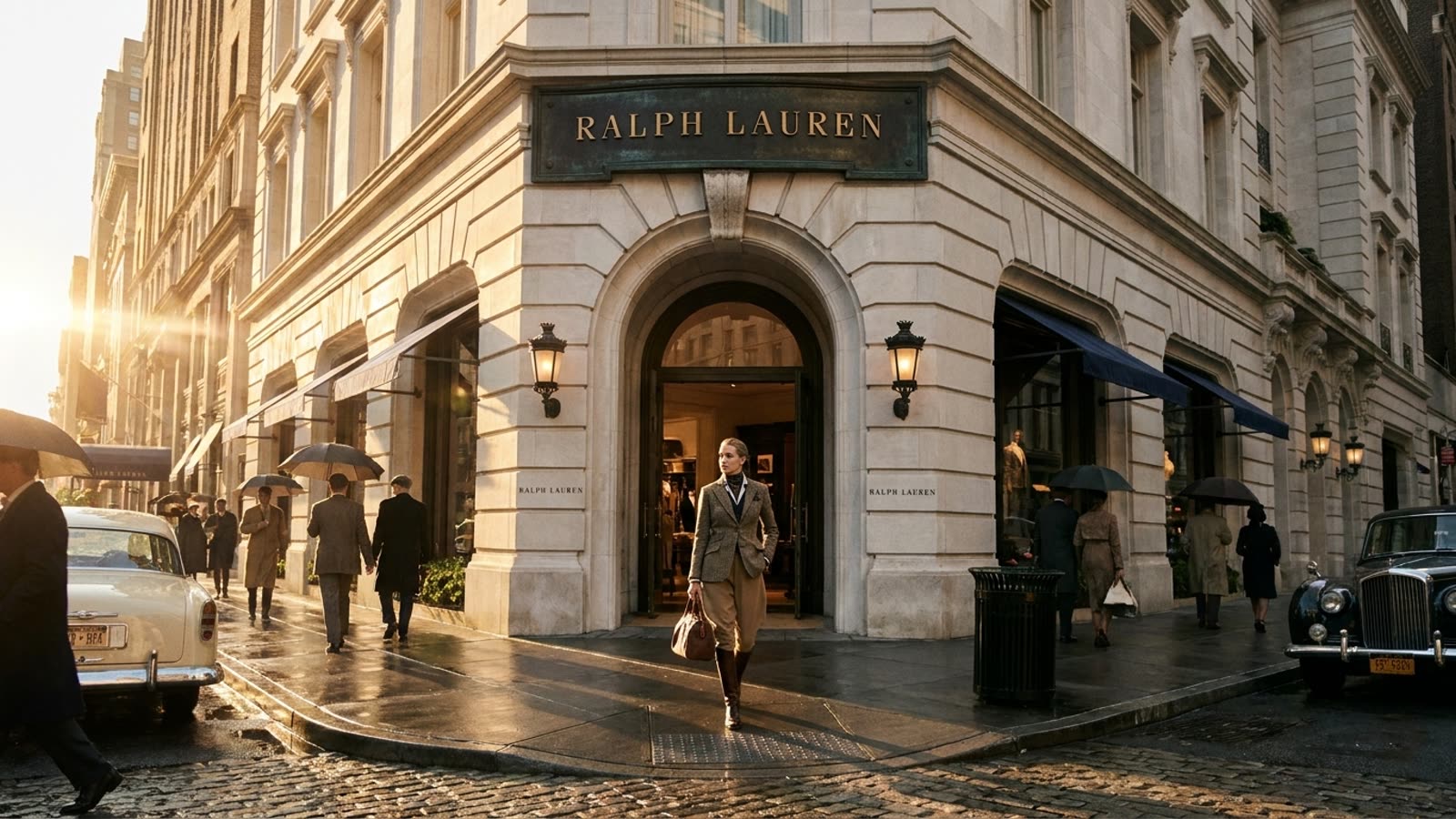
Ralph Lauren has spent five decades selling a fantasy of American aristocracy—polo matches at dusk, Hamptons weekends, inherited wealth worn casually. The clothes delivered. The accessories, with a few exceptions, never quite did. The Polo Blaze bag, quietly released this fall, suggests the house has finally cracked the code.
The Blaze draws on Lauren's equestrian obsession without descending into costume. The curved top handle echoes a stirrup; the structured body recalls a saddle's pommel; the brass hardware could pass for tack-room findings. But the proportions are modern and the silhouette sculptural enough to sit comfortably alongside a Loewe Puzzle or a Row Margaux. It is, in other words, a bag that knows what it references without being imprisoned by it.
The accessories gap
For years, Ralph Lauren's accessories business has been the company's Achilles heel. While European houses built empires on leather goods—Hermès with the Birkin, Louis Vuitton with the Speedy, Gucci with the Jackie—Lauren's bags remained an afterthought, purchased by loyalists but rarely lusted after by the broader market. The brand's handbag revenue has historically lagged far behind its apparel and home divisions, a structural weakness that Wall Street has noted with increasing impatience.
The Blaze represents a strategic pivot. Rather than chasing trends or attempting to out-logo the competition, the house leaned into its own mythology. The equestrian reference is unmistakably Ralph, but executed with a restraint that reads as confidence rather than nostalgia.
Timing and the quiet luxury moment
The bag arrives at a fortuitous cultural moment. After years of logo-heavy maximalism, fashion has swung toward understated luxury—what industry observers have dubbed the "quiet luxury" or "stealth wealth" aesthetic. Ralph Lauren, with its old-money codes and preppy discretion, is suddenly on-trend without having changed a thing.
The Blaze capitalizes on this shift. Its lack of obvious branding (no polo player in sight) positions it as a knowing choice for consumers weary of being walking billboards. The price point—substantial but not stratospheric—places it in competition with entry-level European luxury rather than the ultra-premium tier where Hermès reigns unchallenged.
Our take
The Polo Blaze won't dethrone the Birkin or spawn a decade of waitlists. But that's not the point. What it does is give Ralph Lauren a credible answer to a question the brand has dodged for too long: what does American luxury look like in a handbag? The answer, it turns out, involves horses, restraint, and the confidence to let the leather speak for itself. For a house that built an empire on aspiration, that's a surprisingly grounded place to land.