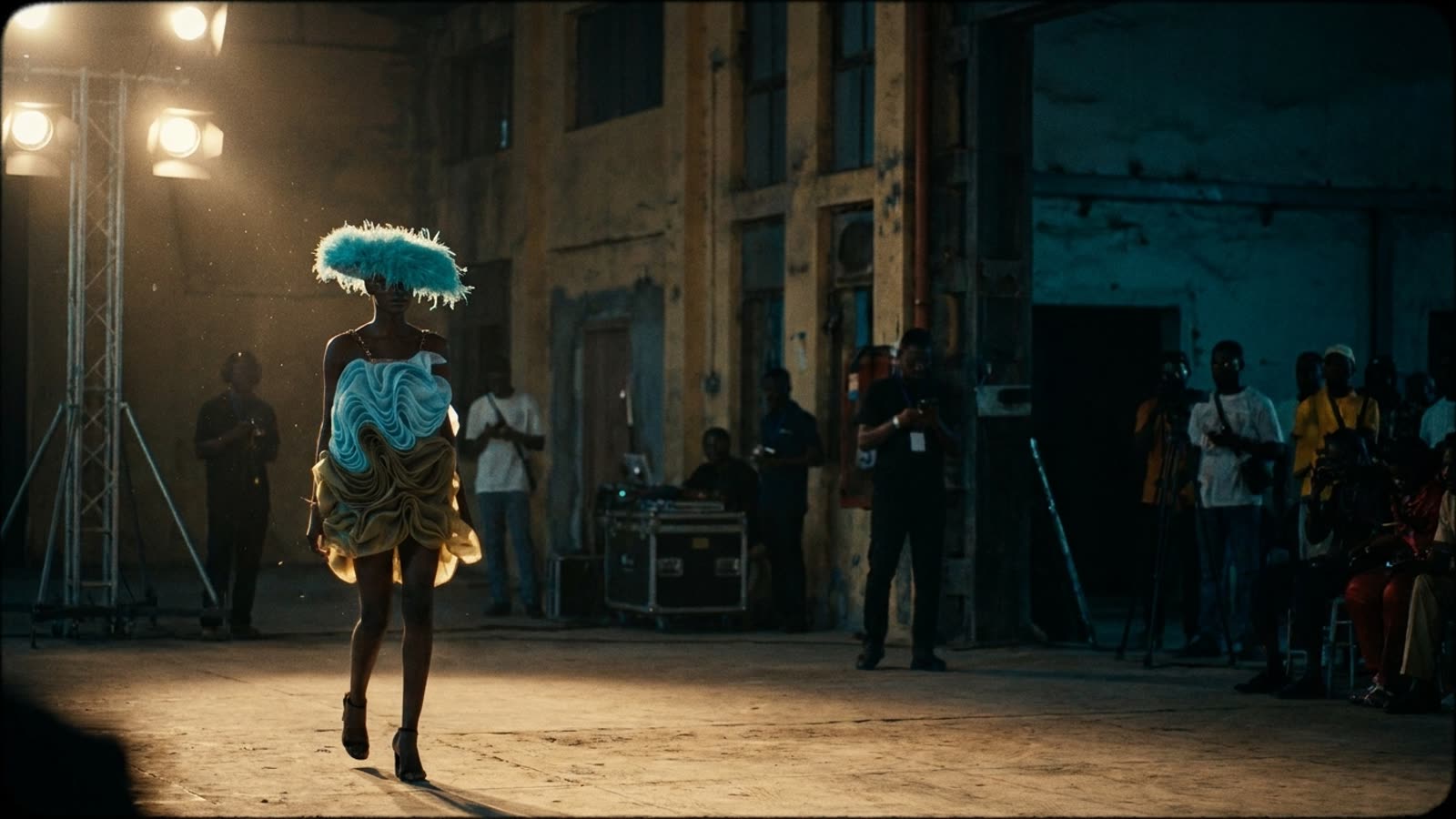
Nigeria's fashion industry has spent the better part of a decade promising to graduate from regional curiosity to global contender. With Hertunba and Oshobor's Spring 2027 debuts at Lagos Fashion Week, that promise finally looks like a binding contract.
Both labels—operating independently but sharing a generational sensibility—presented collections that refused the tired dichotomy between "African-inspired" novelty and derivative Western minimalism. Hertunba's offering leaned into architectural tailoring, with structured shoulders and elongated silhouettes that nodded to the sharp formality of Lagos's business class while incorporating hand-dyed adire fabrics in unexpected placements. Oshobor, meanwhile, explored fluid draping and earthy palettes that felt simultaneously rooted in Yoruba textile traditions and conversant with the quiet luxury dominating European runways.
The infrastructure finally exists
What separates this moment from previous Lagos Fashion Week cycles is context. Nigeria's luxury retail ecosystem has matured considerably: homegrown concept stores have proliferated in Victoria Island and Ikoyi, while a growing cohort of high-net-worth consumers increasingly prefers local designers over imported labels. The production pipeline has improved too, with several Lagos-based ateliers now capable of the finishing quality that international buyers demand. Neither Hertunba nor Oshobor would have been viable propositions even five years ago.
Timing and taste convergence
The global mood helps. The "quiet luxury" wave that swept through Milan and Paris has inadvertently created space for designers whose aesthetic was never maximalist to begin with. Nigerian labels rooted in artisanal craft and restrained elegance no longer need to shout to be heard—they simply need to execute. Both Spring 2027 collections demonstrated that execution is no longer the bottleneck.
Our take
Lagos Fashion Week has historically been a networking event with runway shows attached. Hertunba and Oshobor's debuts suggest it may finally be becoming the inverse: a genuine commercial platform that happens to throw good parties. If these labels can secure international stockists—and there is no structural reason they cannot—Nigeria's fashion industry will have crossed a threshold that no amount of government promotion or diaspora cheerleading could manufacture. The clothes, at last, are doing the talking.