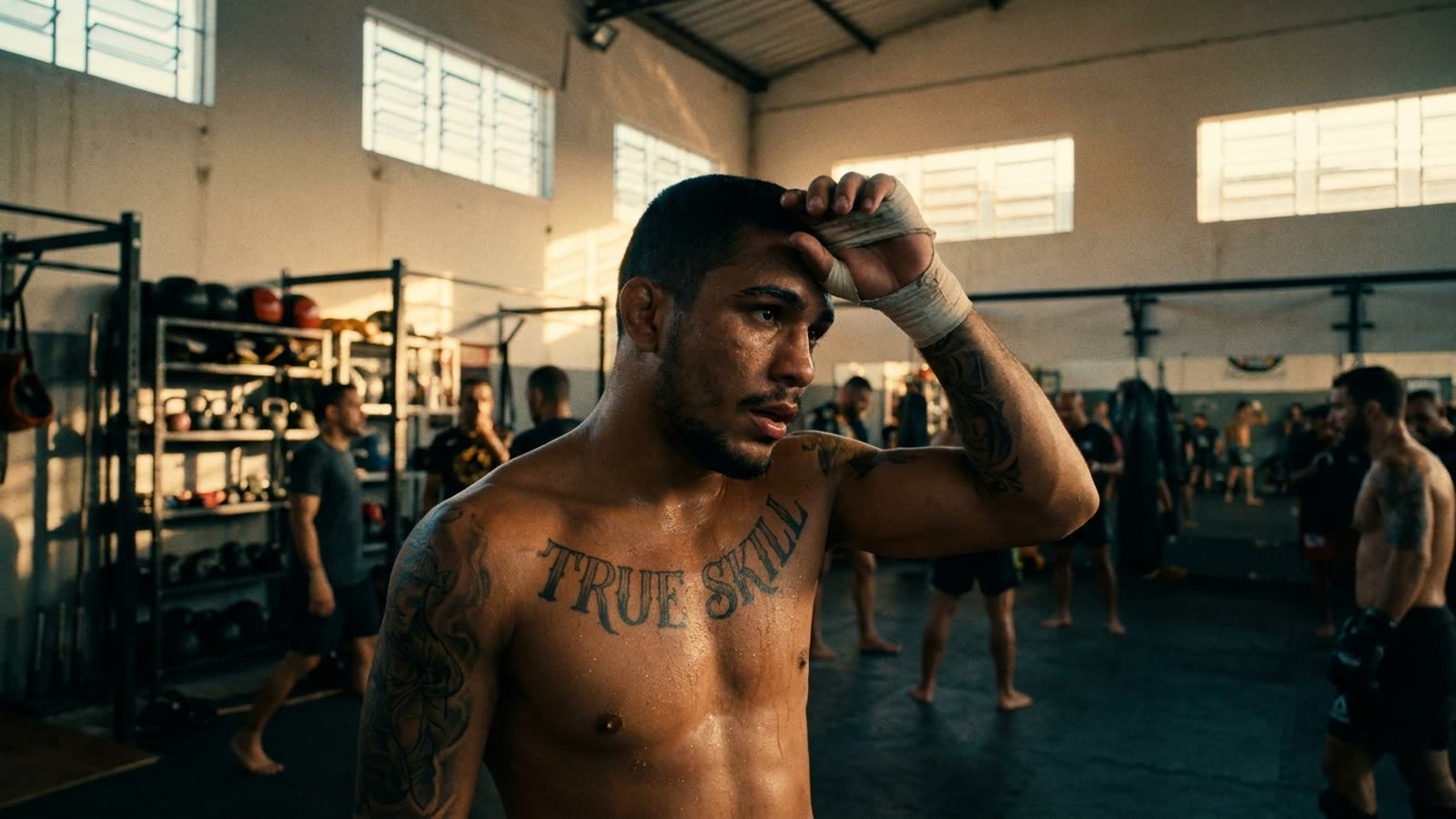
The UFC has a lightweight problem, and his name is Islam Makhachev. The Dagestani champion has cleared out the division with such clinical efficiency that matchmakers have struggled to manufacture compelling challengers. Enter Mauricio Ruffy, a 27-year-old Brazilian who fights like someone forgot to tell him that cautious point-fighting is how you survive in modern MMA.
Ruffy's record inside the octagon reads like a highlight reel: four fights, four finishes, zero trips to the judges' scorecards. In a sport increasingly dominated by wrestlers who grind out decisions, he represents something the promotion's marketing department can actually sell — a finisher with personality.
The Brazilian pipeline keeps flowing
Brazil has always been MMA's most reliable talent factory, from the Gracie family's foundational jiu-jitsu to Anderson Silva's supernatural middleweight reign to the current crop of champions and contenders. But the country hasn't produced a genuine lightweight superstar since the early 2010s, when names like José Aldo and Renan Barão dominated smaller weight classes.
Ruffy emerges at an opportune moment. The UFC's expansion into streaming and international markets requires fighters who translate across cultures — athletes with finishing instincts that need no commentary and personalities that register even through translation. His post-fight celebrations have already generated the kind of organic social media traction that promotional budgets cannot manufacture.
The path to a title shot
The lightweight division's upper echelon presents formidable obstacles. Makhachev's grappling has neutralized strikers far more credentialed than Ruffy. Arman Tsarukyan, Charles Oliveira, and Dustin Poirier all lurk in the rankings, each representing a different stylistic puzzle. The UFC's tendency to fast-track marketable fighters means Ruffy could find himself in deep water before his game has fully matured.
Yet the promotion's calculus has always favored entertainment over prudence. A Brazilian knockout artist with crossover appeal is worth the developmental risk, particularly when the alternative is another Makhachev mauling that sends casual viewers reaching for their remotes.
Our take
Ruffy may never touch the lightweight belt — the division is simply too stacked with elite grapplers. But that almost misses the point. The UFC needs fighters who make people care about the undercard, who generate highlights that escape the MMA bubble and infiltrate mainstream sports conversation. In that narrower but commercially vital sense, Ruffy has already arrived.