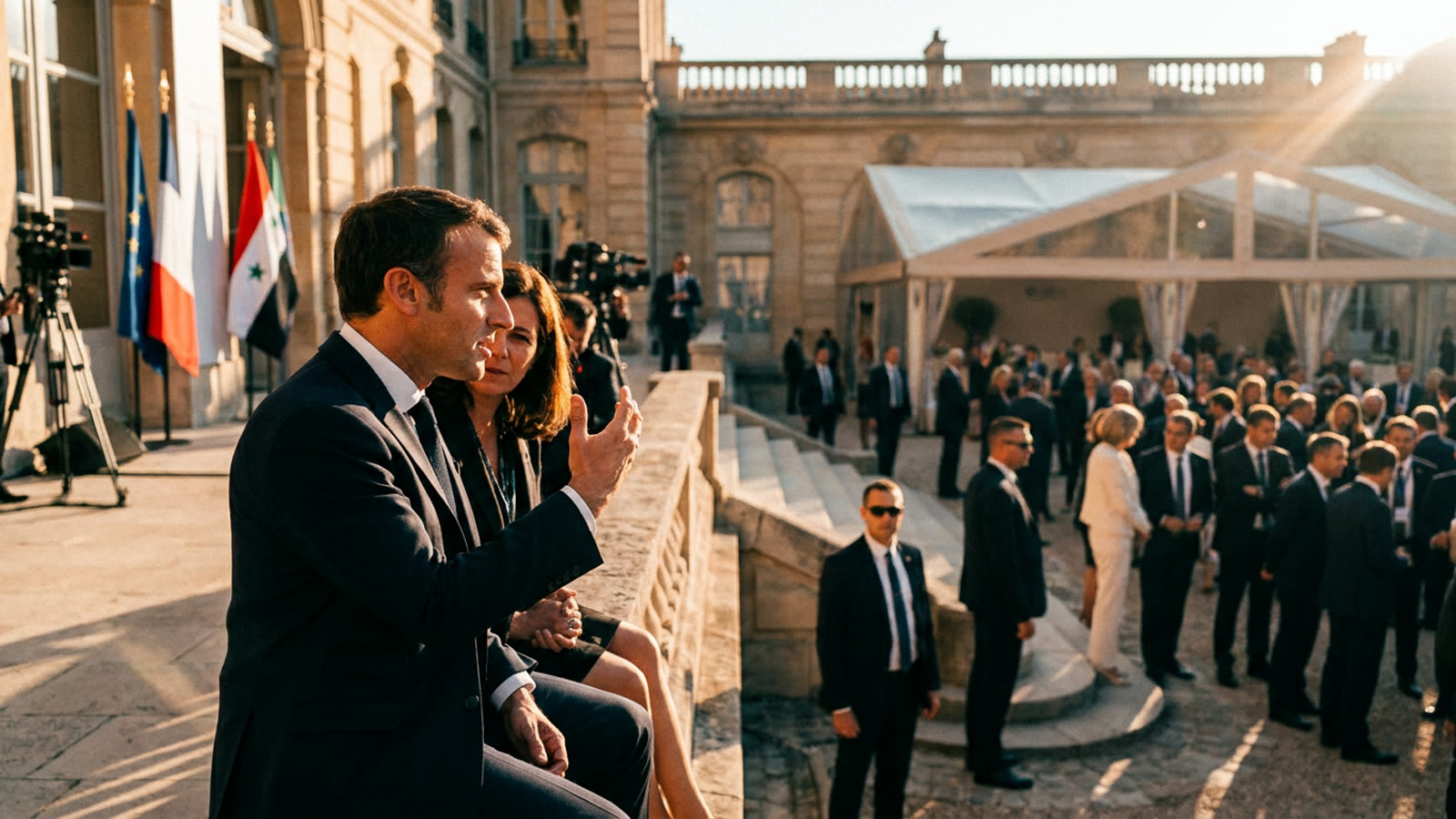
Emmanuel Macron's arrival in Damascus this week marks the first visit by a European Union head of state since Bashar al-Assad's regime collapsed, and the symbolism is precisely the point. France is not merely reopening diplomatic channels with Syria — it is staking a claim to relevance in a Middle East where European voices have grown faint.
The visit comes at a moment of profound uncertainty. Syria's transitional government, cobbled together from rebel factions and technocrats, controls most major cities but faces persistent challenges from remnant loyalist pockets and the ever-present specter of sectarian fragmentation. The country that Assad left behind is less a functioning state than a collection of competing authorities, humanitarian catastrophes, and frozen conflicts.
The French calculation
Macron's willingness to engage before other major European powers reflects a distinctly Gaullist reading of the situation. France has historical ties to Syria dating to its League of Nations mandate, and Macron has consistently sought to position Paris as Europe's indispensable diplomatic actor — the leader willing to take risks while Berlin deliberates and London looks inward.
The timing is also strategic. With Washington consumed by domestic political theater and the NATO summit in The Hague commanding attention, Macron sees an opening. Early recognition and engagement could translate into commercial advantages when reconstruction contracts are eventually distributed, and France's defense industry has never been shy about cultivating new markets.
The risks are considerable
Syria's transitional authorities remain opaque. Western intelligence services are still mapping the power structures that emerged from Assad's fall, and some of the factions now holding ministerial portfolios have histories that would complicate any formal normalization. Human rights organizations have already warned that premature legitimization could entrench actors with troubling records.
There is also the question of what France actually gets. Macron can claim a diplomatic first, but without coordinated European action or American backing, French influence in Damascus may prove as ephemeral as it has in Libya, where Paris's early intervention produced few lasting strategic gains.
Our take
Macron is doing what Macron does: moving fast, claiming the spotlight, and betting that boldness will be rewarded. Whether this visit produces meaningful French influence in post-Assad Syria or simply generates photographs for the history books remains an open question. But in a Europe that has spent years outsourcing Middle East policy to Washington, there is something to be said for a leader willing to show up. The gamble may not pay off, but at least someone is placing a bet.