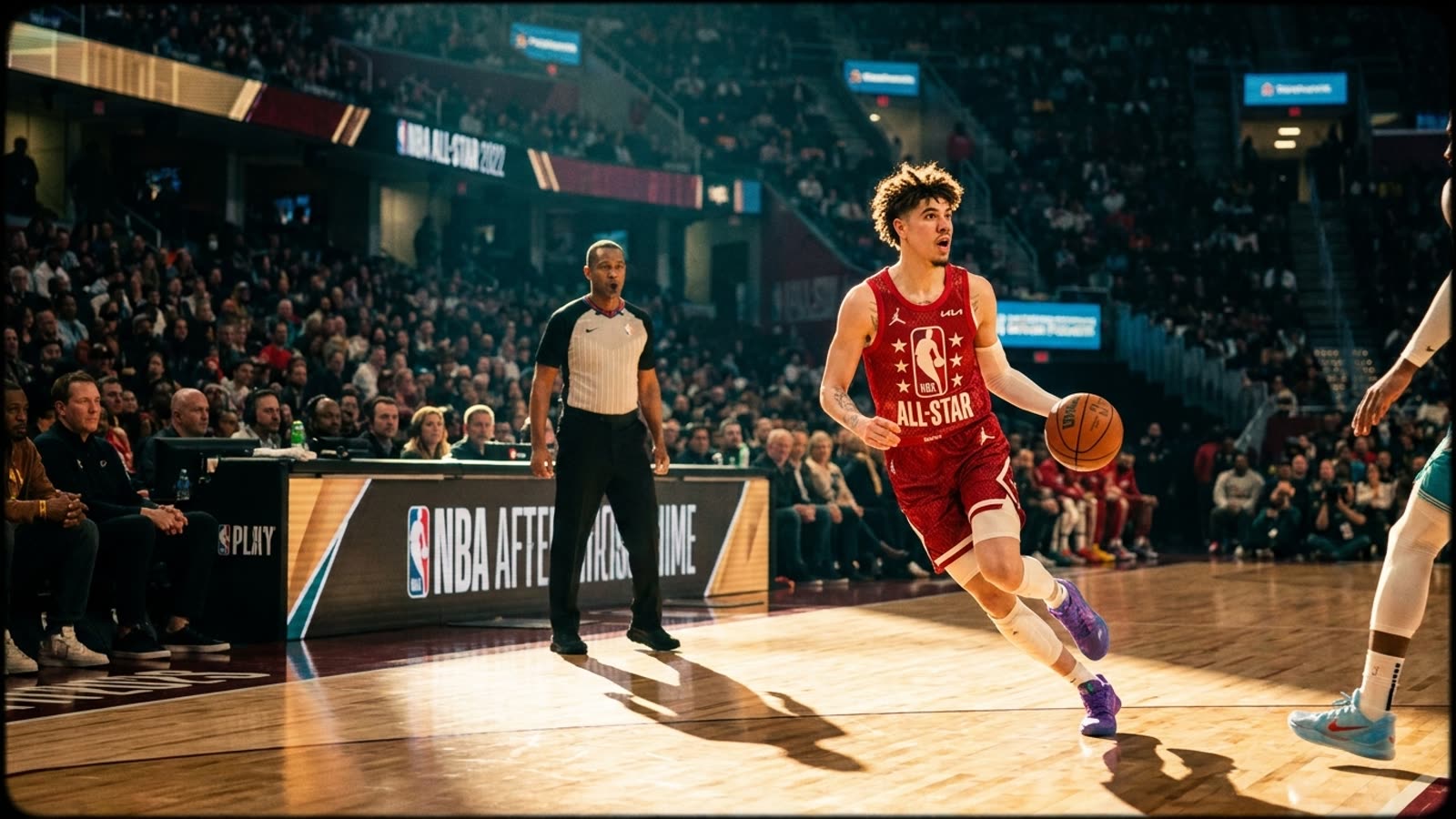
Professional sports officiating operates on a peculiar social contract: referees wield enormous power over outcomes while remaining largely unaccountable for their errors. The NBA disrupted that arrangement, however briefly, when the National Basketball Referees Association confirmed Thursday that LaMelo Ball took two illegal steps en route to a three-pointer in Charlotte's win over Miami—a sequence that had already gone viral for its brazenness.
The acknowledgment is newsworthy precisely because it almost never happens. Officiating crews review plays constantly, of course, but public admissions of blown calls remain vanishingly rare across American professional leagues. The NFL's officiating department occasionally issues quiet corrections through pool reporters; MLB's replay system automates some accountability. But a referees' union stepping forward to say "yes, that was wrong" represents something closer to institutional confession.
The play in question
Ball caught the ball beyond the arc, gathered, took what appeared to be a full two steps, then added another shuffle before rising for his shot. The make counted. Social media, armed with slow-motion replays and righteous indignation, did what social media does. By Thursday morning, the clip had become a referendum on officiating standards, with former players and coaches weighing in.
The NBRA's confirmation that Ball traveled—without any on-court consequence, since the basket stood—satisfied the crowd demanding acknowledgment while doing nothing to alter the result. Charlotte's victory remains in the books. The Hornets keep the win. The Heat keep the loss. The refs keep their jobs.
Why transparency matters more than correction
The interesting question is not whether LaMelo Ball traveled—he obviously did—but why the league's officials chose this moment to break their customary silence. One theory: the play was so egregious, and the video so widely circulated, that denial would have compounded the credibility damage. Another: the NBRA is testing whether selective transparency might actually strengthen public trust in officiating rather than undermine it.
The NBA has experimented with officiating accountability before. The league publishes "Last Two Minute Reports" detailing correct and incorrect calls in close games, a practice that generates headlines but has done little to reduce fan frustration. What Thursday's admission suggests is that real-time acknowledgment—"yes, we saw it, yes, we missed it"—might be more effective than bureaucratic post-mortems.
Our take
The NBRA deserves modest credit for owning the mistake, but let's not overcelebrate basic accountability. In most professions, admitting an obvious error is the minimum expectation, not a breakthrough. The larger issue is that officiating in major American sports remains a black box, with unions and leagues colluding to shield referees from the scrutiny applied to everyone else on the court. One viral travel call does not fix that. But if this becomes a precedent rather than an anomaly, the NBA might accidentally stumble into something resembling accountability.