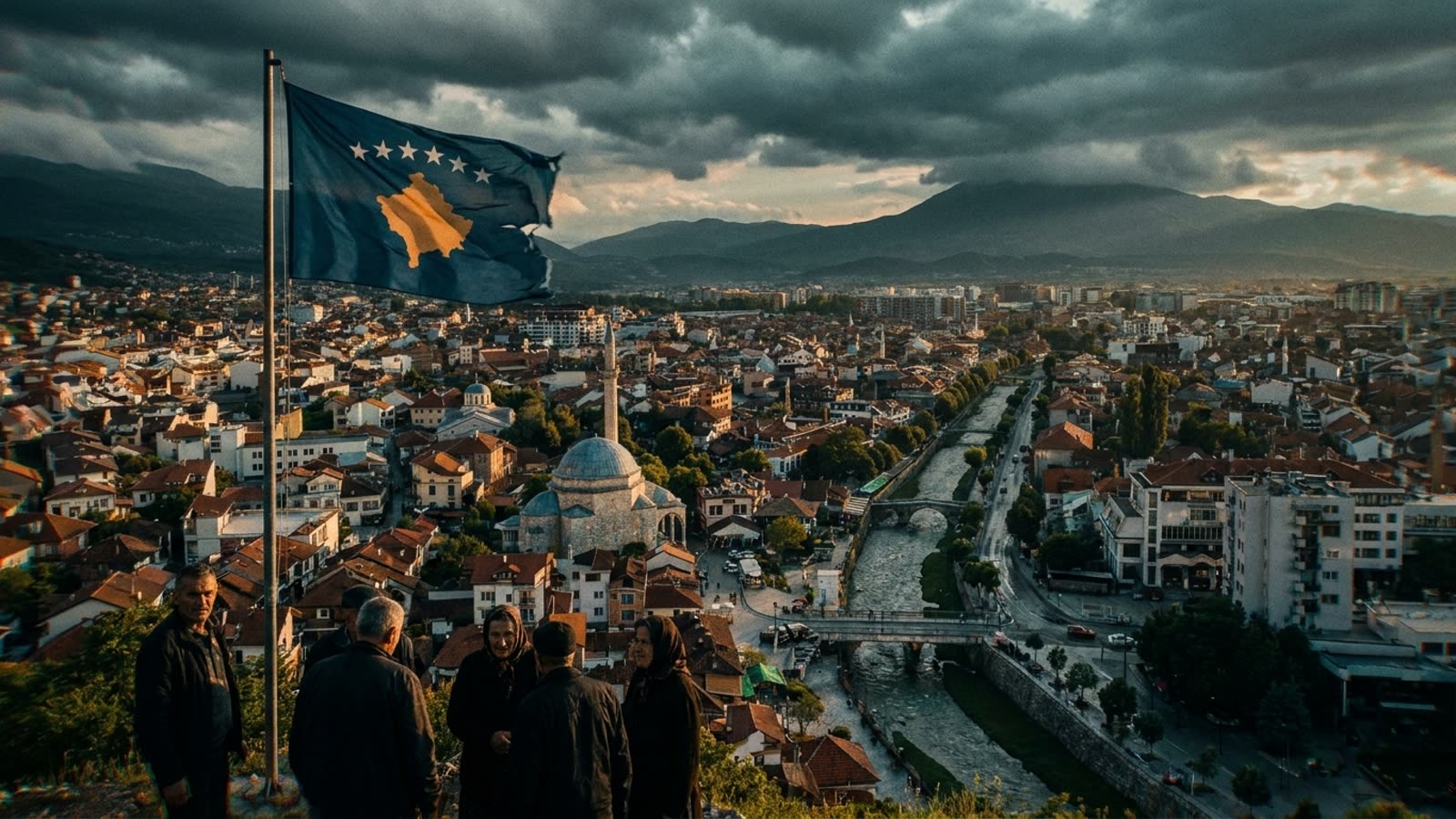
The campaign for Kosovo's snap parliamentary election officially began this week, setting the stage for a vote that will either ratify Prime Minister Albin Kurti's combative nationalism or expose its limits. Either way, the timing is awkward: Western capitals are consumed by the Middle East, Ukraine, and their own domestic fractures, leaving the Balkans to simmer on a back burner that has historically produced unpleasant surprises.
Kurti dissolved parliament after his governing coalition frayed over the handling of the long-running standoff with Serbia in the country's ethnic-Serb north. His Vetëvendosje (Self-Determination) movement remains the dominant force in Kosovar politics, but the prime minister's maximalist posture—refusing concessions to Belgrade, clashing repeatedly with EU and U.S. mediators—has alienated some domestic allies and most of the diplomatic establishment.
The Serbia question, again
Kosovo declared independence from Serbia in 2008; Belgrade has never recognized it, and roughly half of UN member states have followed Serbia's lead. The northern municipalities, where ethnic Serbs form a majority, have been a flashpoint for years. Kurti's government has pushed to integrate these areas more forcefully into Kosovar institutions, provoking Serbian protests, occasional violence, and stern warnings from Brussels.
The snap election is, in part, a referendum on that approach. Kurti is betting that voters will reward his refusal to bow to what he frames as external pressure to appease an irredentist neighbor. His opponents—a fractured constellation of center-right and minority parties—argue that isolation from the EU accession process is too high a price for rhetorical purity.
Western fatigue is the real variable
A decade ago, the Balkans commanded serious attention in Washington and Brussels. The memory of the 1990s wars was fresh, and enlargement was still the EU's most potent foreign-policy tool. Today, the region competes for bandwidth with crises that feel more urgent. The EU's special envoy for the Belgrade-Pristina dialogue has made little headway; the Biden and now Trump administrations have oscillated between disengagement and episodic intervention.
That vacuum is not empty. Serbia has deepened ties with China and maintained a studied ambiguity toward Russia. Kosovo, for its part, has leaned harder into its alliance with the United States, but Washington's attention is finite. A Kurti victory would likely mean more friction with Brussels and more freelancing in Pristina—manageable in calm times, less so if the region's other simmering disputes (Bosnia, North Macedonia) heat up simultaneously.
Our take
Kosovo's election will not make front pages in New York or London, and that is precisely the problem. The Balkans have a way of punishing inattention. Kurti may well win, and he may well be right that Kosovo cannot afford to negotiate from weakness. But the West's inability to offer a credible path to EU membership—or even sustained diplomatic engagement—leaves both Pristina and Belgrade playing a game with no referee. That rarely ends well.