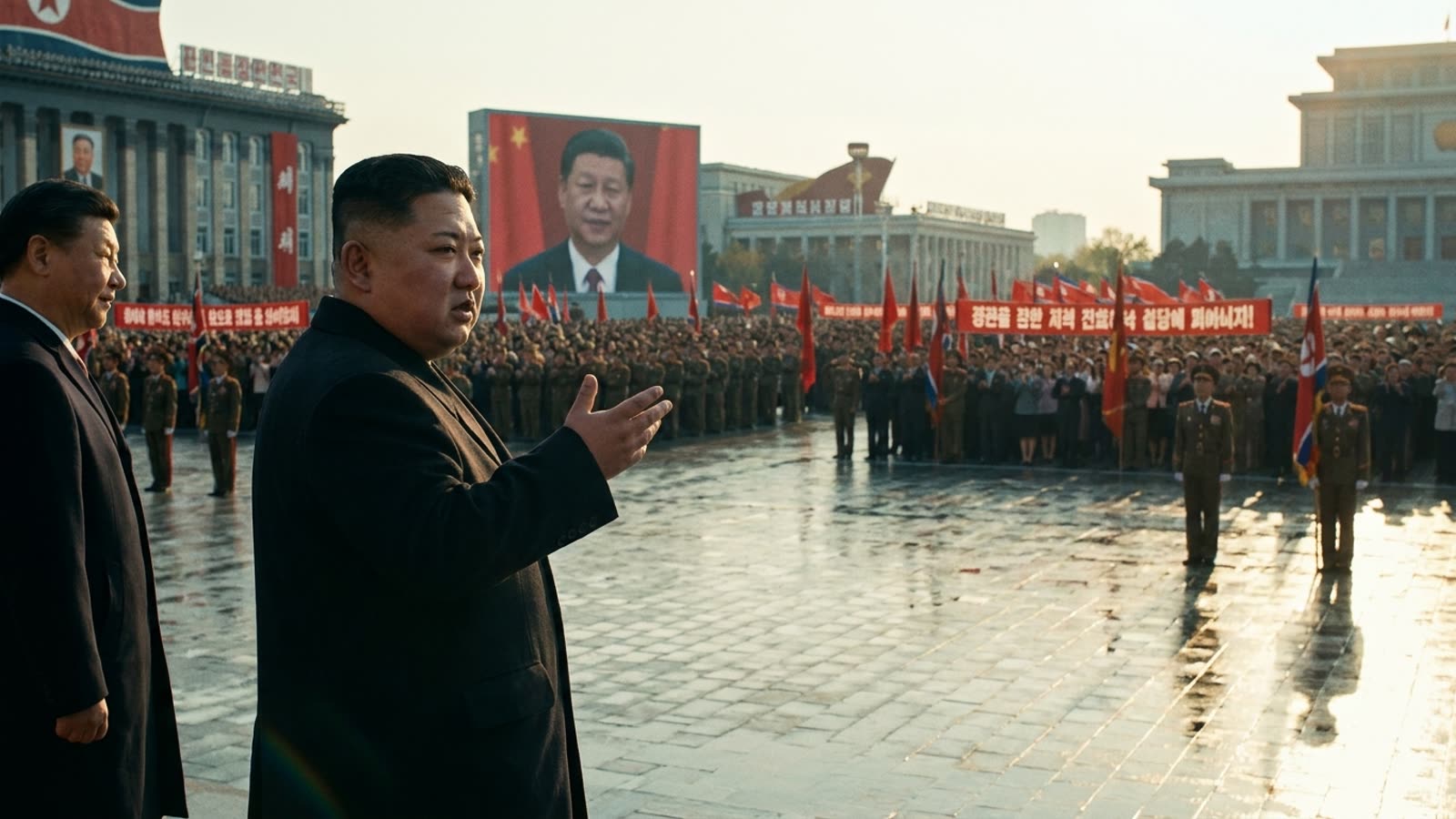
The optics from Pyongyang this week tell a story that neither Beijing nor Washington particularly wants told: Kim Jong Un, supposedly isolated and economically strangled, greeting Xi Jinping with the pomp of a confident host rather than a desperate supplicant. The visit—Xi's first to North Korea since 2019—arrives at a moment carefully chosen to maximize discomfort in Western capitals.
Kim has spent the past several years methodically expanding his nuclear and missile arsenals while the international community's attention wandered elsewhere. The strategy has been almost boringly effective. Sanctions remain in place but enforcement has grown porous, with Chinese trade quietly sustaining the regime through back channels that everyone acknowledges but no one seriously disrupts.
The timing speaks volumes
Xi's Pyongyang visit comes as the United States finds itself overextended across multiple fronts. The Trump administration's Iran gambit has consumed diplomatic bandwidth, the Ukraine stalemate grinds on without resolution, and domestic political considerations increasingly drive foreign policy decisions. For Kim, this represents an ideal environment—one where North Korea can project strength without facing meaningful consequences.
The summit also serves Beijing's interests. China has grown increasingly comfortable using Pyongyang as a strategic irritant, a card to play when Washington applies pressure on Taiwan or trade. The relationship is transactional rather than warm, but both parties understand its utility. Kim gets economic lifelines and diplomatic cover; Xi gets leverage and a buffer state that keeps American troops at a comfortable distance.
What defiance looks like in 2026
The choreography of the visit has been deliberately provocative. State media coverage emphasizes military cooperation and mutual resistance to "hegemonic pressure"—language calibrated to land in Washington without triggering the kind of response that would require actual follow-through. This is the North Korean specialty: provocation that stays just below the threshold of crisis.
Kim's confidence appears well-founded. His nuclear deterrent is now sophisticated enough that military options against Pyongyang carry genuinely catastrophic risks. The leverage this provides has fundamentally altered the calculus. Where previous administrations could at least plausibly threaten force, the current reality is that North Korea has achieved a kind of strategic immunity—not respected, but grudgingly tolerated.
Our take
The Pyongyang summit is less about what Kim and Xi will agree to than what it represents: the quiet victory of patience over pressure. The maximum pressure campaigns of the late 2010s failed not because they were poorly designed but because they required sustained multilateral commitment that never materialized. Kim bet that the world would eventually tire of caring about North Korea, and he was right. The embrace in Pyongyang this week is his victory lap, and the West has no good answer for it.