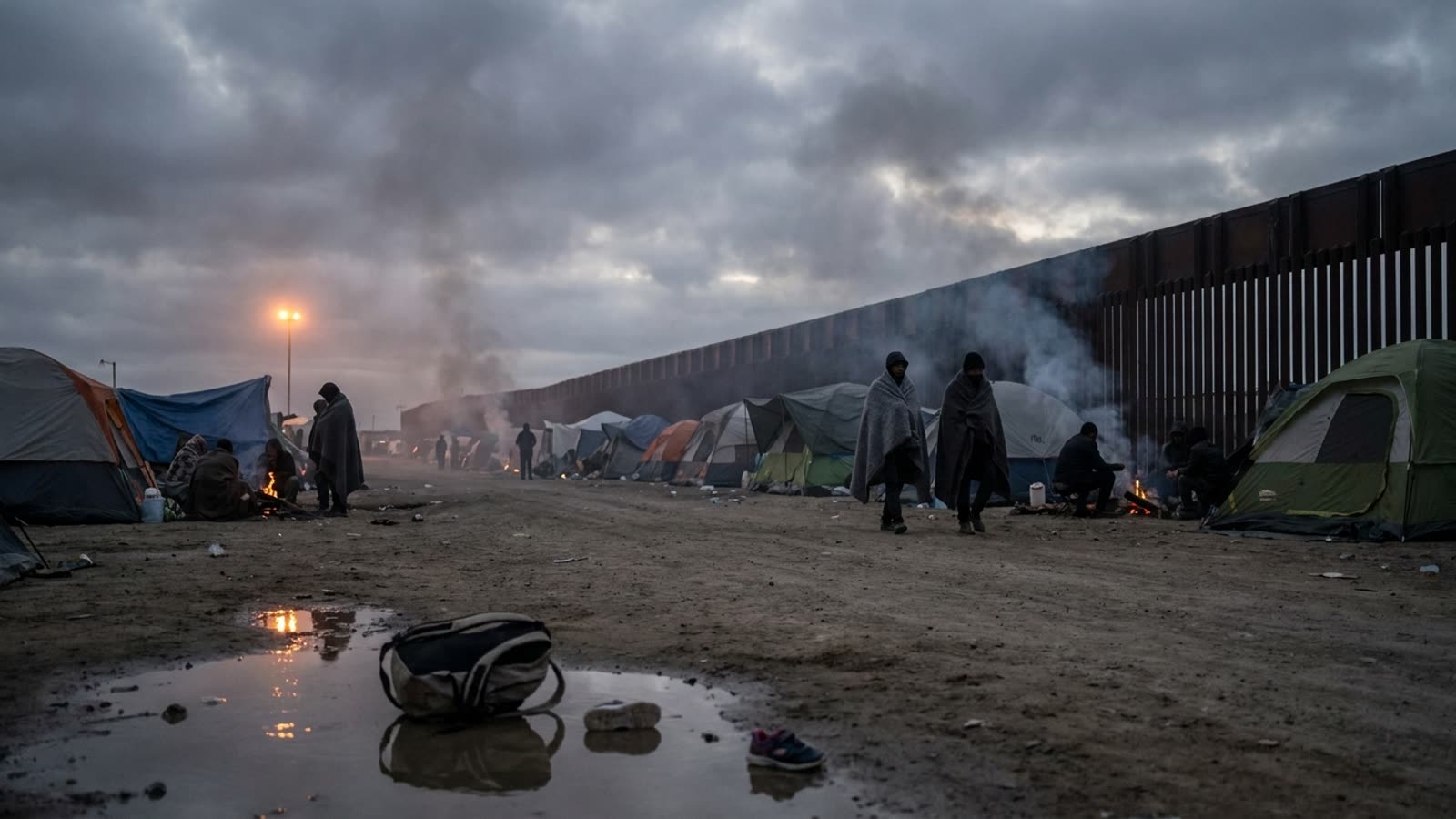
The images arriving from the U.S.-Mexico border this week tell a story the administration would prefer to keep quiet: families huddled under tarps, children playing in dust, and a growing encampment of Muslim migrants who have traveled thousands of miles only to find themselves trapped in bureaucratic purgatory.
The Trump administration's aggressive border policies, now eighteen months into their implementation, have created what humanitarian organizations are calling a shadow population—asylum seekers who cannot enter the United States but have nowhere else to go. Among them, Muslim migrants from conflict zones across the Middle East and Africa have become particularly vulnerable, caught between countries that will not take them back and an America that will not let them in.
The policy architecture
The current situation is the cumulative result of executive orders signed throughout 2025 and early 2026. Enhanced vetting procedures for nationals from predominantly Muslim countries have extended processing times from weeks to months, sometimes years. Meanwhile, the "Remain in Mexico" policy's expansion has pushed the waiting population further south, into areas with limited infrastructure and growing security concerns.
What distinguishes this moment from earlier border crises is the demographic shift. These are not primarily economic migrants from Central America but refugees from Syria, Afghanistan, Sudan, and Somalia—people fleeing the very conflicts that American foreign policy has, in various ways, helped shape. The irony is not lost on international observers.
The diplomatic fallout
Mexico's patience is visibly fraying. President Claudia Sheinbaum has made increasingly pointed remarks about the burden her country is bearing, and diplomatic cables suggest private conversations have been considerably less diplomatic. The camps are becoming a bilateral irritant at precisely the moment Washington needs Mexican cooperation on fentanyl interdiction and trade negotiations.
European allies, meanwhile, have begun citing American border policy in their own domestic debates—sometimes to justify restrictive measures, sometimes to criticize them. The administration's approach has become a reference point in global migration discourse, though not in the way its architects likely intended.
The human arithmetic
Nongovernmental organizations estimate the stranded population has grown substantially since winter, though precise figures are difficult to verify. What is clear is that the camps have developed their own informal economies, social structures, and—troublingly—security hierarchies. Reports of exploitation and violence have increased, particularly affecting women and unaccompanied minors.
The administration maintains that its policies are working as designed: deterring illegal crossings and protecting American security. Border apprehension numbers have indeed fallen, though critics argue this reflects migrants being stuck elsewhere rather than choosing not to come.
Our take
There is a legitimate debate to be had about immigration policy, border security, and the limits of American capacity to absorb refugees. But policy should be judged not only by its stated intentions but by its actual consequences. The growing encampments along the border represent a humanitarian situation that will eventually demand a response—whether that comes through policy adjustment, judicial intervention, or simply the weight of accumulated human suffering becoming too great to ignore. The administration has built a dam; the question is whether it can hold.