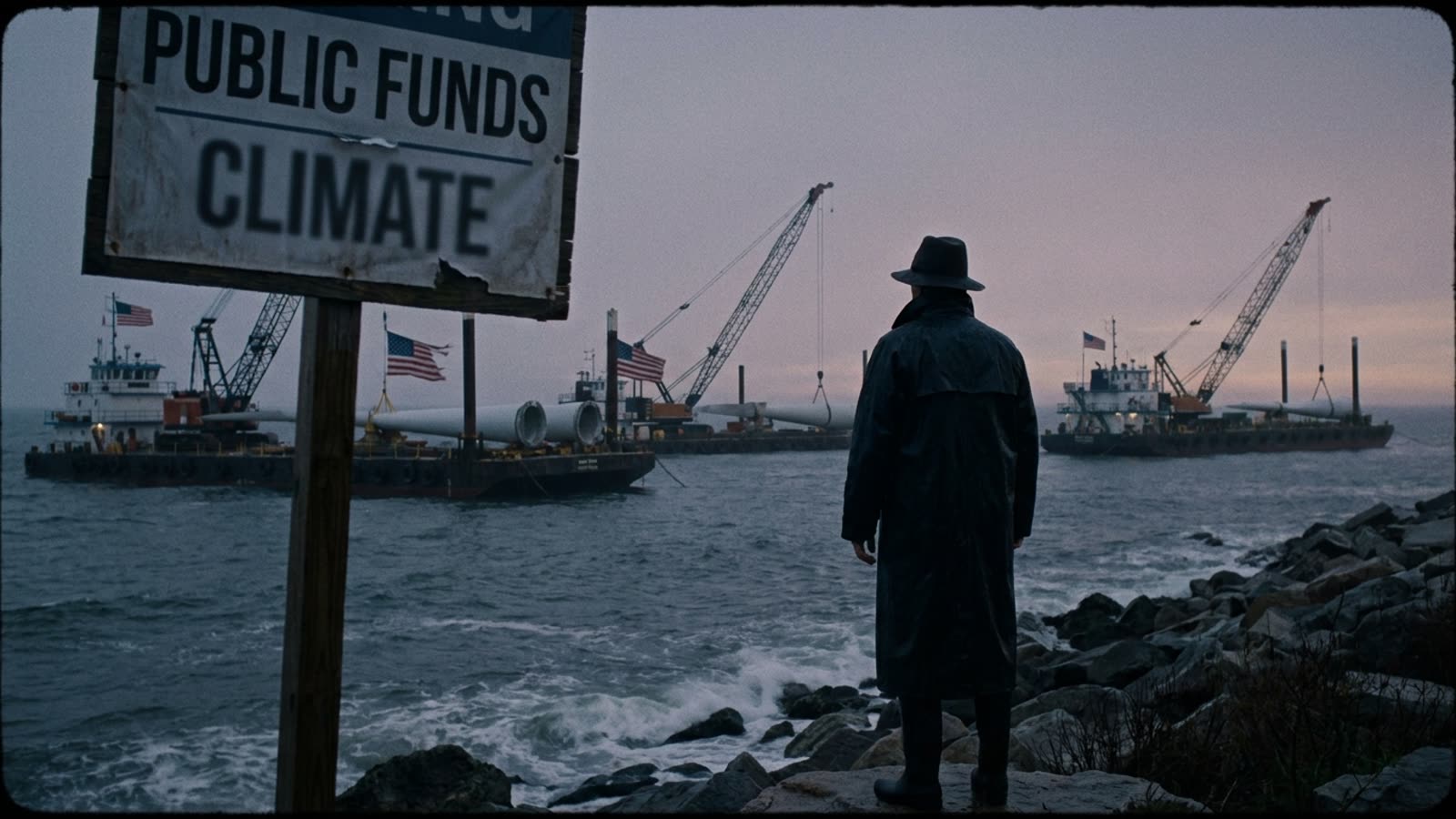
The federal government has entered the business of paying companies to do nothing—and the price tag is staggering.
The Trump administration quietly finalized a settlement worth approximately $1 billion with a French energy conglomerate to abandon its offshore wind development leases along the Atlantic coast. The deal, which emerged in regulatory filings last month, represents one of the largest single payouts to a private company for the explicit purpose of halting a permitted energy project. Now a coalition of blue states—led by New Jersey, New York, and Massachusetts—is suing to block the arrangement, arguing it constitutes an illegal expenditure of appropriated funds and a backdoor repeal of congressionally authorized renewable energy policy.
The mechanics of a billion-dollar exit
The settlement resolves what the administration characterized as "legacy contractual obligations" from Biden-era offshore wind auctions. The French company had secured federal leases and begun preliminary permitting for projects that would have supplied power to millions of coastal households. Under the new agreement, the company surrenders its development rights, receives the settlement payment, and walks away with no obligation to build anything. The administration argues the payout actually saves taxpayers money by avoiding years of litigation and the costs of supporting projects it considers economically unviable. Critics note that the "savings" calculation assumes the projects would have required substantial federal subsidies—an assumption the previous administration explicitly rejected when approving the leases.
The legal theory taking shape
The multistate lawsuit advances a novel constitutional argument: that the executive branch cannot unilaterally spend appropriated funds to nullify energy projects that Congress has authorized and funded through separate legislation. The complaint cites the Impoundment Control Act and argues the settlement effectively "impounds" renewable energy policy by paying to prevent its implementation. Legal scholars are divided on the merits. Some see a straightforward separation-of-powers case; others view it as a policy dispute dressed in constitutional clothing. What's not disputed is the political stakes: if the settlement stands, it establishes a template for future administrations to pay their way out of inherited energy commitments.
The offshore wind industry watches nervously
The implications extend far beyond one French company's windfall. Dozens of offshore wind projects at various stages of development now face uncertainty about whether their federal agreements carry any durable weight. Several European developers have reportedly paused investment decisions pending the litigation's outcome. The American Wind Energy Association issued a statement calling the settlement "a devastating signal to global capital markets" about the reliability of U.S. energy contracts. Meanwhile, the administration has signaled it views the settlement as a model, with officials suggesting similar arrangements could resolve other "stranded" renewable projects.
Our take
Paying a company a billion dollars to not do something is not, in itself, scandalous—governments settle disputes constantly. What makes this arrangement remarkable is its naked policy purpose: this is not a settlement of a legal claim but a purchase of a policy outcome the administration could not achieve through legislation. Whether courts will distinguish between the two remains to be seen. But the precedent being set is clarifying: in the new energy politics, the question is not whether projects can be built, but how much it costs to ensure they aren't.