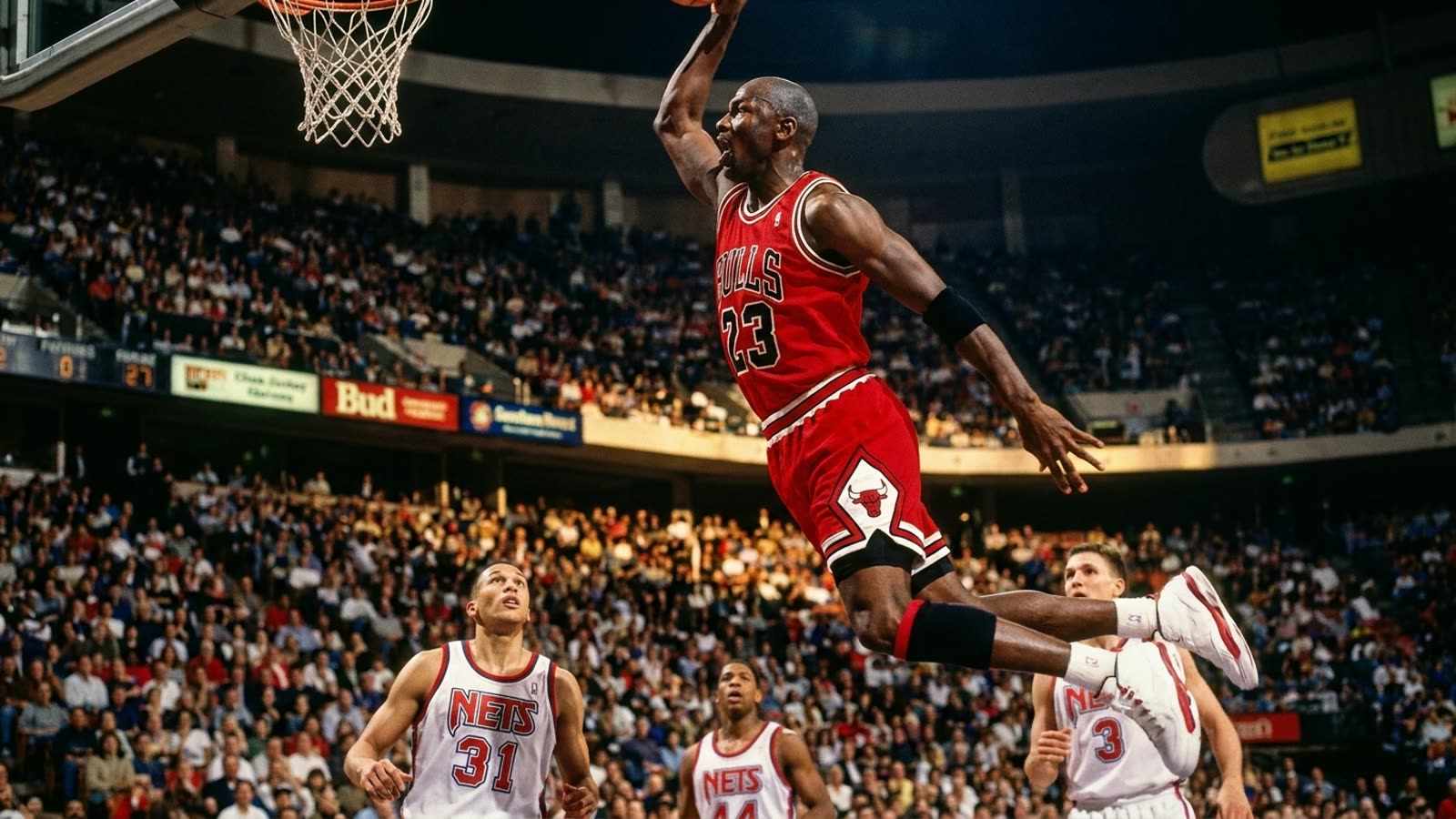
The sports memorabilia market has entered territory that would have seemed absurd a decade ago: a single basketball jersey, worn and signed by Michael Jordan during the 1998 NBA Finals, has privately changed hands for $14 million. That figure does not include auction fees, because there was no auction — this was a private sale, the kind of transaction that increasingly defines the upper reaches of the collectibles market.
The jersey in question is from Game 5 of the 1998 Finals, the series that concluded with Jordan's iconic last shot over Bryon Russell and his sixth championship. It is a road jersey, meaning the black Bulls uniform rather than the home white, and it carries Jordan's autograph. These details matter enormously in a market where provenance and specificity determine whether something is worth six figures or eight.
The new economics of nostalgia
This sale does not exist in isolation. It follows the $10.1 million paid for a Jordan jersey in 2022, which was then a record for any game-worn sports item. Before that, the ceiling for basketball memorabilia hovered in the low single-digit millions. The acceleration is striking: in roughly four years, the record has increased by nearly 40 percent.
What is driving this? The convergence of several forces. Generational wealth transfer has put enormous capital in the hands of people who grew up watching Jordan. The financialization of collectibles — through fractional ownership platforms, authentication services, and institutional-grade storage — has made these items legible to investors who would never have considered a jersey as an asset. And scarcity is genuinely real: there are only so many game-worn Jordan Finals jerseys in existence, and most are already locked in collections.
Why Jordan, why now
Jordan's cultural position remains singular. He retired from basketball in 2003, yet his commercial relevance has not diminished. The Jordan Brand generated over $5 billion in revenue last year. The 1998 Finals, immortalized in "The Last Dance" documentary, have become the Zapruder film of basketball — endlessly analyzed, mythologized, monetized.
The private nature of this sale is also instructive. The buyer did not want the publicity of an auction house record. This suggests the purchaser views the jersey less as a trophy and more as a store of value — something to hold, perhaps to sell later at an even higher price. The memorabilia market is increasingly behaving like the art market, where private sales between collectors and dealers dwarf public auction volume.
Our take
Fourteen million dollars for a piece of fabric is, by any ordinary standard, irrational. But markets are not obligated to be rational, and the Jordan jersey market is not ordinary. What we are witnessing is the final stage of sports nostalgia becoming a fully financialized asset class. The buyers are not fans in any traditional sense — they are wealth managers, family offices, and collectors who view these items as inflation hedges and portfolio diversifiers. Whether this is sustainable depends on whether the next generation cares about Jordan as much as this one does. Given that teenagers today were not alive when he played, that is not a certainty. But for now, the market has spoken: Michael Jordan's sweat-stained polyester is worth more than most people's homes.