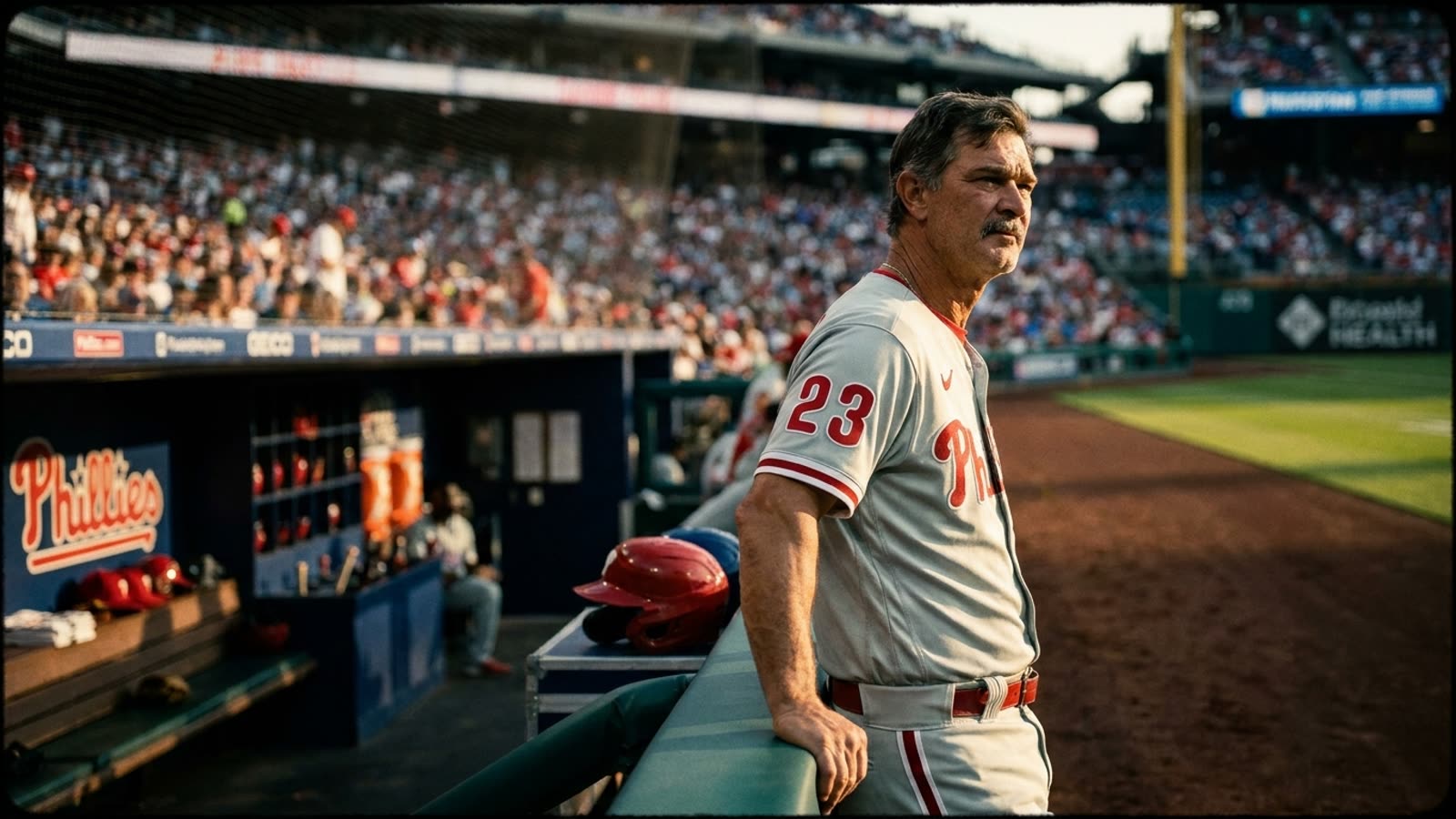
The Philadelphia Phillies have made official what the baseball world assumed since September: Don Mattingly is no longer interim anything. The former Yankees icon and three-time Manager of the Year finalist has signed a two-year contract to remain at the helm of a franchise he resurrected from early-season chaos.
Mattingly took over a Phillies club that had stumbled to a dismal start, their original manager dismissed before Memorial Day. What followed was one of the more quietly impressive managerial performances in recent memory—a steady hand that transformed clubhouse tension into playoff baseball. Philadelphia's front office, having watched Mattingly coax production from a roster that looked broken in April, saw no reason to conduct a broader search.
The case for continuity
Managerial hires in baseball increasingly resemble corporate succession planning: safe, internal, analytically vetted. Mattingly's appointment fits the mold but carries genuine merit. His experience managing in Miami and Los Angeles gave him fluency in handling egos and expectations, skills the Phillies desperately needed after their rocky start. Players publicly credited him with restoring calm. The front office credited him with restoring wins.
Two years is notably modest for a manager who delivered a playoff berth under duress. It suggests Philadelphia wants flexibility—either to extend Mattingly if the club contends, or to pivot quickly if the window closes. For Mattingly, now 65, the length matters less than the opportunity. He has managed more than 1,500 games without a pennant; the Phillies roster, still talented despite its early dysfunction, offers a legitimate path.
What changes now
Very little, which is precisely the point. Mattingly inherits his own roster, his own coaching staff, his own clubhouse chemistry. The Phillies avoided the disruption of a new voice demanding new systems. Whether that continuity produces October advancement or October exit remains the only question that matters.
Philadelphia's division rivals—Atlanta, the Mets—have their own managerial stability. The National League East will be decided by player performance, not dugout strategy. But Mattingly at least enters 2027 with organizational trust, something his predecessor never secured.
Our take
This was the obvious move, executed without drama, which is itself a minor achievement for a franchise that spent the spring as a tabloid fixture. Mattingly may not be a transformational hire, but he was a transformational interim. Sometimes the best decision is simply to stop pretending the audition is still ongoing.