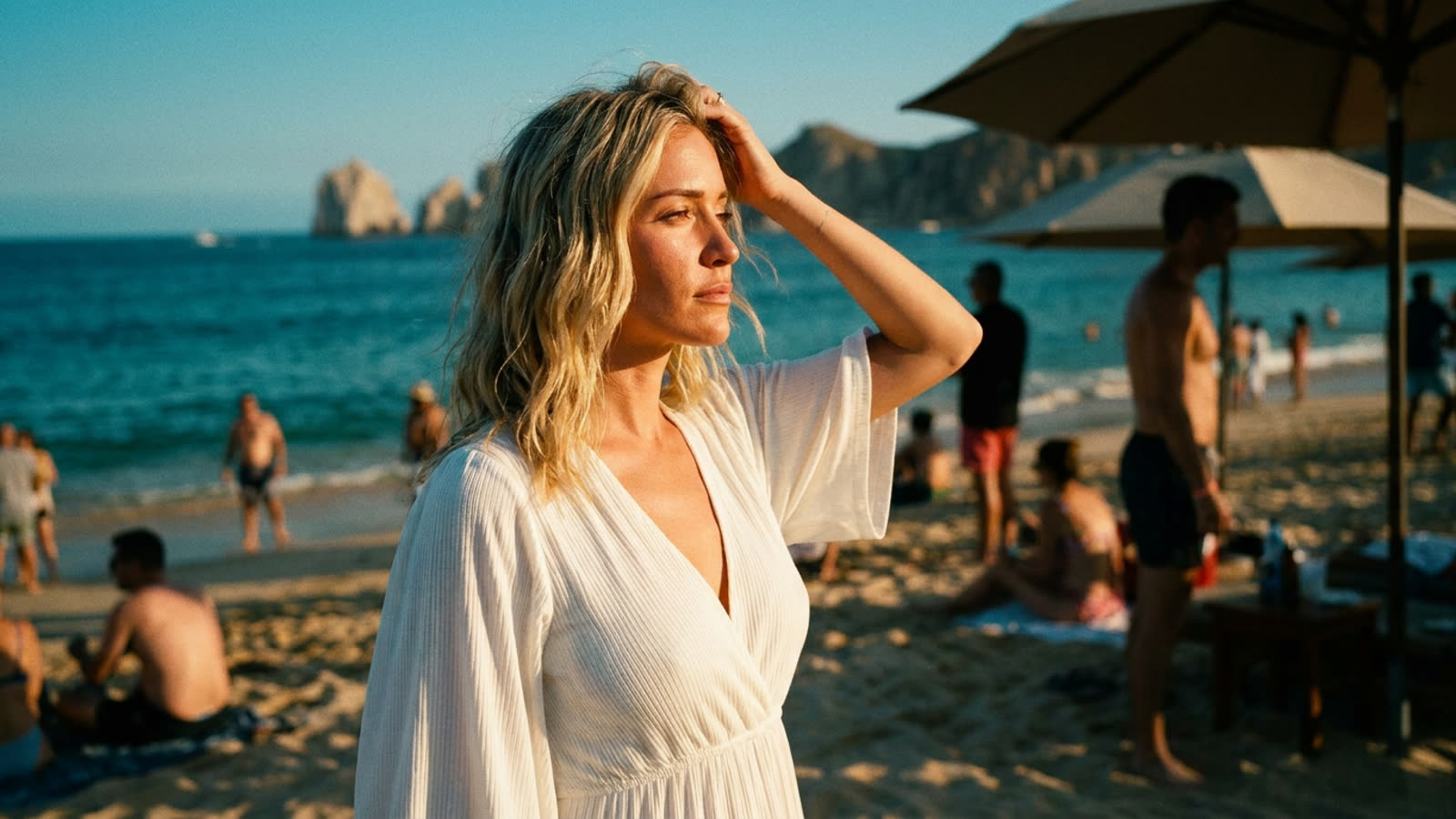
The photographs from Cabo San Lucas are unremarkable in the way all celebrity vacation content is unremarkable: sun, sand, swimwear, the suggestion that life is better when you're beautiful and warm. What makes Kristin Cavallari's latest beach appearance notable isn't the bikini or the backdrop—it's the simple fact that she's still commanding attention twenty-one years after she first appeared on MTV's Laguna Beach: The Real Orange County.
In an industry that treats reality stars as disposable content units, Cavallari has achieved something approaching permanence.
The survivor's playbook
Consider the class of 2004. Laguna Beach launched alongside the first season of The Apprentice and the early Real World spinoffs. Most of Cavallari's castmates have retreated into private life or the influencer middle class—posting sponsored content to audiences measured in the low five figures. Stephen Colletti acts occasionally. Lo Bosworth sells wellness supplements. Lauren Conrad, the only peer with comparable name recognition, has largely withdrawn from public life.
Cavallari, now 39, has done the opposite. She divorced NFL quarterback Jay Cutler in 2020, turned the split into content gold, launched a jewelry line (Uncommon James) that reportedly generates eight figures annually, and maintains a media presence that spans podcasts, reality television, and the tabloid ecosystem. Her E! series Very Cavallari ran for three seasons. She hosts Let's Be Honest, a podcast that regularly charts.
The Cabo photos, syndicated across celebrity media this week, aren't news. They're maintenance—the kind of visibility that keeps the brand warm between product launches and interview cycles.
Why the 2000s cohort keeps winning
There's a structural reason why the Laguna Beach and The Hills generation has proven more durable than subsequent reality cohorts. They arrived before social media democratized fame, which meant their celebrity was manufactured by professional networks with real distribution power. MTV spent money on production values, narrative arcs, and promotion. The result was a kind of cultural imprinting that TikTok-era stars struggle to replicate.
Cavallari's audience remembers her from adolescence—theirs and hers. That parasocial bond is stickier than anything algorithmic discovery can produce. She's not competing with twenty-two-year-olds for attention; she's serving a demographic that grew up alongside her and now has disposable income for jewelry and wellness products.
Our take
The entertainment industry's obsession with youth obscures a quieter truth: longevity is its own form of talent. Cavallari has outlasted network executives, format trends, and three distinct eras of media consumption. The Cabo photos will generate a few days of traffic and then disappear. The brand will remain. That's not luck—it's strategy executed over two decades, and it deserves more respect than the industry typically affords women whose careers began in bikinis on basic cable.