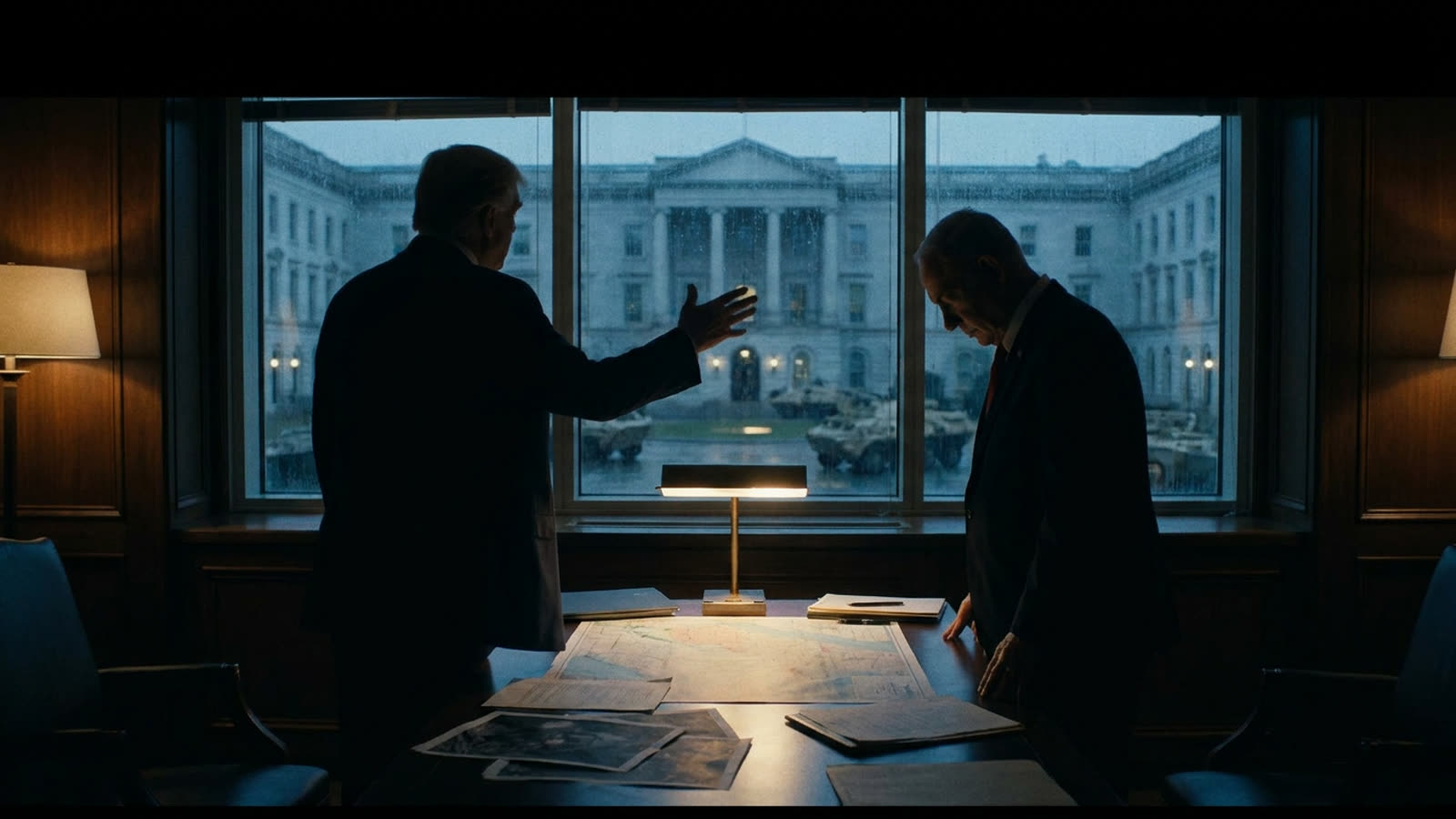
The Trump administration's emerging Iran deal was always going to face skeptics in Congress, in Riyadh, and in the American foreign-policy establishment. But the most consequential skeptic sits in Jerusalem, and he has apparently made his position explicit: Benjamin Netanyahu has told President Trump that Israel will remain free to act against Iranian threats regardless of what Washington signs, according to an Israeli source familiar with the conversation.
This is not posturing for domestic consumption. It is a diplomatic shot across the bow that fundamentally alters the calculus for any agreement.
The architecture of fragility
The deal taking shape—centered on uranium surrender, Strait of Hormuz security guarantees, and a phased sanctions rollback—depends on a basic premise: that all relevant parties will abide by its terms long enough for verification mechanisms to function. Netanyahu's declaration punctures that premise before the ink is dry. Tehran's negotiators now know that even if they comply with every American demand, Israeli jets could still strike Natanz or Fordow at a moment's notice.
For Iran's hardliners, this is precisely the outcome they predicted. Why surrender enriched uranium to a superpower that cannot guarantee its regional ally will stand down? The argument writes itself, and it will be made loudly in Tehran's corridors of power.
Washington's impossible position
The Biden and Obama administrations both struggled with the same tension: America's commitment to Israeli security versus its desire for diplomatic breakthroughs with Iran. Trump, who tore up the JCPOA in his first term and then launched military operations against Tehran in his second, now finds himself in the improbable role of peacemaker—yet he cannot credibly promise something he does not control.
The White House could, in theory, pressure Netanyahu by conditioning military aid or intelligence sharing on Israeli restraint. In practice, this is politically radioactive. Congressional Republicans, already uneasy about the emerging deal, would revolt. Trump's evangelical base would be apoplectic. The president has no appetite for that fight, which means Netanyahu holds the stronger hand.
Regional ripples
Gulf states, who have been quietly pressuring Trump to finalize an agreement that would stabilize oil markets and reduce the risk of a wider war, are watching nervously. Saudi Arabia and the UAE have invested heavily in normalization with Israel through the Abraham Accords framework; an Israeli strike that torpedoes the Iran deal would force them to choose sides in ways they have carefully avoided.
Meanwhile, American military planners must now game out scenarios in which the U.S. is simultaneously negotiating with Iran and providing intelligence to an Israel that might use that intelligence for preemptive strikes. The operational contradictions are staggering.
Our take
Netanyahu's message is clarifying, if nothing else. It confirms what seasoned observers have long suspected: Israel views any American-Iranian rapprochement as a threat to its strategic autonomy, and it will not subordinate its security doctrine to Washington's diplomatic ambitions. Trump can sign whatever document he likes. Whether it survives contact with Israeli F-35s is another matter entirely. The peace deal is not dead, but it was just diagnosed with a serious pre-existing condition.