The United States and Iran have reached a framework to extend their ceasefire, Reuters reported Wednesday, a development that would pause—but not end—the most dangerous military confrontation between the two powers since 1979. The catch: President Trump has not yet signed off, and in this administration, that gap between agreement and approval can swallow entire diplomatic initiatives.
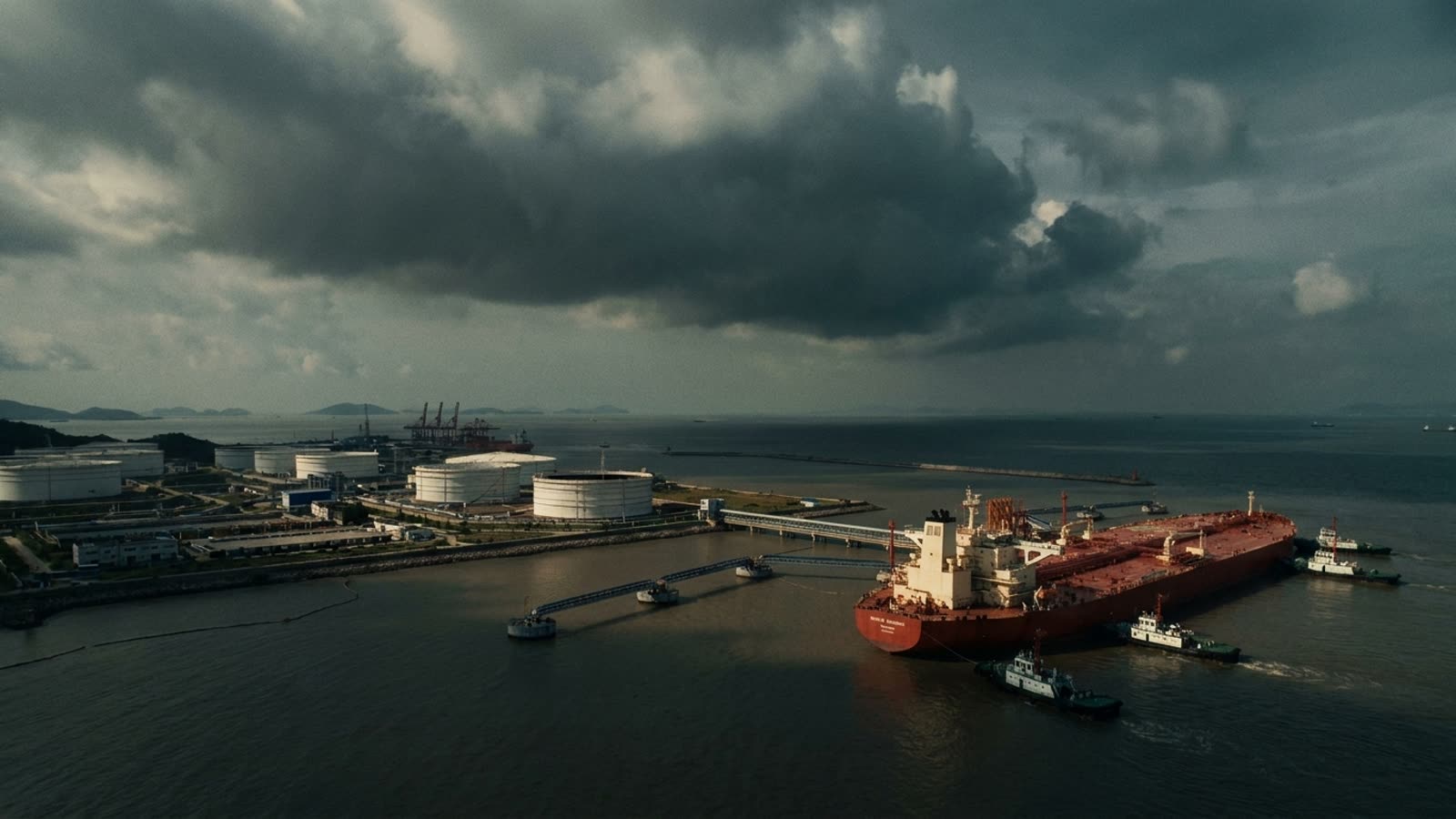
The extension, brokered through intermediaries in Oman, would give both sides another seven days to negotiate terms for a broader de-escalation following last week's exchange of strikes that rattled global oil markets and pushed crude briefly above $95 a barrel. Iranian officials reportedly sought guarantees on frozen assets; American negotiators demanded verifiable constraints on Tehran's drone program. Neither got what they wanted, but both apparently concluded that more war was worse than more talking.
The arithmetic of exhaustion
Iran's calculus is grimly straightforward. The Revolutionary Guard's strike on a U.S. airbase in the Gulf earlier this month demonstrated capability but invited retaliation that degraded roughly a third of its operational drone fleet, according to Pentagon assessments. Supreme Leader Khamenei, now 86 and visibly frail in recent appearances, has reportedly told advisors that a prolonged conflict risks regime stability at a moment when succession planning remains unresolved.
Washington's incentives are more tangled. The administration entered this confrontation promising swift victory; instead it got a grinding exchange that has consumed munitions, distracted from the Pacific, and produced no obvious political dividend. Polling suggests American voters are exhausted by Middle Eastern entanglements, even as hawks within Trump's cabinet push for a decisive blow against Iranian nuclear infrastructure.
Why Trump's delay matters
The president's hesitation is not unusual—he has long cultivated unpredictability as a negotiating tactic—but it introduces genuine uncertainty into a situation where miscalculation could prove catastrophic. Iranian commanders, unsure whether the ceasefire will hold, may keep forces on heightened alert; that posture increases the odds of an accidental escalation. Oil traders, meanwhile, are pricing in roughly 40% odds that hostilities resume within the month, according to options-market data.
Trump's inner circle is divided. Treasury Secretary Bessent reportedly favors the extension, arguing that sustained conflict threatens the administration's economic agenda. National Security Advisor Waltz has been more hawkish, viewing the ceasefire as an Iranian stalling tactic. The president himself has offered only cryptic social-media posts, praising American military strength while leaving the diplomatic question unanswered.
Our take
Ceasefires are not peace; they are pauses that sometimes become peace and sometimes become preludes to worse violence. This one has the feel of two exhausted boxers clinching in the late rounds, neither capable of a knockout but neither willing to concede. Trump's approval, when it comes, will likely be hedged with conditions designed to preserve optionality. That is probably the best outcome available—a muddle that avoids catastrophe without resolving anything. In the Middle East, muddles have a way of lasting longer than grand bargains.