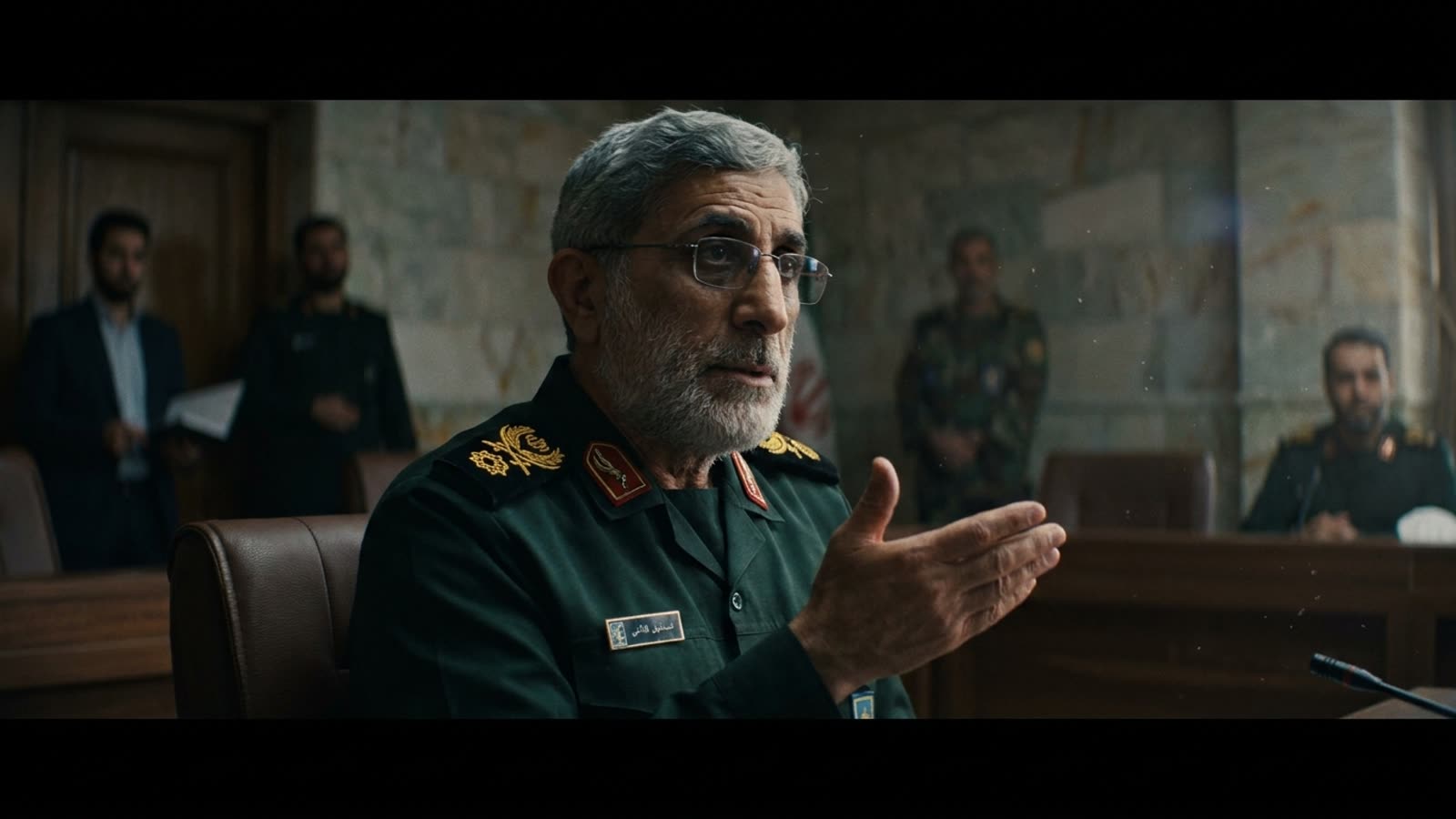
The Biden administration spent years trying to revive diplomacy with Tehran. The Trump administration has spent weeks bombing it. Neither approach has reckoned seriously with the man who may matter most to what comes next: Major General Esmail Qaani, the commander of Iran's Quds Force and the architect of its proxy warfare across the Middle East.
Qaani, who assumed command after the 2020 assassination of Qasem Soleimani, has long been dismissed in Washington as a lesser figure than his predecessor—more bureaucrat than battlefield commander, more cautious than charismatic. That assessment is looking increasingly outdated. As the Trump administration weighs a second wave of strikes against Iranian nuclear and military infrastructure, Qaani has emerged as the critical node connecting Tehran's decision-making to its network of militias in Iraq, Syria, Lebanon, and Yemen.
The man behind the proxies
Qaani's career was forged not in the Arab world, like Soleimani's, but along Iran's eastern borders—Afghanistan and Pakistan, where he spent decades cultivating relationships with Shia militant groups. That experience made him an unlikely choice to oversee Iran's western front. But six years into the job, he has proven more adaptable than skeptics predicted.
Interpol issued a red notice for Qaani in connection with the 1994 AMIA bombing in Buenos Aires, which killed 85 people. He has never faced trial. Within Iran's Revolutionary Guard Corps, his position appears stronger than at any point since he took command. The Quds Force's budget has reportedly increased, and its coordination with Hezbollah and Iraqi militias has grown more sophisticated despite Israeli efforts to degrade those networks.
Why Washington keeps underestimating him
American intelligence assessments have consistently portrayed Qaani as risk-averse, someone who would counsel restraint in the face of escalation. That reading may confuse tactical patience with strategic timidity. Qaani's approach to proxy warfare has always emphasized deniability and attrition over dramatic confrontation—a posture that serves Iran well when the alternative is direct conflict with American firepower.
The danger is that Washington's mental model of Iranian decision-making still centers on Supreme Leader Khamenei and President Pezeshkian, treating the IRGC as an instrument rather than an actor with its own institutional interests. Qaani commands the forces that would execute any retaliation against American assets in the region. His assessment of acceptable risk matters enormously.
Our take
The Trump administration's Iran strategy has focused on coercion: strike hard enough, and Tehran will capitulate or collapse. That theory requires Iranian leaders to behave as rational actors responding to cost-benefit calculations made in Washington. Qaani's biography suggests a different logic—one shaped by decades of asymmetric warfare, institutional survival, and a worldview in which American power is formidable but not permanent. If the next phase of this confrontation goes badly, it will likely be because no one in Washington bothered to understand the man on the other side of the chessboard.