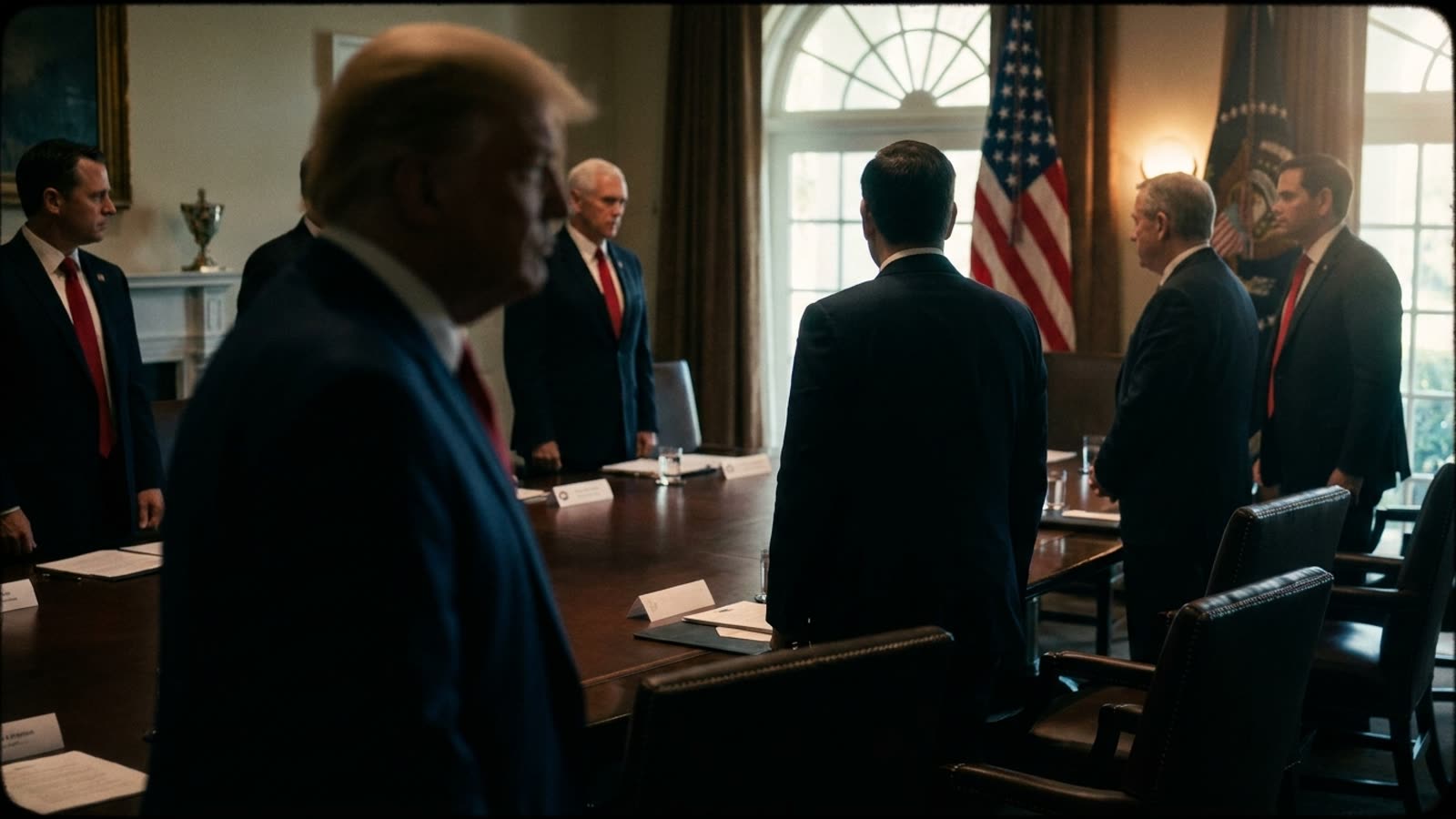
The question in the White House Situation Room is no longer if but how much. President Trump's meeting with national security officials this week to weigh follow-on strikes against Iran marks a pivot point: having already crossed the threshold of direct military action, the administration must now decide whether to treat the initial salvos as a contained message or the opening movement of a sustained campaign.
The calculus is more constrained than the president's maximalist rhetoric suggests. Iran's retaliatory posture, the fragility of Gulf energy infrastructure, and the calendar—midterms loom in November—all argue for calibration. Yet the internal logic of "maximum pressure" pushes toward escalation: if limited strikes fail to alter Tehran's behavior, the doctrine demands more.
The Escalation Ladder's Slippery Rungs
Trump's options reportedly range from expanded strikes on Iranian proxy assets in Iraq and Syria to direct hits on Islamic Revolutionary Guard Corps facilities inside Iran. Each rung carries compounding risk. Targeting the IRGC's missile program or nuclear-adjacent sites would almost certainly trigger a response against U.S. bases in the region or Gulf shipping lanes—scenarios that could spike oil prices past $100 a barrel and rattle an equity market already jittery over tariff uncertainty.
The president's advisers are divided. Defense hawks favor a heavier hand, arguing that half-measures invite Iranian opportunism. A more cautious faction warns that a regional conflagration would consume the administration's bandwidth precisely when it needs legislative wins on taxes and immigration.
The Midterm Math
War, historically, is a double-edged political instrument. A swift, decisive campaign can rally the base; a grinding, inconclusive one bleeds approval ratings. Trump's team is acutely aware that the 2026 midterms will be a referendum on economic management as much as foreign policy. A spike in gas prices or a televised hostage crisis would hand Democrats a cudgel they currently lack.
Polling suggests the public supports "strength" against Iran in the abstract but sours quickly on open-ended military commitments. The administration's messaging—emphasizing Iranian provocations and American restraint—is designed to preserve optionality while inoculating against charges of warmongering.
Our take
Trump has maneuvered himself into a familiar corner: having promised dominance, he must now deliver results without the costs that dominance typically entails. The next round of strikes will reveal whether the White House has a theory of victory or merely a theory of toughness. Markets, allies, and adversaries are all watching to see which one it is.