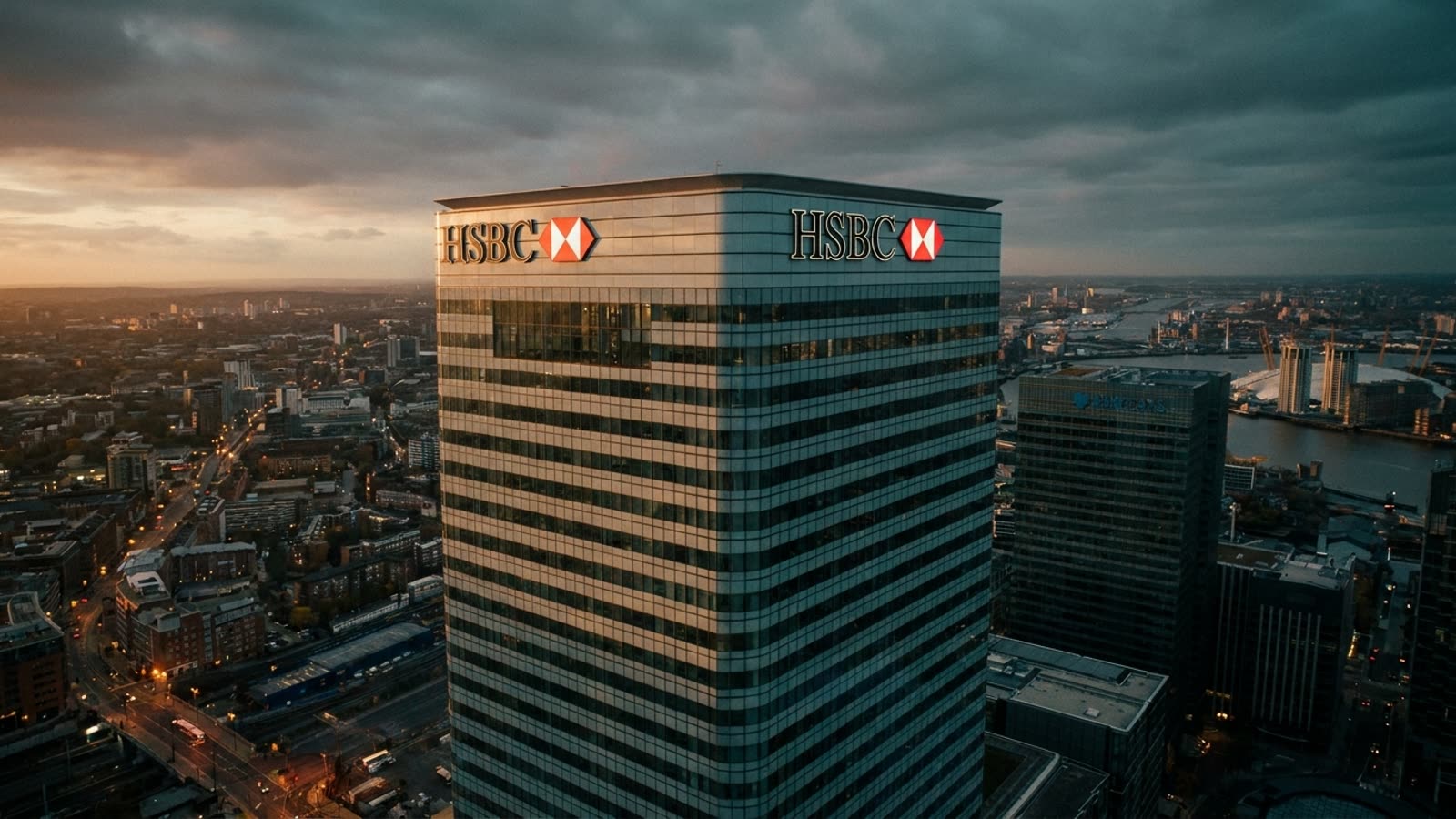
HSBC delivered third-quarter results that, in almost any prior decade, would have been celebrated: profits jumped, costs fell faster than promised, and management greenlit a share buyback of up to $1 billion. The stock dropped anyway. Welcome to the new normal for global banking, where merely beating your own targets earns you nothing if you fail to clear the whisper numbers that really matter.
The London-listed lender's quarterly earnings rose sharply year-on-year, driven by aggressive cost discipline and resilient net interest income in Asia, the geography that still accounts for the bulk of HSBC's profits. Management credited an accelerated restructuring programme that has trimmed headcount and consolidated back-office operations faster than originally projected. The buyback, while modest relative to the bank's $140-billion-plus market capitalisation, signals confidence that capital ratios remain comfortably above regulatory minimums even as Basel IV implementation looms.
Why the market yawned
Analysts had pencilled in slightly higher revenue, and HSBC's fee income from wealth management—a business the bank has bet heavily on as it pivots toward affluent Asian clients—came in softer than hoped. Investors also parsed the guidance for signs of margin compression: with central banks in the US and Europe now firmly in easing mode, the interest-rate tailwind that turbocharged bank earnings from 2023 through mid-2025 is fading. HSBC's net interest margin held up better than peers, but the direction of travel is unmistakable.
The broader European banking picture
HSBC's muted reception fits a pattern. Across the continent, lenders have reported solid fundamentals only to see share prices stagnate or retreat. The sector trades at a persistent discount to book value, reflecting scepticism that current profitability can survive a lower-rate world. For HSBC specifically, geopolitical risk adds another layer: its heavy exposure to Hong Kong and mainland China leaves it vulnerable to any fresh deterioration in US-China relations, a concern that has intensified as Washington tightens export controls on advanced semiconductors and AI hardware.
Our take
HSBC did what it said it would do, and then some. That the reward was a falling share price says less about the bank than about the market's jaundiced view of European finance. Investors have been burned too many times by cost-cutting cycles that failed to translate into durable returns on equity. Until HSBC—or any of its continental peers—demonstrates it can grow revenue in a low-rate, high-scrutiny environment, the sector will remain a value trap dressed up as a value play. The buyback is nice. It is not a thesis.