For two years, British retailers performed an exhausting act of financial contortion: absorbing supplier price increases, swallowing higher energy costs, and eating into margins rather than passing the full burden to shoppers still traumatized by the 2022-23 inflation spike. That performance has ended.
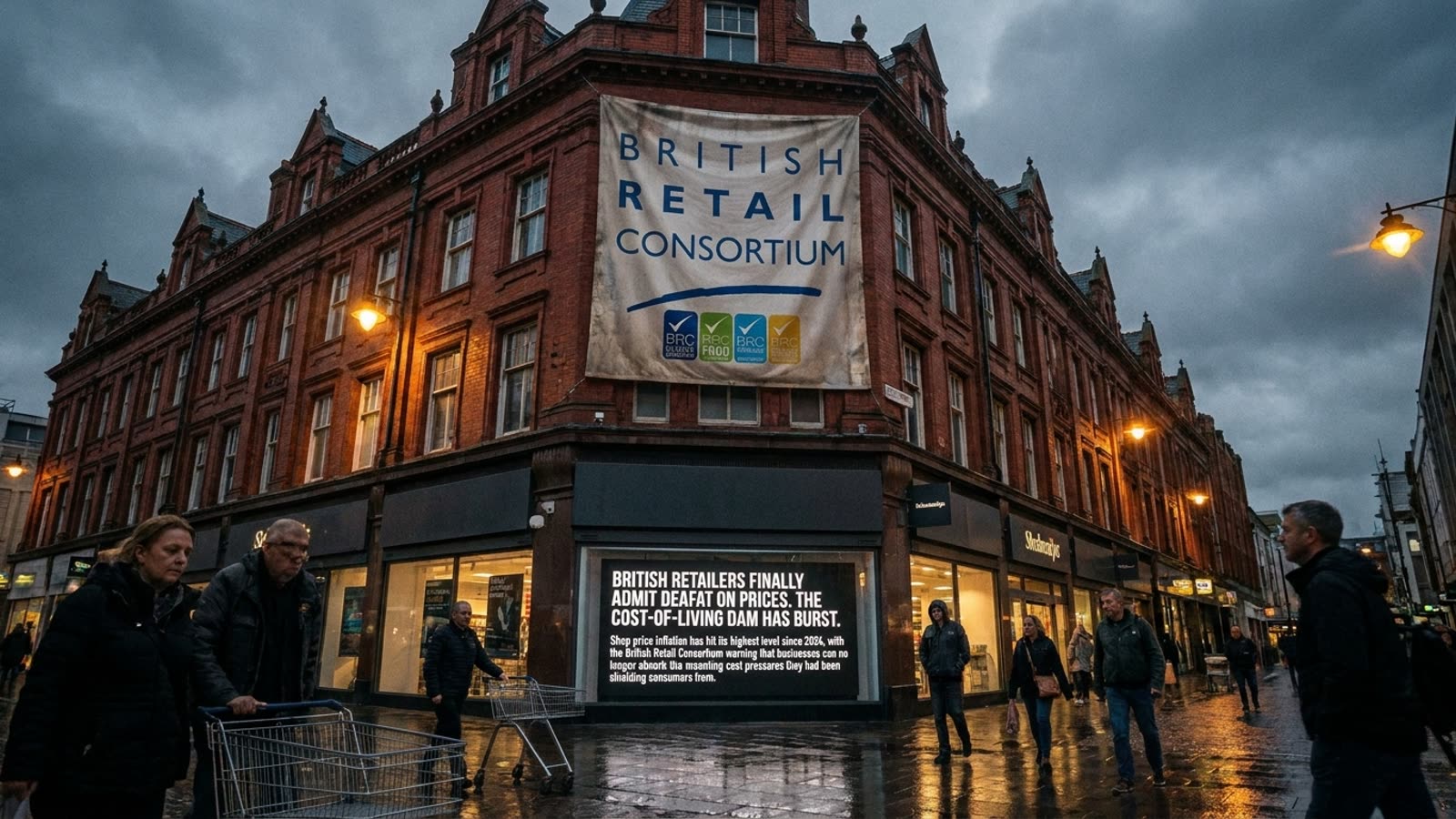
The British Retail Consortium's latest data shows shop price inflation climbing to its highest level since mid-2024, with the trade body's chief executive delivering a blunt assessment: "The dam is starting to break on the huge wave of costs" that retailers had been holding back. The timing could hardly be worse, arriving days before Chancellor Rachel Healey delivers a Budget already shadowed by fiscal constraints and voter anxiety about household finances.
The arithmetic of absorption
Retailers' ability to shield consumers was never infinite—it was borrowed time purchased with compressed margins and delayed investment. The calculus has shifted for several reasons. Energy costs, while below their 2022 peaks, remain structurally elevated. Labour costs have risen with minimum wage increases and persistent staff shortages in logistics and warehousing. And the supply chain disruptions that were supposed to be transitory have calcified into permanent inefficiencies, from Black Sea shipping complications to Red Sea route diversions that add days and dollars to every container.
Food retailers face particular pressure. Fresh produce, dairy, and bakery categories—where margins were already razor-thin—are seeing the steepest increases. The irony of Healey's pre-Budget announcement to cut tariffs on marmalade and gherkins is not lost on grocery executives: the gesture addresses pennies while the problem operates in pounds.
The consumer response
British households have already demonstrated their adaptation playbook. Trading down to own-brand products, reducing basket sizes, and shifting discretionary purchases to discount cycles are now embedded behaviors rather than temporary adjustments. The question is whether these coping mechanisms can stretch further, or whether we are approaching a genuine demand destruction moment where consumers simply stop buying categories altogether.
The BRC data suggests the latter is beginning: volume growth has stalled even as value growth ticks up, the classic signature of inflation without real consumption expansion. For retailers dependent on volume throughput to cover fixed costs, this is the worst possible combination.
Our take
The political class will treat this as a communications problem—hence the marmalade tariff theatre. But the structural reality is that Britain's retail sector is caught between input costs it cannot control and consumer spending power it cannot conjure. Healey's Budget may offer targeted relief, but the fundamental mismatch between what things cost to sell and what people can afford to pay is not amenable to fiscal tinkering. The dam hasn't just cracked; the reservoir behind it is still filling.