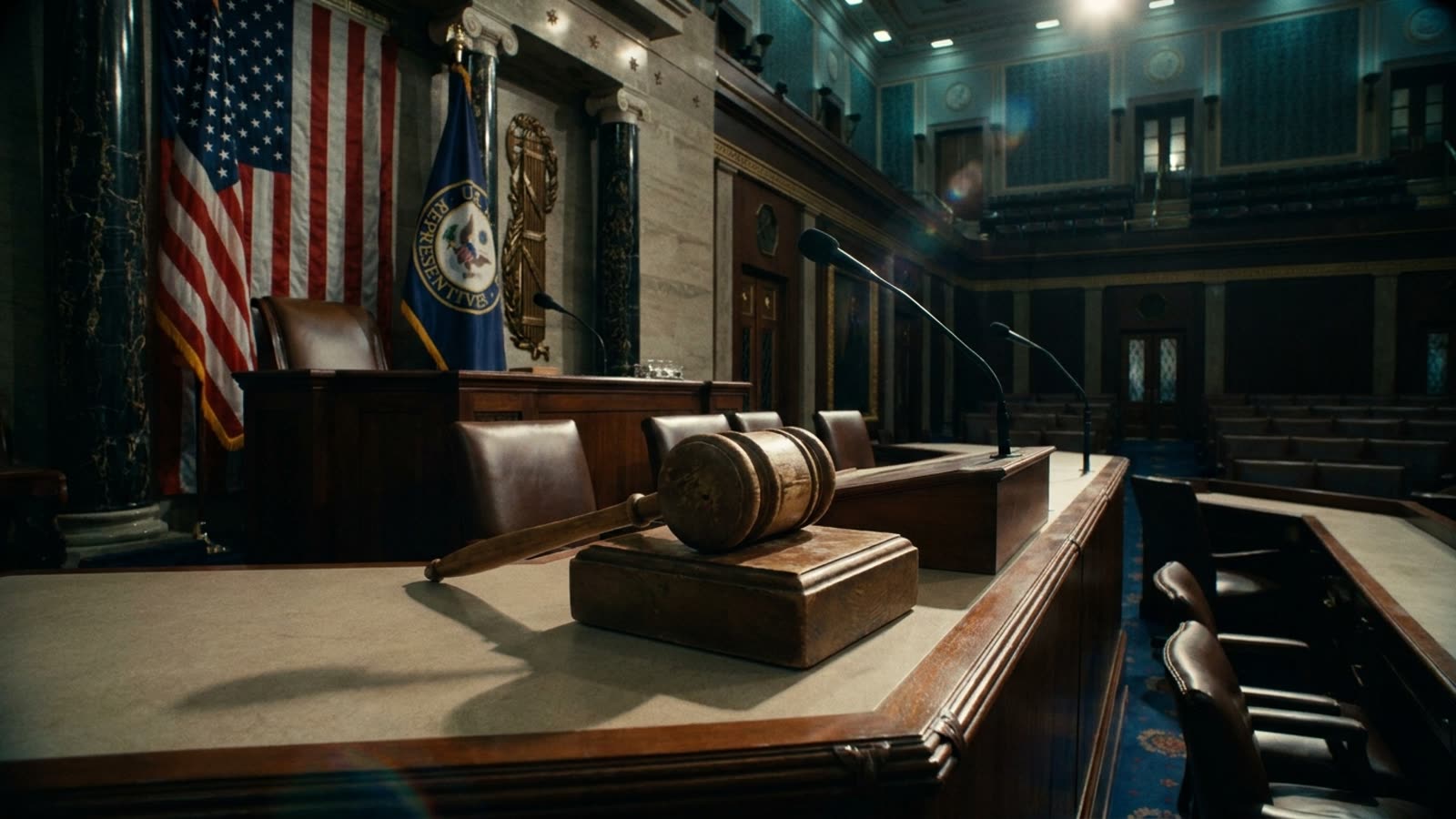
The Constitution grants the House of Representatives exactly one instruction about its presiding officer: "The House of Representatives shall chuse their Speaker." It says nothing about how, or from whom, or what happens when they cannot agree. This studied vagueness has transformed what the Founders imagined as a procedural formality into one of the most consequential and least understood power struggles in American democracy.
The mechanics appear simple. On the first day of a new Congress, the clerk of the outgoing House calls the roll, and members vote by name for their preferred candidate. A speaker must receive an absolute majority of votes cast—not a plurality, not a majority of those present, but a majority of every member who votes for a person by name. In a 435-member chamber with full attendance and no abstentions, that means 218 votes, a number that has become almost mythological in its difficulty to reach.
Why the math is brutal
Unlike parliamentary systems where coalition negotiations happen before an election and produce a unified government, the American system forces the governing coalition to form in public, on the House floor, with cameras rolling. A party with a slim majority cannot simply install its leader; it must persuade every skeptic, reward every loyalist, and neutralize every insurgent while the opposition watches and waits.
The absolute-majority requirement means that a handful of defectors can hold the entire chamber hostage. If a party controls 222 seats, only five members need to vote for someone else—or vote "present"—to deny their nominal leader the gavel. This arithmetic transforms backbenchers into kingmakers and turns ideological purity into negotiating leverage.
The historical anomaly of contested elections
For most of American history, speaker elections were formalities. The majority party caucused privately, settled its disputes, and presented a united front. Contested floor votes were relics of the antebellum era, when the slavery question fractured both parties so thoroughly that the House once took two months and 133 ballots to elect a speaker.
The return of multi-ballot speaker elections in the twenty-first century signals something profound about the state of American political parties: they are no longer capable of enforcing discipline through traditional means. Committee assignments, campaign funding, and legislative priorities—the carrots and sticks that once kept members in line—have lost potency against members who answer primarily to ideologically motivated small donors and partisan media ecosystems.
The office itself as leverage
What makes the speakership worth fighting over is not the salary or the security detail but the near-absolute control over what the House considers and when. The speaker decides which bills reach the floor, which amendments receive votes, and which members chair which committees. In a system designed with multiple veto points, the speaker's scheduling power is perhaps the most underappreciated choke point in American lawmaking.
This is why concessions extracted during speaker elections matter so much. Promises to allow floor votes on specific bills, commitments to restore certain procedural rights to rank-and-file members, agreements to empower particular factions on key committees—these are not symbolic gestures but structural changes to how power flows through the institution.
Our take
The speaker election reveals American democracy's deepest design flaw: it assumes good-faith cooperation among actors who increasingly have no incentive to cooperate. The Founders built a system that requires supermajority consensus at nearly every turn but provided no mechanism for achieving it. When parties were broad coalitions that overlapped ideologically, this worked. When they became sorted, polarized, and internally factionalized, it became a recipe for paralysis. The gavel is not awarded to the most capable legislator; it goes to whoever can survive the hostage negotiation. That this process now plays out on live television, with the world watching the most powerful legislature on earth struggle to organize itself, is less a bug than a feature of a system straining against its own assumptions.